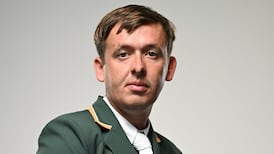
President Volodymyr Zelenskiy of Ukraine announced a shake-up of his national security leadership on Friday, saying he planned to replace his defence minister and had named the head of the country’s military intelligence agency as his new chief of staff.
In his overnight address, Zelenskiy said that a “substantial overhaul” was underway to make Ukraine “more resilient”.
Zelenskiy said he had asked Mykhailo Fedorov, a vice prime minister and the minister of digital transformation, to become the new minister of defence as part of a “wave of personnel changes”. He also promised that “more decisions will follow”.
Fedorov was at one point seen as a potential candidate to replace Andriy Yermak, Zelenskiy’s chief of staff, who resigned over a corruption scandal.
READ MORE


But earlier Friday, Zelenskiy announced that Kyrylo Budanov, head of the country’s military intelligence agency, would fill the role — which had been left vacant for weeks.
The departure in November of Yermak, who had also served as Kyiv’s lead peace negotiator, cleared the way for a political overhaul that had been long deferred by the war. But it also left Zelenskiy without his main enforcer at a delicate moment in talks with the United States over ending the war with Russia.
The appointment of Budanov, 39, moves one of Ukraine’s highest-profile generals into a political role as the country starts to discuss the possibility of elections if a ceasefire can be reached with Russia. It also removes a celebrated spymaster from his post, shaking up Ukraine’s intelligence leadership.
Budanov has been seen as a potential rival to Zelenskiy as the United States and Russia call for elections in Ukraine. Budanov’s move to the presidential office suggests that he will not compete against Zelenskiy in a presidential election, political analysts said.
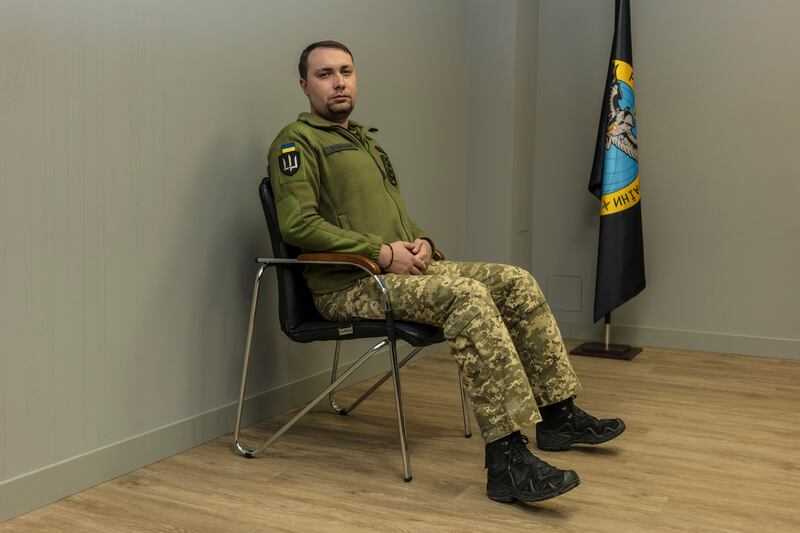
In announcing his appointment, Zelenskiy said that Ukraine “needs greater focus on security issues,” the development of its defence and security forces and further progress on the diplomatic track of negotiations.
“Kyrylo has specialised experience in these areas and sufficient strength to deliver results,” Zelenskiy wrote on social media.
In his own online post, Budanov said his new role was “an honour and a responsibility at a historic time for Ukraine”.
Budanov has a strong relationship with the United States, which could be important in Ukraine’s peace negotiations with the Trump administration. He was trained as part of a CIA-backed program, and after he was injured fighting in eastern Ukraine, he received treatment at Walter Reed National Military Medical Center in Maryland, a rare accommodation for a Ukrainian soldier.
Zelenskiy decided on the appointment of Budanov after a round of negotiations with the Trump administration in Florida last month, according to a Ukrainian official familiar with the situation. Zelenskiy realised that he would need a top aide respected in Washington and European capitals who was able to help guide the process, the official said.
Budanov is expected to push within Ukraine’s military for a larger role for so-called asymmetrical strategies — the tricks, feints and creative use of new technologies that he was known for at the military intelligence agency, rather than head-to-head combat with Russia’s larger military.
Zelenskiy appointed Budanov as his military intelligence chief in 2020. By then, at just 34, he already had a reputation for audacious covert operations that occasionally pushed the boundaries of what was acceptable to Ukraine’s leadership and its Western allies. Under his leadership, the military intelligence service, known as the HUR, has carried out assassination and sabotage missions behind enemy lines, including on Russian territory.

In 2016, he led a team of commandos into the Russian-occupied Crimean Peninsula, where they planned to plant explosives at an airfield. When Russian fighters caught them, Budanov’s unit fought back, killing several Russians, including the son of a general. The Ukrainians had to swim back to Ukrainian-controlled territory, but suffered no losses.
The operation incensed the White House, which feared provoking Russia, and prompted an angry rebuke from Joe Biden, who was then vice president.
Since Russia’s full-scale invasion of Ukraine began in 2022, Budanov has become one of the best-known figures of the war — despite the fact that he has been responsible largely for covert operations.
His stone-faced expression has inspired memes about Ukraine’s steely resolve, and the Kremlin has included Budanov’s name on its list of foreign terrorists.
Budanov has also maintained contacts with the Russian side as part of his mandate to negotiate prisoner exchanges — unique among Ukraine’s senior leadership.
Oleh Ivashchenko, head of the Foreign Intelligence Service of Ukraine, was named as Budanov’s replacement at the HUR.
Budanov’s appointment to the presidential office caps weeks of speculation over who would fill the role left vacant by Yermak. He resigned after law enforcement agencies searched his apartment as part of an investigation into embezzlement at the state nuclear power company. Yermak has not been charged.
Zelenskiy interviewed potential candidates in December but took his time in selecting and naming Budanov. The delay came as the latest peace negotiations raised the prospect of elections — and Zelenskiy’s ultimate choice was seen as a harbinger for postwar politics in Ukraine.
The current draft peace proposal calls for Ukraine to hold elections as soon as possible after the signing of an agreement. Zelenskiy has said he is open to holding an election but that a ceasefire must be in place before any vote can occur. Russia, in demanding that Ukraine hold an election, has refused to agree to a ceasefire.
The Ukrainian president has not said directly whether he would run in a future election. Budanov’s move to the presidential office brings a potentially formidable competitor into Zelenskiy’s inner political circle, turning him into a likely ally in any election.
Recent polling showed that Budanov would beat Zelenskiy in Ukraine’s two-phase presidential election if he entered the second round. The polling showed that Valery Zaluzhny, a former commander in chief of the Ukrainian military who is now Kyiv’s ambassador to Britain, would also be a strong contender.
This article originally appeared in The New York Times.