‘No sir, not a chance.” That may not be your immediate answer when asked if you’ve any interest in watching the Enhanced Games on Sunday night, but trust me, there will be nothing either new or even remotely meaningful to see here.
They might be hard to completely ignore perhaps, but it will be worth the effort. Despite all the prize money and hoopla and the multimillion dollar build off the Las Vegas strip – and of course the free-for-all on anabolic steroids – Sunday’s event has already delivered one gently ironic twist by becoming a slimmed down version of its original self. Not that Peter Thiel will be losing any sleep over that.
Promptly dubbed the Steroid Olympics, or the Pharma Games, it’s three years since Australian billionaire Aron D’Souza first announced his plans to stage a sporting event that would both allow and encourage the use of otherwise banned performance-enhancing drugs. A sort of model for the new “super humanity”, in the process ripping up the World Anti-Doping Agency (Wada) code.
D’Souza initially envisaged five different sports and “maybe a couple of thousand” willing-to-be-doped athletes. The Enhanced Games were also intended to be staged over three days, before all that was watered down to just three sports, and for one night only: the short sprint events, in athletics and swimming, and weightlifting, that being the sport of already least resistance to enhancement.
READ MORE


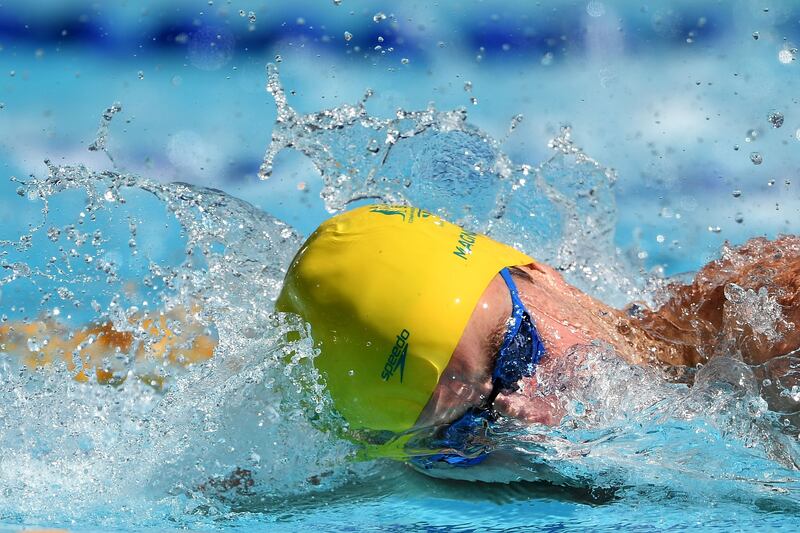
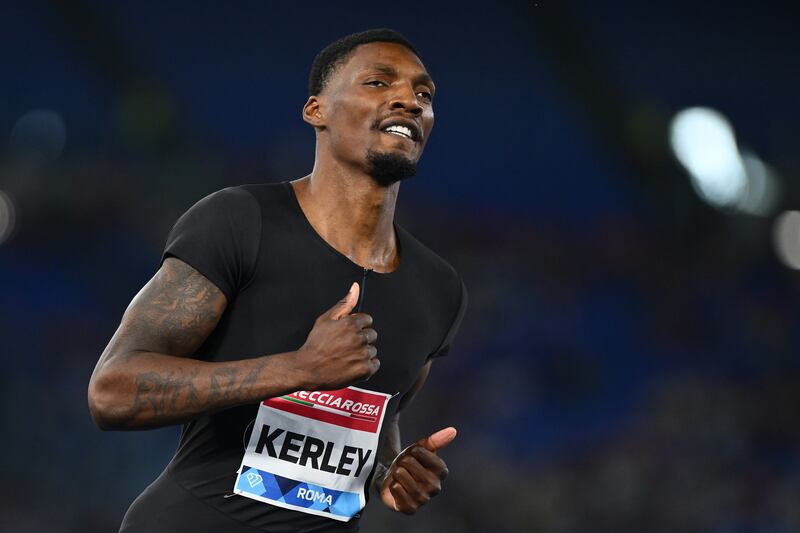
Even at that, and despite the total prize pool of up to $25 million (€21.5 million), they still fell short of their final target of 50 athletes. Of the 42 who eventually did sell-out/sign up – and none of them are denying they’re in it for the money – the only recognisable names perhaps were James Magnussen, Australia’s two-time swimming world champion, who retired seven years ago, and US sprinter Fred Kerley, who in March of this year was banned for two years for anti-doping whereabouts failures. God knows what exactly they’re out to prove on Sunday.
Thiel was also one of the early investors – his personal fortune of around $27.5 billion, at the last count, over four times what it cost to stage the Paris Olympics in 2024. The International Olympic Committee might be blushing if he ever came knocking, but Thiel has little interest in selling sport. One click on the Enhanced Games website will take you to the peptides and testosterone and other so-called longevity products to help break the spell of ageing, and which are the core selling point here.
Earlier this month, Thiel and his co-investors put Enhanced Group Inc on the New York Stock Exchange, so they clearly see a future in their products, probably aspiring to Ozempic levels of global distribution. “Enhanced Group’s sport event will massively enlarge the market, making millions and millions of people aware of the power of enhancements who would otherwise not be,” said German venture capitalist Christian Angermayer, the company co-founder and largest shareholder.
Still, they were also unable to pull in a single sponsor or broadcast partner. Maybe there’s enough risk already in broadcasting events where there might be doping going on, rather than removing all doubt – although if you still really want to stay up on Sunday night (it kicks-off at 2am Irish time), it’s available for free on their YouTube channel. In any reporting sense this is strictly Louis Theroux territory anyway.
By the time Max McCusker became the second Irish swimmer to submit himself to being enhanced in December, joining fellow Olympian Shane Ryan, the rage against the Enhanced Games from Swim Ireland, Sport Ireland and the Olympic Federation of Ireland was loud and clear. World Aquatics also said those taking part were “like clowns juggling knives”, such were the obvious health risks involved, long and short term.
“I really hope it doesn’t take a fatality to bring us to our senses,” Professor Niall Moyna of DCU told this newspaper in October, adding: “Are we actually prepared to sacrifice the life of a human being for entertainment?” In which case it’s probably best not to watch.
Neither McCusker nor Ryan have made any attempt to disguise their motivations, and Sunday will certainly be the biggest payday of their lives. Of the six swimming events, each with only four swimmers, McCusker and Ryan will swim two, with the winner each receiving $250,000. So they could potentially walk away will half a million dollars. Then what? It won’t have done their sporting reputation much good.
There is also the promise of a €1m bonus if anyone can break the world record in the 50m freestyle or the 100m sprint, but that time will count for zilch. Not when the swimmers are not only doping but also wearing nylon shark-suits, long since banned in world swimming. For the record, the first thing World Athletics do whenever any world record is broken is add the “subject to ratification” part – which includes the required anti-doping test.
The Enhanced Games has also published a list of substances its athletes have been using over the last number of months, including testosterone, human growth hormone, stimulants and EPO.
We also know there is a limit on any improvements these substances can bring about. Bigger is not necessarily better, and Magnussen admitted early on in his enhancement regime that “there was a tipping point where everything was improving, and then my swimming speed started to decrease because of the size outside of the pool … I was just too big for a swimmer”.
[ Ian O’Riordan: The Enhanced Games are fast becoming a running jokeOpens in new window ]
Truth is, we don’t need a day trip to Sin City to know exactly what these performance-enhancing substances can do − from the systematic East German doping regimes of the 1960s, to Tommy Simpson dying on his bike and the dozens more cyclists who died in their sleep, to Ben Johnson and the dirtiest race in history in Seoul 38 years ago, to Lance Armstrong and the US Postal Cycling Team.
Whatever about an athlete cheating on themselves, there are enough dark and dangerous lessons already. We know enough about the history of doping in sport, we don’t need to be sold any more – which may be the best reason for not watching any of the Enhanced Games.