
It is difficult to fathom that John McGahern died 20 years ago this month. News of his passing was met with a national outpouring of grief among those who had followed a career that spanned five decades, from the publication of his first novel, The Barracks, in 1963 up to the beautifully evocative Memoir of 2005, a year before his premature death when he was aged in his early 70s.
The writer’s trajectory was not always a smooth one. The Barracks received a very positive reaction, winning the AE Memorial Award as well as the Macauley Fellowship, which allowed McGahern to take a year’s leave of absence from his job as a national schoolteacher at Belgrove in Clontarf, Dublin.
The controversy caused by the subsequent banning of his second novel, The Dark, along with his marriage in a register office to a Finnish divorcee, Annikki Laaksi, in 1965, however, would result in his dismissal by the school manager, Fr PJ Carton, an action that sparked further controversy and led to McGahern going into exile for a few years.
It always struck me as somewhat naive on McGahern’s part to think that a book describing masturbatory acts by an adolescent male character, the abuse inflicted on him by his widowed father and, most controversially of all, the suspicion that his cousin, Fr Gerald, might be grooming him for similar acts of impropriety could have escaped the attention of the Censorship Board.
READ MORE



Indeed, McGahern’s editor at Faber, Charles Monteith, pointed out that the inclusion of the word f**k on the opening page was dangerous enough, but the description of what the father does to his son was “an actual criminal offence”, which would make a banning “almost inevitable”. This proved to be the case.
The close involvement of John Charles McQuaid, then Archbishop of Dublin, in the “McGahern Affair” could have led to the writer’s complete alienation from the Catholic Church, but because of the deep faith of his mother Susan, who died when he was just 10 years old, McGahern remained attached to the rituals of Catholicism.
Indeed, before his death he specifically asked his cousin, Fr Liam Kelly, to say a traditional funeral Mass for him in Aughawillan church, Co Leitrim, before being laid to rest beside his beloved mother in the adjoining cemetery.
[ How John McGahern’s sin was compounded in the minds of ‘careful and hostile’ interrogators ]
Susan’s fervent desire had been for her son to become a priest, but he chose a different type of vocation: a priesthood of the pen. His final novel, That They May Face the Rising Sun, has been described by literary critic Dermot McCarthy as the Mass he never got to say for his mother, an assessment that is borne out by its gentle tone and wistful evocation of place and people.
The success of the recent film version of this novel, directed by Pat Collins, shows the extent to which McGahern was a visual writer, a quality that he regularly emphasised by repeating the mantra that he wrote to “see” and the seeing was through words.
In the 20 years since his death, McGahern’s star has continued to rise as can be seen in the numerous scholarly books published on aspects of his work. In addition, his prose essays were brought together in Love of the World, a collection that was edited by renowned McGahern scholar Stanley van der Ziel.
An annotated collection of his letters was published in 2021 thanks to the indefatigable editorial work of Frank Shovlin, whose authorised biography is to be published by Faber later this year, which will also see the publication of the McGahern Companion, a collection of 17 essays co-edited by Kathleen Costello-Sullivan, Derek Hand, Barry Houlihan and myself.
So why are people still so fascinated with McGahern’s work? A lot is imputable to his carefully sculpted prose, where each word counts, and his wonderful array of relatable characters. He also has the ability to make of one small place an everywhere, which is a rare literary attribute.
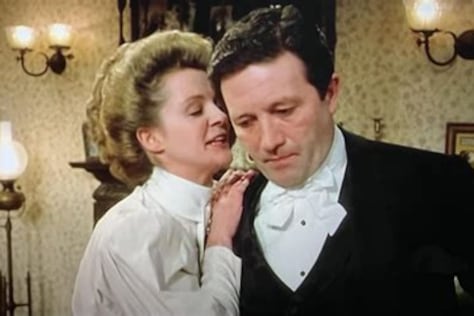
His greatest work in my view is the 1990 novel Amongst Women, which was shortlisted for the Booker Prize and was made into an acclaimed television series with the late Tony Doyle superb in the role of Moran, a disillusioned veteran of the War of Independence who treats his family as though they were part of the IRA flying column he led during the struggle against the English.
Declan Kiberd viewed the work as “one of the major books of the last 50 years in Ireland”, an assessment echoed by Fintan O’Toole, who described it as “completely Irish and highly universal”.
McGahern once remarked how “a book that was written 200 years ago can be as alive today as when it was first published, and last month’s novel can be as dead in a year as a laboratory mouse”. It is fair to say that his own work 20 years after his death is still very much “alive”, continuing as it does to offer key existential insights to a contemporary world struggling for meaning.


