
There are about 6,000 children and teenagers in the care system in Ireland. Some are in foster homes and some in residential care. Epic [Empowering People in Care] is a voluntary organisation that represents them. In their offices in Smithfield, Dublin, I meet four members of Epic’s Youth Council who have spent time in care: clever, funny and caring young adults who want to tell me about their lives. They’re all in a good place, but too many young people who go through the care system experience homelessness and poverty and they want to advocate for them.
Nineteen-year-old Anisa Abuukar is playing with a cuddly puppet to make the others laugh. She came to Ireland from Somalia as an unaccompanied minor when she was 14. “My mam got married when she was 13, an arranged marriage. He brought her into the countryside ... Then he left us. My mam doesn’t want what happened to her happening to me, an arranged marriage.”
The man who escorted her here left her at the airport. She was terrified and didn’t have much English. She experienced both foster homes and residential care. In her first residential placement she didn’t engage with anyone. She was moved to a foster home but it didn’t work out. “I was a child who woke up at 2am and cried. The social workers brought me to a residential house.”
She missed her mother. “When I got my period the first time, I didn’t know how to manage. I was hiding in my bed all day. I said, ‘I want to go to my GP.’ I said to the GP, ‘I want you to stop this blood please.’ Every month I couldn’t manage. They [some staff members] were always angry. ‘You have to change your bedsheets. You’re old enough.’ ... I hated having a period.”
READ MORE


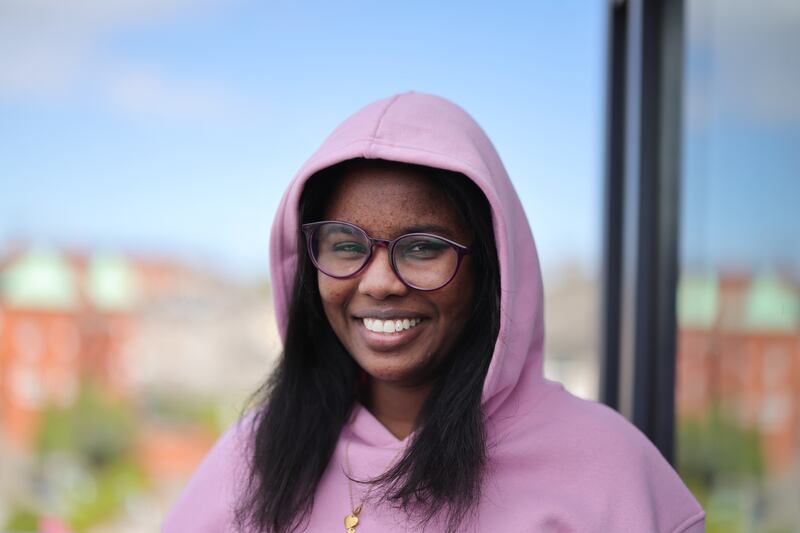
She ended up in a psychiatric hospital for a while. “My weight was so low ... I had a lot of placements. People couldn’t understand me very well ... They’d report it if I got angry. They’d call my social worker if something happened. They’d call me crazy if my mental state wasn’t good and I broke something.” Anisa says they should have been asking: “Why is this young person crying? What do they need? What service do they need?’”
“There is such a crisis-led approach being used,” chips in 23-year-old Andrea Reilly. “They’ll wait till the situation gets really, really bad before they step in to give you the right supports.”
Anisa’s last placement, in Tallaght, was by far her best. The staff there were more experienced, she says, and they were very kind to her and really helped her with her mental health. They brought her to Jigsaw, the youth mental health service, and she ended up getting an autism diagnosis. “I got the help I needed ... It took me three to four years to understand things [here]. I feel like Ireland is my country now ... I want to help people.”
Andrea is from Nenagh, Co Tipperary, and was in foster care from birth. She’s studying youth and community work in University College Cork (UCC) and already talks with the passionate fluidity of an activist. She paces as she talks.
“I was placed into care because my mother had issues with addiction. I have a disability called foetal alcohol spectrum disorder ... Luckily, I was in a placement that had very good awareness of stuff like that, but I think that there was lack of understanding from [some] social workers and professionals ... I’m still very close with my former foster family.”
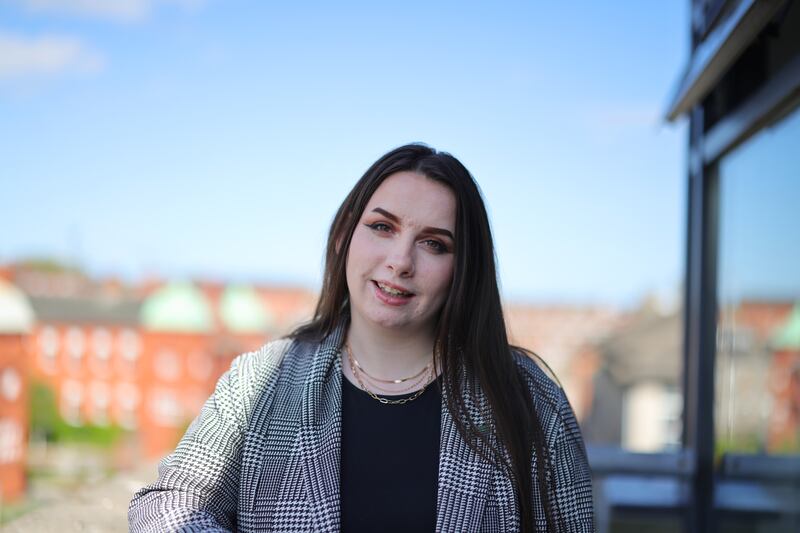
Living in a small town meant everyone knew she was fostered. “I got a lot of stigma. A lot of people think when children are in care, it’s their fault ... I remember a lot of people not being allowed to be friends with me in school.”
“You hide that you’re in care,” says Anisa.
“A lot of people when I tell them I grew up in residential care, they think that it’s like a detention centre and that I did something to deserve to be there,” says 26-year-old Kai Brosnan.
“People can be very narrow-minded,” says 22-year-old Princess Esezobor. “People whose parents do everything for them.”
Princess lives in Galway, where she formerly studied medicinal chemistry at the University of Galway. She is about to start a job as a chemistry quality control analyst.
She’s wearing a black denim jacket festooned with patches of her favourite musicians: The Red Hot Chili Peppers, Tupac, Muse, Chappell Roan, Jimi Hendrix. She plays bass. “I’m learning scales,” she says. “I’m not confident yet.”
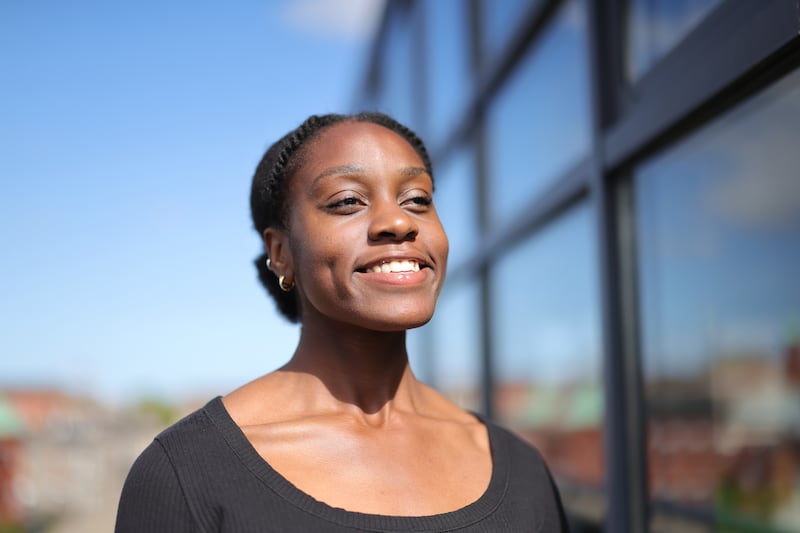
She first went into the care system at the age of 16. She doesn’t want to go into detail about the reasons why – she has a good relationship with her family now – “but I was struggling a bit”.
She ended up in six different placements. Her first foster family were lovely, she says. But other placements were not so successful. Some of the people she was placed with, she says, “weren’t well-informed ... And some of them were not racially informed either ... It was all crazy stuff. They asked, ‘Oh how come we [white people] can’t say the N-word?’”
[ Twenty years, 15 children fostered: ‘Hearing them laugh is a great feeling’Opens in new window ]
Princess says she responded to stress by running with her music blaring. “The band that really got me started with music was Muse.” She smiles. “I remember when I first heard Supermassive Black Hole.”
Cork man Kai has a tattoo of a wolf on one arm and an intricate mandala on the other. On his inside arm are the words “this too shall pass”. He works as a social care worker in a residential unit like the ones in which he spent his teenage years.
“My family wasn’t a healthy place for me to be,” he says. “I was in hospital for a short period of time. My social worker come into the hospital one day and said I was being put into residential care ... I sat in the hospital bed googling ‘residential care’ and all that came up was old folks’ homes. I genuinely thought I was going to the old folks’ home.”
They all say that often professionals in the system don’t explain things properly, forgetting that they’re talking to children and teenagers.
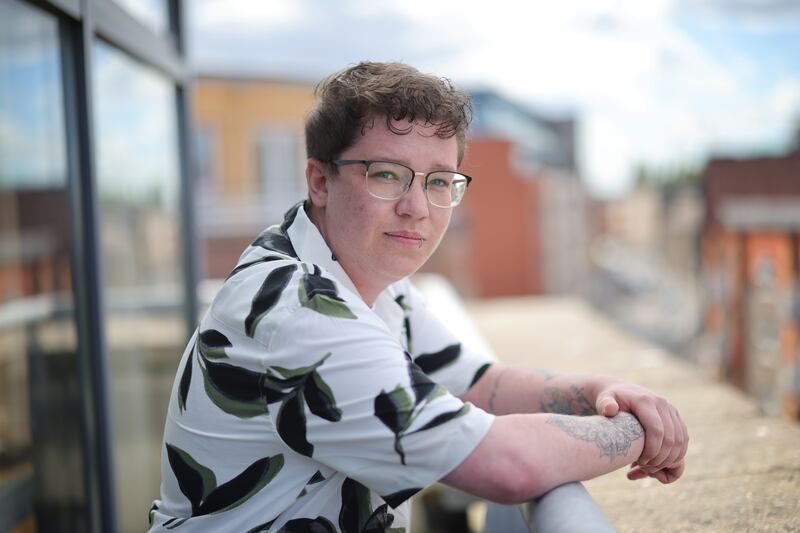
Residential units are strange places to live, says Kai. “Your life becomes very professionalised very early on, because you have all of these meetings. They’re having team meetings in your sittingroom when you want to be watching TV. They tend to forget that it’s your home.”
For some time he felt “unless I was an easy case, people didn’t want to work with me. It forces you to be this happy-go-lucky person when you actually have the weight of the world on your shoulders. You feel you have to make the professionals’ job easier by being easy and happy and not telling them all the difficulties that are going on in your head.”
Andrea can relate: “If [a social worker is] saying, ‘How is everything?’ You just automatically want to say, ‘I’m good.’ Because if you say, ‘Actually, I just want to follow up with you on this or you can help me with this application.’ You can really hear them panic ...
“Everybody that I know that’s grown up in care are very articulate, because a lot of us have had to learn to advocate for ourselves from a very young age, and we’ve had a lot of professionals in our lives from a young age, with a lot of adult language: ‘access visits’, ‘review meetings’, ‘respite’ ... We’re very resilient. If I’m having a bad day, I’m like, ‘Well, I’ve come this far.’”
“I know a lot of people that are care-experienced and a lot of time feel like they have to earn love, because we didn’t have that unconditional love,” says Kai. “It’s something that, at 26, I’m still working on.”
Kai’s final placement was “superb”, he says. “When I got out of my social worker’s car in Dublin, I met with the manager, and she showed me to my room and it was as much me as they could make it. When they read my file, they didn’t just read the challenges that I had, they focused on what was important to me. I am really into horses. They had these horse plushies. They had art stuff. As many things as possible that were important to me. And I remember them saying, ‘Tomorrow, when you wake up, we’ll bring you around the area. And we can also go shopping. If you don’t like the bedclothes we can get new bedclothes.’ They wanted to make it mine from as soon as I stepped in.”
The housing crisis affects everyone, but we don’t have a mam and dad we can go back to
— Kai Brosnan
“We’ve all been let down in different ways, but there’s also some incredible people within the system. They are overworked and the resources aren’t there, but there are absolutely amazing people going above and beyond for the young people they work with.”
All four of them want to highlight the shortcomings in the system – the high turnover of staff, the high caseloads for existing staff and the high number of broken placements some children experience.
They also discuss the anxiety young people feel when they are ageing out of the system. While some aftercare services are available until they are 21 (extended to 23 for those in training or education), the aftercare allowance is only available after 18 for those accessing education. It puts huge pressure on young people who might already be coping with significant trauma. Some young people whose lives are a bit more chaotic do not have the wherewithal to manage life after care. Epic wants aftercare services to be both stronger and more flexible and wants the upper age limit extended to 23 for all care-leavers (not just those in education), with an extension to 26 “on a needs basis”.
“It’s like taking the blocks from underneath the Jenga tower,” says Andrea. “It’s going to fall down. I’ve seen people who are trying to study for their Leaving Cert and they’re in emergency accommodation, not knowing where they’re going to be moved to next.”
“The housing crisis affects everyone, but we don’t have a mam and dad we can go back to,” says Kai. “I was bouncing between places, and then I ended up in homeless services. I only got my own apartment a year-and-a-half ago.”
They want to represent other young people in the care system and those who have left it. Kai and Andrea recently spoke to social studies students in Trinity College Dublin and they’re part of a UCC social care board. They also consult other professionals, says Kai, “talking about what works well and what doesn’t”.
And they want to show that care-leavers can have good lives. Kai and Princess have degrees and Andrea is working towards achieving hers. Anisa is studying at the National Learning Network. They have a level of maturity and self-reliance that is unusual for people their age. Kai was once a school dropout, believing, based on what he had been told in the past, he would “never amount to anything”. “But on my first day on the Epic Youth Council eight years ago, I sat across from someone who was doing her PhD. To the side of me was someone who had a loving partner with a kid on the way. Care-experienced people can be successful.”
All children who come through the care system should be in a position to do well, he says. “I think when the State takes a child into their care, they have a responsibility for that child that doesn’t end when they turn 18. So many young people are let down.”