
Ireland’s housing crisis will not be solved by the Government’s decision to phase out State-funded accommodation for Ukrainians, a high-ranking official in Kyiv has said.
Sergiy Kyslytsya, the first deputy head of president Volodymyr Zelenskiy’s office, was commenting after a plan to terminate more than 500 contracts for hotels and other accommodation housing more than 16,000 Ukrainian refugees from August was confirmed.
The Government plans to offer financial incentives in the hope of persuading Ukrainians to return to their country.
Kyslytsya said the housing crisis in Ireland predated the influx of tens of thousands of Ukrainians displaced by the full-scale Russian invasion in 2022. He said Ukrainians working in Ireland faced the same housing problems as the Irish, even if they are paid a decent salary.
READ MORE


“So it’s not about Ukrainians being idle and not willing to be active contributors to Irish wellbeing and the Irish economy. It’s about the structural problem in Ireland itself.”
The sooner the housing crisis and the war in Ukraine end, “the better for everyone,” Kyslytsya added.
“Even if the majority of Ukrainians leave Ireland, it will not solve problems that existed before the Ukrainians moved to Ireland.”
Kyslytsya, a Ukrainian diplomat who moved to Zelenskiy’s office in January, stressed that treatment of Ukrainians abroad was within the purview of the foreign ministry, not the president’s office.
However, he stressed that displaced Ukrainians played an active and positive role in the societies that host them. Statistics show that wherever governments have integrated Ukrainians in the labour market, the overwhelming majority are employed, pay tax, do not rely on social benefits and contribute to the prosperity of the host country, he said. This was especially true in Poland, which is now home to nearly one million Ukrainians.
[ State-funded Ukrainian hotel accommodation to be wound down over next 12 monthsOpens in new window ]
The conditions offered to Ukrainians who have fled to Ireland since 2022 have been gradually tightened. In March 2024, offers of State-provided accommodation to new arrivals were limited to 90 days. Payments to people who host Ukrainians in their homes or vacant properties are in the process of being wound down. Ireland is also in talks at EU level about a voluntary return programme.
The Ukraine Civil Society Forum, a coalition of 122 Irish organisations supporting those displaced by the war, said removing supports during an ongoing war would add to the trauma and stress Ukrainians here already face.
Brian Killoran, the forum’s national co-ordinator, said “there simply isn’t capacity within the private rental market to absorb over 58,000 beneficiaries of temporary protection” and the only other option for Ukrainian people would be to apply for International Protection “in the hope of being accommodated”.
Irish Refugee Council chief executive Nick Henderson said hotel accommodation “was never intended to be permanent, but it has provided a vital safety net against destitution”.
“The reality is that people are here because the war continues,” he said. “Attacks are ongoing, cities are still being bombed, and civilians – especially children – remain at grave risk.”
The Government’s move split Opposition parties, with some condemning and others welcoming the reforms.
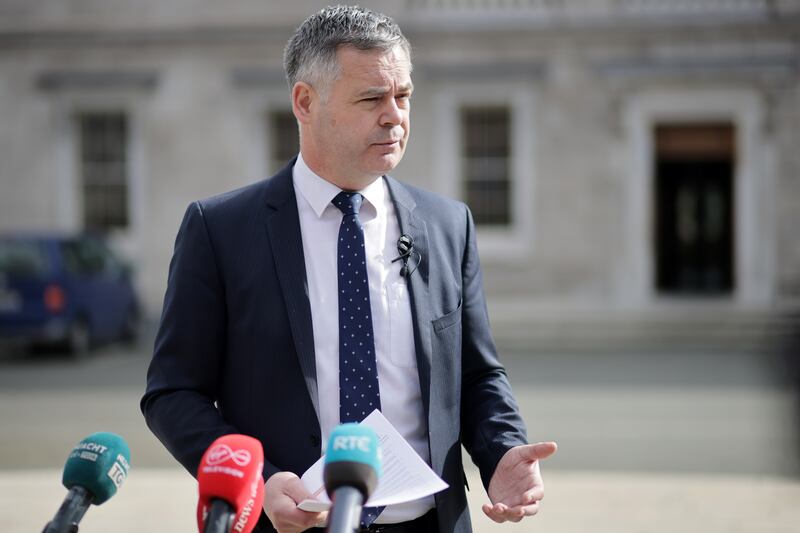
Labour Party finance spokesman Ged Nash said what was being proposed was “unethical” and “frankly immoral”. He said due to the State’s militarily neutral position, supporting refugees was Ireland’s “unique contribution” to assisting Ukraine.
Sinn Féin finance spokesman Pearse Doherty said the tax-free Accommodation Recognition Payment for hosting refugees was “deeply unfair” and had distorted the private rental market.
Aontú leader Peadar Tóibín said he supported the Government’s move, saying the current measures had a “significant impact on the rest of society” and Ireland should not offer supports that were out of line with other jurisdictions.
In response to queries, the Department of Justice said “Ireland intends to continue to support people from Ukraine who are beneficiaries of temporary protection”.
It said proposals have been developed for Government in line with a recent EU Council Recommendation for a co-ordinated approach to transition people out of temporary protection across the EU.
It said “Government will also be considering proposals to phase out State-funded accommodation that has been provided to people from Ukraine since 2022. Any changes that are approved to this accommodation model would be introduced on a phased basis, with information and support provided to residents. The proposals will also consider ongoing supports for people with particular circumstances that would make it difficult for them to manage in independent accommodation.”


