
In many classrooms of the past, challenging a teacher’s viewpoint might have risked landing you in detention, or worse.
However, in Leaving Certificate politics and society classrooms, structured disagreement and critical questioning are central to the learning environment.
Introduced on a phased basis since September 2016, the subject began in 41 trial secondary schools. Now entering its 10th year, participation has grown significantly – from 867 students sitting the politics and society exam in 2018, to more than 3,000 in 2025.
Assessment combines a written paper with a citizenship project report worth 20 per cent of marks, in which students research a social or political issue, often gathering their own data through surveys or interviews. They are encouraged to take action on their issue, such as delivering an event in their school or creating an exhibition to share their findings.
READ MORE


According to the subject’s specification, it aims to “develop the learner’s capacity to engage in reflective and active citizenship, informed by the insights and skills of social and political sciences”.
“We call it politics, but actually, sociology has a huge space in it,” says Catherine McGing, teacher of the subject at Laurel Hill secondary school in Limerick. “There’s also human rights law, there’s development studies, postcolonial development, global inequality. There’s climate action and sustainable development. There’s media studies, there’s political philosophy.”
The structure and breadth of the course have created an ongoing balancing act between open discussion and preparation for the final written exam, McGing notes. She recalls a student questioning how exploratory learning fits within the CAO points system.
“It’s all well and good to have all this great thinking, but at the end of the day, we still have to sit the exam, and they’ve kind of put the cart before the horse,” she says. “This idea of just thinking it out and unpacking things is all well and good, but at the end you have to write a paper.”
Teaching a brand new subject to students in a pilot school was an “extraordinarily stressful endeavour” for teachers, says McGing. “We really needed each other, and we really leant on each other, and it built this really nice community of teachers.”
[ Inside the only girls’ boarding school taught entirely through IrishOpens in new window ]
Jerome Devitt, a teacher of the subject at King’s Hospital and the Institute of Education in Dublin, similarly describes the pilot period as teachers “taking turns rowing the lifeboat”.
He set up the Pol-Soc Podcast, which breaks down various sections of the course for students, and also has a website which provides resources for teachers and students.
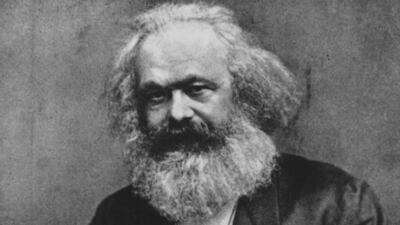
Students also study and critically analyse the ideas of a number of ‘key thinkers’, ranging from philosophers such as Thomas Hobbes and Karl Marx, to more modern figures such as Irish sociologist Kathleen Lynch.

In a consultation paper circulated last year by the National Council for Curriculum and Assessment (NCCA), it was noted that “for many students, the key thinkers are the best part of the Politics and Society specification”.
While the subject has attracted some criticism for being “left leaning”, particularly in the selection of key thinkers for study, Devitt rejects this idea. “It’s utter nonsense,” he says. “A lot of the course, the institutions you cover, like the World Bank, they’re very much neoliberal and centre-right in the world anyway.”
He adds that such criticisms are “kind of insulting to the teachers, to suggest that, because you’re studying Karl Marx, that you’re trying to make everybody into little Marxists. Anybody who’s trying to get a teenager to believe anything or to do anything that they want them to do will tell you how blatantly untrue that is actually going to be.”
Pablo Schofield Legorburo, who has been teaching the subject for four years and recently took over as the chairperson of the Politics and Society Teachers Association of Ireland, says the organisation has suggested that “another look” be taken at the list of key thinkers on the course.
According to October’s NCCA consultation paper for the subject, focus group feedback noted: “The issues arising from the number and breadth of key thinkers needs to be carefully considered, especially with regards to potential risks associated with including theories that may be at odds with a human rights approach.”
The study of key thinker Noam Chomsky is expected to prompt discussions in classrooms, following revelations that he maintained a close friendship with sex trafficker Jeffrey Epstein.
Schofield Legorburo says he would most likely “precede the teaching of [Chomsky’s] ideas with maybe an explanation of him as a person and what’s problematic about him” until a decision is made about his place on the course.
Given the subject matter of the politics and society course can be sensitive, teachers are conscious that students may be encountering some of these issues in their own lives. “There’s very emotive topics like gender violence, toxic masculinity and suicide rates amongst young men or amongst the travelling community,” says Devitt.
He notes that teachers have to “work out a way of teaching the topic in a way that’s sensitive to the students and their experiences, but also is realistic and accurate and data based, and data driven”.
I’m a big advocate for lowering the voting age, because these kids ... they have incredible insight, and we’re kind of missing part of the puzzle if we’re ignoring them
— Catherine McGing
For McGing, the fact that students are having their experiences reflected in the classroom is part of what makes the subject “so terrific”. She refers to one of the subject’s key thinkers, Paulo Freire, who is “all about a dialogical approach to teaching, and the conversation we have with the students”.
She emphasises the importance of “the humility of the teacher to understand that I have loads to learn about the world, that I don’t know about [the students’] world.”
Part of learning about students’ experiences involves being “a little bit aware of what they are consuming online and on social media”, says Devitt. “When you hear certain little trigger words here and there, you kind of go, ‘Okay, I know that guy just watched a Jordan Peterson video ...’ and you can kind of meet them where they are.”
One rule he has for his classroom is to “never get into an argument with somebody unless you feel that you, and they, are prepared to change their mind”.
“It’s not just that we should, but we have to listen to other points of view. We have to balance out, even if we don’t agree with them,” says Devitt. “Fifteen per cent of the marks on [students’] essays are for alternative and comparative perspectives.”
[ Teachers must receive substantial pay rise, ‘no ifs or buts’, says ASTIOpens in new window ]
From discussions in the classroom and correcting her students’ essays, McGing says she has “hope in the future with young people. I’m a big advocate for lowering the voting age, because these kids, if we give them the correct information and we allow them the time to think about the world that they live in, they have incredible insight, and we’re kind of missing part of the puzzle if we’re ignoring them.”
She has seen her students go on “to do all kinds of interesting things in the space of social justice” after secondary school. “Maybe [politics and society] is a place where they meet social justice for the first time, and they meet the idea that society is unfair, but we could make it fairer.”
Schofield Legorburo says he wishes the subject had been available to take when he was in secondary school, “because that opportunity to be an active participant in discussion and to start developing your citizenship, I think it’s been so lacking in Ireland, and I think it’s been detrimental to democracy”.
Try your hand at some of these politics and society short questions from last year’s higher-level paper:
- Describe two ways language diversity is protected within the European Union.
- Briefly describe why press freedom should be a key feature of any democratic society.
- Describe two functions of the President of Ireland.


