

The Irish public has become more pessimistic about the future of the EU, the world, our country and even ourselves over the last six months.
With the Ode to Joy ringing out in Dublin this week as Ireland assumed the presidency of the Council of the European Union, the timing of these Eurobarometer survey findings doesn’t seem ideal given international affairs will dominate the domestic agenda for the rest of the year.
The number of Irish respondents feeling pessimistic about the world’s prospects rose by 10 points to 47 per cent, while 22 per cent reported feeling downbeat about the EU, a four‑point increase. Concern about Ireland’s own prospects climbed to 21 per cent, up five points, and 14 per cent said they were pessimistic about their personal situation or that of their family, up four points.
However, the 1,010 Irish respondents were, on average, far less downcast about all four topics than others in the bloc.
READ MORE


Asked what feelings best described their emotional state, to which respondents could give up to four answers, 41 per cent of Irish people chose “uncertainty” (3 points below the EU average), 46 per cent chose “hope” (3 points above) and 36 per cent chose “happiness” (14 points above).
For some reason the Irish respondents were lacking in “serenity”, which was cited by 11 per cent (versus an EU average of 27 per cent), but the proportion feeling “helplessness” (11 per cent), “anger” (10 per cent) and “anxiety” (17 per cent) were all below the EU average.

Chauffeur firm secures €5.6m wedge to deliver great and good
There are many reasons for optimism for Optimum Chauffeur Drive, which has been awarded the privilege of ferrying around the great and good during Ireland’s presidency of the Council of the European Union, and a tidy wedge for doing so.
The Clonsilla-based firm came through Department of Foreign Affairs tender competitions to provide ground transportation management services (a contract valued at €4.45 million), and specialist armoured vehicles for delegations attending high-level meetings (valued at €1.2 million).
A tender, valued at €781,835, for the hire of the “core” fleet of 40 executive cars (for example, “Audi A6, BMW 5 Series, Mercedes-Benz E-Class”) and 44 executive minivans to meet “motorcade requirements” went to Enterprise Rent-A-Car.
Optimum is tasked with providing experienced, security-cleared drivers to operate the fleet, which should be no bother, given its website hails its “punctual, professional, personable, discreet” chauffeurs.
The department expects each vehicle to have “a spotlessly clean exterior” and an interior “with no visible” stains, dirt or litter. There must be “one fresh 500ml serving of cartoned or canned still water per passenger” for each direction of travel, with additional servings for longer journeys. “Priority should be given to the use of high-quality locally produced products ...”
The second contract Optimum secured is for a fleet of 12 high-quality armoured cars that meet “appropriate security specifications” for use in motorcades in November, when a number of summits and ministerial-level meetings take place.
The cars, to be driven by gardaí, must be manufactured after March 15th, 2021 and be “mechanically and technically faultless”, with black the preferred colour option “to optimise consistency” across the presidency fleet.
Contract worth up to €5m on offer to run Oireachtas creche
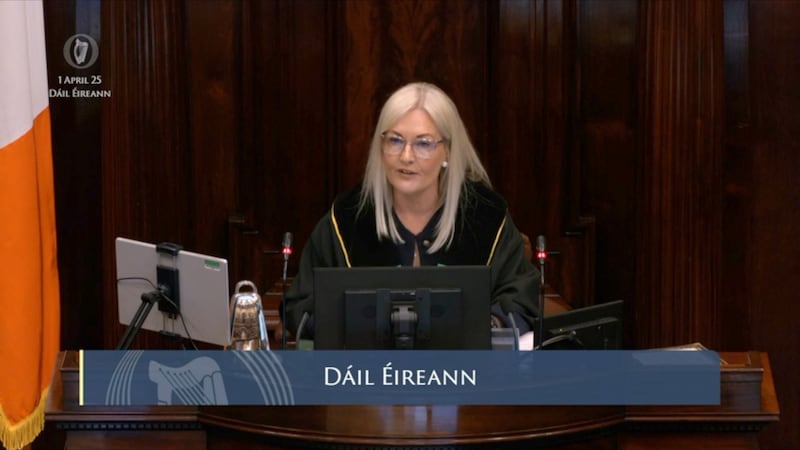
Temper tantrums, squabbles and refusals to play nice are not uncommon in the Oireachtas. And that’s before the budget negotiations begin. Ceann Comhairle Verona Murphy has bridled during rowdy Dáil proceedings about the House being like “a playground” and even pleaded with Taoiseach Micheál Martin to “stop behaving like a child”.
If the job of marshalling 173 other TDs seems like a lot, Murphy has another option coming soon. An operator for the Oireachtas creche on Kildare Street is being sought on a contract worth up to €5 million over a maximum of 10-years.
The creche has capacity for 29 children – six in the baby room, 11 in the toddler room and 12 in the Montessori room, according to a pre-tender document, with tenderers expected to outline how they would maximise capacity and “minimise staffing costs by optimum allocation of resources”.
There is a waiting list for spaces, which are offered on a priority basis with the kids of TDs and Senators topping the “order of preference”. It’s also open to the children of Oireachtas staff, party-political staff, members of the press gallery, and employees of departments and State agencies.
The opening hours are 8.15am to 6.15pm, with an option for cover up to 10.15pm on Tuesdays and Wednesdays (subject to availability) when the Oireachtas sits late. While many believe TDs and Senators get too many holidays, the same does not apply to the creche, which “in view of the needs of working parents ... must be open all year apart from specific holiday closures” at Christmas and Easter.
Asked about the creche fees charged, a Houses of the Oireachtas spokeswoman said this was “confidential, competitive information”. One former user said the cost was in line with other crèches when their child attended a few years back. “I thought it was great and the staff were brilliant.”
MEP argues on ‘importance of wool’ for fleeced farmers
Irish farmers have for years felt they are getting fleeced when it comes to the price paid for wool sheared from their sheep. While IFA national sheep chairman Adrian Gallagher says there has been a “bit of life” in wool sales in Wales and England lately, with prices of up to €1 a kilogramme paid, farmers have long made a loss due to shearing costs eclipsing what merchants pay.
Irish farms yield about seven million kilogrammes of wool annually, but the material has fallen down the pecking order in a world of fast fashion and synthetic fibres. Where farmers can find a buyer, it is mostly exported to the UK for washing and then either sold on for use in carpets or returned to Ireland for use in pillows, insulation and other products.
Worse again, the European Commission classifies wool as waste, grouping it with carcasses and blood for disease‑control purposes. Fine Gael MEP Maria Walsh says this outdated classification forces farmers to store, clean or dispose of wool rather than using it productively on their farms. She argues that wool is “a natural, biodegradable material” with real value as its high nitrogen content and slow decomposition make it an excellent fertiliser. Yet farmers cannot apply it directly to land without costly processing.
A farmer, Walsh has been pushing for change and has had a debate on “the importance of wool” added to next week’s European Parliament agenda. The commission recently committed to reviewing the classification in its Fertiliser Action Plan, she says, with the debate offering a chance to keep the pressure on.
“If we are serious about supporting rural communities and building a more sustainable bioeconomy, we must start by changing how we value materials like wool.”