
Saturday started off “like any normal weekend” in Dubai for Jasmine O’Brien, with the Dublin native and her family going for a bike ride in the morning.
After returning home, O’Brien said she saw the news on BBC about the first strike in Abu Dhabi.
“Around an hour later, I heard the first interception overhead.”
The sounds were the result of Iranian strikes on the United Arab Emirates (UAE), carried out in response to a US-Israeli operation that killed Iran’s supreme leader, Ayatollah Ali Khamenei.
READ MORE


“It has been an unsettling few days,” said O’Brien, who moved to Dubai in 2016 with Vivek Narasimhan.
The couple have since married and have daughters aged two and five.
“As parents, your first instinct in a situation like this is to think about your children. At the same time, we do feel safe.
“It’s hard to explain unless you’ve lived here and experienced life in the UAE, but there is a genuine sense of trust in the leadership and their capabilities.
“Even in moments that feel heavier, we feel reassured that everything possible is being done to protect residents,” said O’Brien.
She said they have received alerts advising them to remain indoors and stay away from windows when necessary, guidance the family are following.
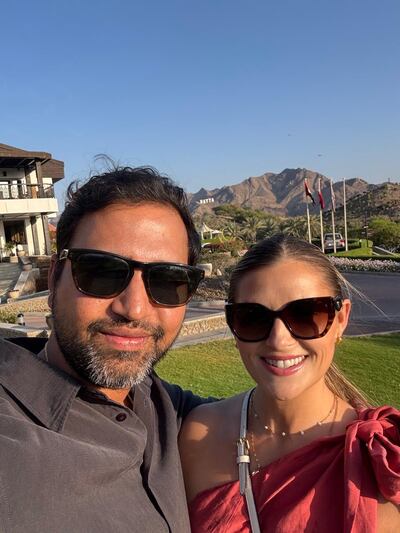
“For now, we’re focused on keeping things as calm and normal as possible for our children, even though schools are closed.
“In some ways, it feels reminiscent of the early days of Covid – a sense of disruption, but also resilience.
“This is home for us. While it’s an uncertain time, we feel protected and have full faith in the country’s ability to manage the situation,” she added.
Among the Irish people stranded in Dubai is Róisín Smith, a Co Sligo woman who lives in Sydney and works for the St Vincent de Paul charity. She has been travelling between Ireland and Australia for 40 years and considers the long journey to be akin to “getting on a bus”.
She took a flight from Sydney to Dubai with the aim of taking a connecting flight to Dublin ahead of her father Paddy’s 94th birthday on Tuesday. It was only an hour before landing in Dubai on Saturday afternoon that she learned from fellow passengers of the US-Israeli attack on Iran.
Exhausted after the first leg of the her journey, Smith joined the queue to board the Dublin flight but never got on the plane and eventually saw airport signs saying all Dubai flights had been suspended.

Soon after, Smith found herself in a three-hour queue with other passengers for buses to hotels provided by her airline.
“Emirates bought 6,000 hotel rooms across the city that night,” Smith said, citing local information.
Smith has been in a 700-room, four-star hotel since Saturday, enjoying good food, a large room and a warm welcome from staff. While she has seen nothing of the escalating conflict on the ground in Dubai, she said she can still hear it rumbling overheard in the night-time skies.
“You can hear the interaction of the defence system shield with missiles at night,” she said. “I haven’t seen any smoke or fire but you can certainly hear it.”
Henry Browne, from Co Derry, arrived in Dubai on Friday evening for a short visit before he was due to travel on to India on Monday. He first learned something “serious” had happened from a notification he received from the New York Times on his phone.
“At that stage it felt distant, geopolitical, abstract – the kind of news you read and then continue your day,” he said.
As the day went on, he heard “sharp bangs”, which he initially assumed to be fireworks. Later in the evening, he heard more loud bangs and saw flashes in the sky.
Shortly before midnight, Browne received an official alert with instructions saying to go indoors and stay away from windows. Seeing as his hotel room had a large bay window, he opted to sleep in the bathroom.
His flight to India was cancelled and he has been able to extend his stay in Dubai for €60 a night.
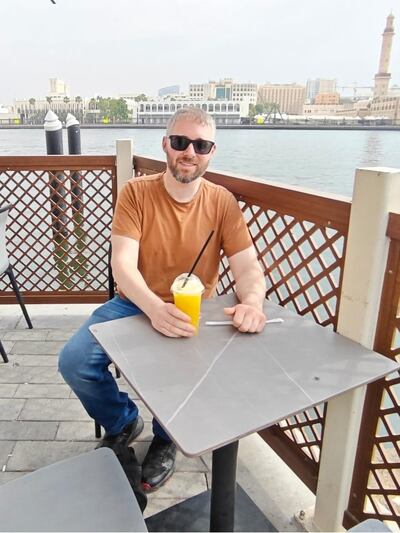
“There is also a widespread sense of confidence in the UAE’s air defence systems,” he said.
“We are grateful for the military’s protection and the communication from the government. The UAE authorities have handled the crisis with incredible competence. For now, we trust that those systems will continue to protect the city.”
Donal Campbell, a lawyer originally from Co Monaghan, has been living in Dubai for more than six months.
On Saturday evening, he was at a friend’s birthday party when an emergency alert appeared on his phone.
“We were told to stay away from windows, close curtains, and don’t stay on a top floor,” he said. “That was kind of scary ... We could just hear activity in the sky.
“My primary source of advice is to follow the official panels here and I also registered with the Department of Foreign Affairs.”
Campbell said he is working from home, feels safe and has followed guidelines from local authorities.
“The government is also very quick to respond. We’ve been receiving updates very quickly.”
![Donal Campbell, originally from Co Monaghan: 'The [UAE] government is very quick to respond. We’ve been receiving updates very quickly'](https://www.irishtimes.com/resizer/v2/2PDR5A6EN5EPTJCTSZYHB3WDLE.jpg?auth=0b047f7ed54e4ee8f2a6a25d2da4bf514cbfed134d0b1a67e3362f5b1b2fab1f&width=400&height=266)
A spokeswoman for the Department of Foreign Affairs said it is closely monitoring the security situation in the Middle East and Gulf region and is providing consular assistance to affected Irish citizens.
People in affected areas are advised to shelter in place, avoid unnecessary movement and follow advice from local authorities.
“We understand that a limited number of flights are scheduled to depart Abu Dhabi Zayed International Airport this afternoon,” she said. “These flights will focus on those stranded in transit, and airlines are in contact with those eligible to travel.”
“Irish citizens in the region are strongly advised to register with the department via our Citizens Registration facility, available on www.citizenregistration.dfa.ie, if they have not already done so.”
[ What is the situation for Irish tourists in Dubai and other parts of the Gulf?Opens in new window ]


