
It won’t be completed until late 2027, but around Carlingford Lough, residents and businesses are already poised to take advantage of the Narrow Water Bridge.
“You can already see a difference just knowing the bridge is coming,” says Cormac King, owner of Cornamucklagh House pub near Omeath, Co Louth.
“Two new hospitality businesses have opened recently – and we ourselves have reopened. It breathes a wee bit of life back into Omeath.”
The Narrow Water Bridge has been mentioned in numerous Government manifestos down through the decades, but it was only in May 2024, that a shovel went into the ground at the historic site.
READ MORE


It will link Warrenpoint in south Down with Omeath in north Louth, at the point of the infamous IRA ambush in 1979.
Eighteen British soldiers were killed at Narrow Water by a pair of roadside bombs on the northern side. A tourist was killed on the southern side when soldiers fired across at him.
The symbolism of a bridge spanning this strip of water has long been invoked by people on both sides of the Border who yearn for closer connectivity.
In addition to drawing a line under a dark period in history, the bridge will change the ability to travel, socialise and do business in the area.
“It will really open up this side,” says King, who has been operating Cornamucklagh House since the summer of 2024. “Omeath and Carlingford to Rostrevor and Warrenpoint – such a scope of places.
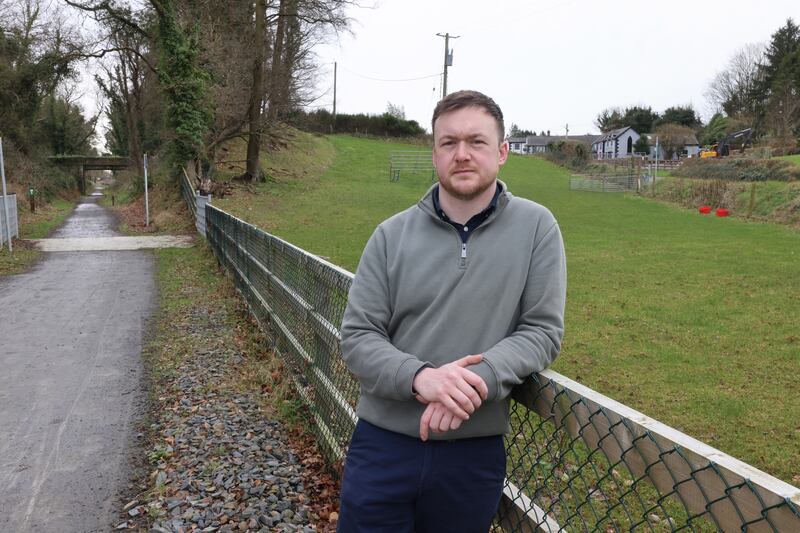
“We have Slieve Gullion in south Armagh, the Mournes at our doorstep and the Cooley Peninsula as well.”
He is planning to open six lodges near the pub site before Easter and the bridge will be a key part of the offering. The pub closed during Covid and did not open for over four years, says King.
The news that a bridge was coming to the area formed part of the decision to reopen and invest in the new accommodation.
“We want people to stay here with us and then go across the water to the Blues on the Bay Festival in Warrenpoint. That would be unheard of in the past. At this point, realistically, it is an extra 30-minute drive through Newry to get there”.
A short distance out the shore road from Warrenpoint on the other side of the Lough, Kevin Cole runs Fearon’s Bar in Rostrevor. Fearon’s is also known to locals as Kavanagh’s after its late proprietor, Henry Kavanagh.
Cole has worked behind the bar there for over 30 years. He says the changes seen in the area over recent years would have been unimaginable in the 1980s and ‘90s, when the town had little more than “two B&Bs in a five-mile radius”. Now, he points out, the Mourne region attracts around half a million visitors a year.

“This new addition brings a sense of hope to the local economy,” he says. “It’s an asset to everyone.”
He cites the presence in Rostrevor of “one of the best downhill mountain bike tracks in Europe”, as well as the new greenway bicycle track that links Newry with Carlingford.
“So a major shift has occurred and the bridge, in a way, is a symbol to the people who locally are strong of character and proud of our lough.”
He is worried, however, that the ongoing issues around the processing of waste at Warrenpoint Harbour still threatens to take the shine off the area’s appeal. Local residents remain locked in a long-running battle with Warrenpoint Harbour Authority over the storage there of odorous waste.
The funding for the bridge came out of the Government’s Shared Island Fund and it is billed as a “symbol of peace and co-operation in the region”.
But long before millions of euros were committed to the project, the two sides of Carlingford Lough used to enjoy a much closer relationship.
People who are old enough remember the Narrow Water ferry that used to operate at weekends between Omeath and Warrenpoint – a journey of mere minutes. With pubs and hospitality once closed on Sundays in the North, families and groups of friends would make the short hop across to Omeath in the Republic.
While a new car-ferry service opened at nearby Greenore in 2017, linking with Greencastle in Co Down, it sits at the mouth of the lough as more of a tourist attraction than a transformative piece of infrastructure.
Community groups have been eyeing the possibilities the bridge may hold.
Life and Time is a community-based, end-of-life care service that operates in south Down. It provides specialist on-call nursing services and has 65 nurses available to attend to people who are dying at home.
“The bridge raises the possibility of including another rural community which is deprived because of its distance from the centre,” says Henry McLaughlin, medical officer of Life and Time.
A former GP, McLaughlin founded the charity in 2018. He says Life and Time was established because late-night end-of-life services were based out of Craigavon, Co Armagh. This led to long waiting times for people in urgent need of symptom control.
He believes people on the Cooley Peninsula are similarly isolated from their services based out of Dundalk.
“With the Shared Island initiative, there is a possibility we could extend our service in some way. Omeath would only be five minutes from Warrenpoint once the bridge is completed. Without the bridge, it is currently quicker to come from Dundalk – and that is quite a distance away,” he says.
“The bridge is a catalyst for exploring options and sharing the service with the community in Omeath and along that peninsula.”
He acknowledges the existence of significant regulatory and legislative hurdles which may need to be addressed, but the new piece of infrastructure has now made the conversation possible.
Caoimhe Fearon runs the Baile Beag coastal retirement community in Omeath. Later this year, construction will begin there for a care home. The bridge, she says, will make the task of recruiting easier.
“In terms of getting a workforce for that, it will make some difference,” she says.
“Trying to get staff is one of the biggest issues you face. With the bridge finished, it opens up the whole south Down area for employment.
“Construction starts this year and realistically will take 18 to 24 months, by which stage the bridge should be well up and running.”

Newry estate agent Garry Best believes, in the short term, the bridge will be about enhancing the tourism offering in the region – as opposed to radically shaking up the property sector.
“Until the relief road on to the A1 at Cloughoge is finished – improving the roads system from Omeath to the motorway – it’s not going to be dramatic,” says Best.
He added that local people will likely avail of the new bridge and the existing Flagstaff Road over the mountain in order to avoid Newry traffic on their way to Dundalk.
“But I would have thought in its current state, it wouldn’t be taking a lot of heavy traffic,” says Best. “The Flagstaff route is a road where two cars can manage all right. Anything larger would be tricky enough.”
He does anticipate, however, that the bridge’s opening could bring more homebuyers across the border to Warrenpoint and Rostrevor – putting more upward pressure on house prices there.
“Over a five- or 10-year period it will open up a route that maybe others haven’t travelled much before,” he says. “People could get to like it and decide to set up a family there. I think it will have an impact locally.”


