
Niamh Highfield was out for a walk with a friend in 2020 when they stopped at a set of monkey bars. She fell while using the climbing frame and sustained a broken neck.
The then 22-year-old had spinal surgery at the Mater Misericordiae University Hospital in Dublin but ended up paralysed.
Six years on, Highfield, from Dunshaughlin, Co Meath, is among 12 people in Ireland with spinal cord injuries who have gained significant hand and arm function improvements, and regained independence, through pioneering surgeries carried out at the Mater.
The first was a nerve transfer on her left hand, and then she had a tendon transfer on her right.
READ MORE


Highfield described the recovery process as “awful”, saying nerve pain “would shoot down” her arms “constantly” at the time, but says the operations have “really changed” her everyday life.

She is again able to brush her hair, apply make-up, clean, take the dog for a walk, cook, play with her nieces and nephews, write, and create and sell her own art.
“You don’t realise how much independence you’ve lost until you gain it back,” she says. “It’s just being independent again and having a life outside of someone doing everything for me.”
Each year, around 20 to 25 people in Ireland sustain a high spinal cord injury.
Brian Millar, originally from Co Clare but living in Mullagh, Co Galway, suffered his in a fall from a tree in August 2022.
While he was in hospital, Gráinne Colgan, a consultant hand surgeon at the Mater, made him aware of his surgery options, but he was not thinking about it at the time and thought he would be “fine”.
Millar (37) said that once he got his head around what had happened, he knew he needed to get function in his hands to be more independent and has since had two surgeries.
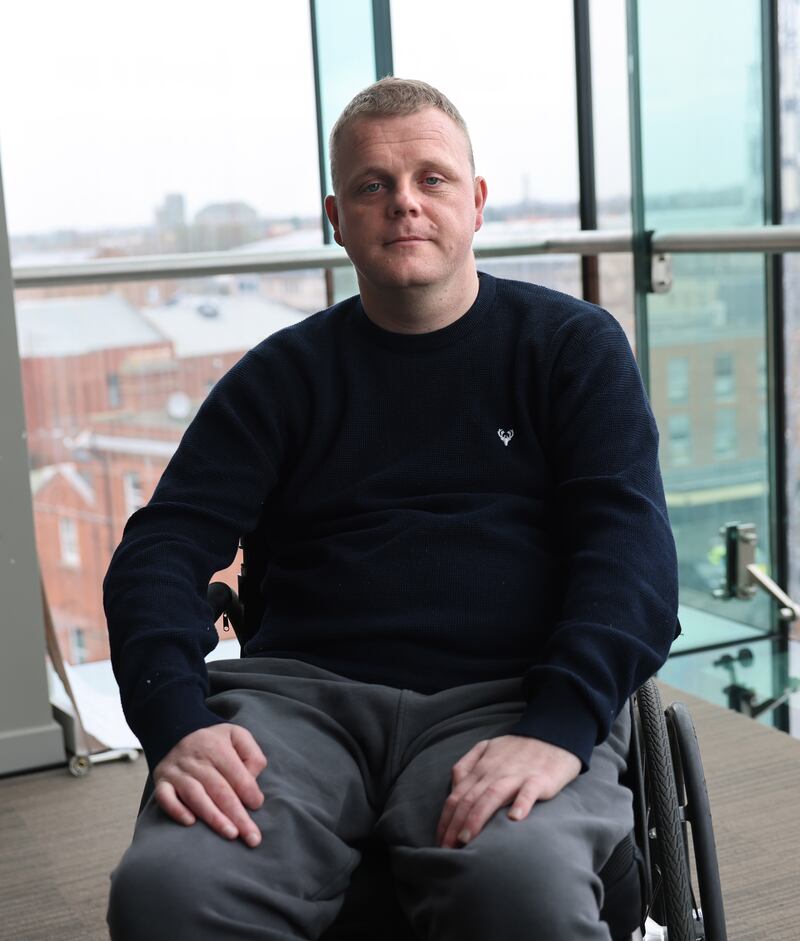
He said it was more than a year into his recovery before he saw any improvement.
“You’d nearly be thinking is this going to work at all but you just have to keep up with the physio and eventually it starts to work,” he said. “It’s just everyday, simple little things that you just take for granted, it’s nice to be able to do for yourself.”
He gave examples of being able to pick up a cup, moving from splint feeding to feeding himself with a fork, and putting his phone on charge. The father of three said he used to have to ask his children and partner Maria to do things for him.
“It’s nice not having to be asking [them] all the time,” he said.
The Mater is the only centre in Ireland, and one of a few globally, that combines a purpose-built spinal injury unit with on-site access to reconstruction surgery. The programme has been possible as a result of collaboration between the Mater’s surgical and rehabilitation teams, linking Colgan with consultant plastic surgeon Kevin Cronin and Eimear Smith, consultant in rehabilitation medicine at the National Rehabilitation Hospital.

Colgan said a traumatic spinal cord injury is “so devastating” for a young person.
“The fact that we do have something to offer, that really, really can be life changing, is something we just feel really strongly that we want to see available to those people,” she added. “When you have nothing, a little becomes a lot.”


