
An all-island study on attitudes towards the Irish language has recorded strong support for the language with a majority of participants in both jurisdictions saying Irish-medium education should be provided wherever there is demand.
The Irish Language Attitudes Survey 2025, conducted by Trinity College Dublin and Ipsos B&A in 2025, is the sixth instalment in the longest running survey on attitudes regarding the Irish language on the island of Ireland.
The survey recorded increased positivity towards Irish since the last survey was conducted in 2013. In the Republic, 78 per cent of respondents said they were in favour of Irish overall, higher than was reported in the previous 2013 survey (67 per cent).
In Northern Ireland, where 45 per cent reported being in favour of Irish overall in 2013, 55 per cent reported a favourable attitude in the latest 2025 survey.
READ MORE


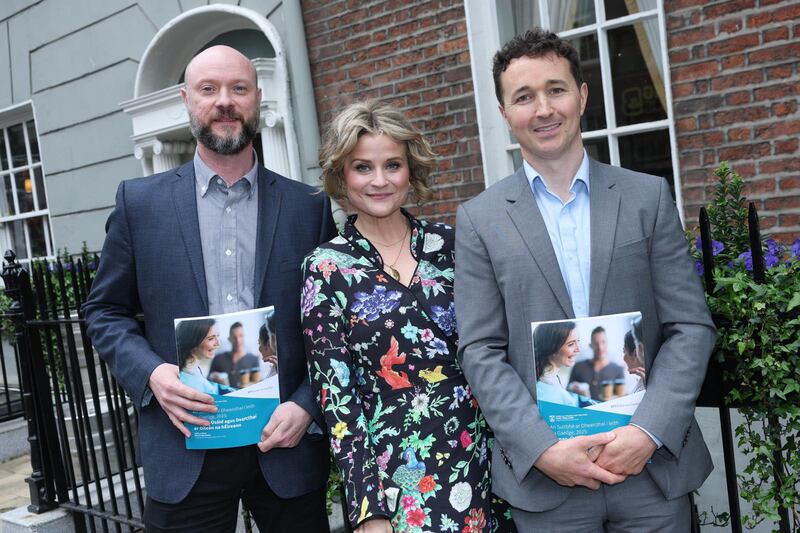
Commissioned by Foras na Gaeilge, with funding from the Department of the Gaeltacht, it was launched in Dublin on Tuesday by Minister for the Gaeltacht Dara Calleary.
Despite the gap between favourable attitudes towards Irish and levels of ability in the language, more people reported speaking Irish on a regular basis than last recorded in 2013 with 16 per cent in the Republic (plus 3 per cent) and eight per cent in the North (plus 6 per cent) saying they speak Irish daily or weekly.
Almost half (49 per cent) of adults in the south reported at least basic fluency in speaking the language, while one in ten (10 per cent) indicated advanced fluency in Irish.
Seven per cent of adults rated their ability to speak Irish as extending to “most conversations” while 3 per cent reported that they have the ability of a native speaker.
However, half of respondents in the Republic said they have only ‘the odd word’ (26 per cent) of the language or cannot speak Irish at all (24 per cent).
Overall in Northern Ireland, where fluency in Irish was strongly concentrated among those who describe themselves as Irish, 17 per cent reported having basic fluency in Irish with 1 per cent reported native speaker ability.
Eighty-one per cent of adults in Northern Ireland indicated they have no fluency in Irish, either being able to speak no Irish at all (59 per cent) or only speaking the odd word (22 per cent).
The 18-24 age cohort had the highest cohort among daily speakers in both jurisdictions, with Northern Ireland reporting more daily speakers at 14 per cent against 11 per cent in the Republic.
Strong support for Irish-medium education and for the teaching of Irish was reported in both jurisdictions.
Eighty-seven per cent of respondents in the south and 57 per cent of respondents in the North supported the teaching of Irish as a subject at primary and post-primary level.
Support for Irish-medium education also received significant support across both jurisdictions with 44 per cent of parents in the South indicating a willingness to send their children to an all-Irish primary school if one were located near their home, while slightly fewer, 40 per cent, would send their children to a post-primary level school.
In the North, more than one in four parents (26 per cent) would send their children to an all-Irish primary or post-primary school if one were located near their home.
Strong majorities (66 per cent) in both jurisdictions disagreed that Irish is a dead language and only a small minority (1 per cent in the South and 2 per cent in the North) agreed that Irish should be discarded and forgotten.
There was an association between exposure to Irish at school and current use of the language. In the south, of those who learned Irish as a subject only in primary school, 9 per cent currently speak Irish daily, 8 per cent weekly, 31 per cent less often, and 52 per cent never speak the language.
Of those who attended Irish-medium primary school in the South, 60 per cent reported that they currently speak Irish daily or weekly rising to 64 per cent for those who attended Irish-medium post-primary schools.
Report authors Colin J Flynn and Noel Ó Murchadha of Trinity College Dublin said there was “clear evidence of a broadly favourable attitudinal environment with respect to the Irish language” in both jurisdictions.
They said this provides “a significant opportunity, but one that is unlikely to yield substantive gains without deliberate and co-ordinated policy action.”
They said addressing language ability was highlighted as a priority.
“The gap between positive attitudes and levels of ability and use highlights the limits of symbolic support for Irish when opportunities to engage in sustained and meaningful language development across the life course are restricted,” they wrote.
Recommendations include a critical review of the system of exemptions from the study of Irish in the south, the expansion of Irish-medium education within further and higher education, and a long-term strategy to support the expansion of Irish-medium education.
Referring to recent recommendations to make the learning of languages other than English statutory in primary schools in the North, they said it would provide “a valuable opportunity” for the expansion of Irish-language learning in that sector.
A total of 1,498 adults were surveyed face-to-face as part of the random probability survey, 1,000 in the South and 498 in the North. The survey has a margin of error of plus or minus 4 per cent.


