
As the Dublin launch of the Michelin Guide for Britain and Ireland 2026 approaches on February 9th, the hospitality industry is laced through with a familiar mix of anticipation and anxiety. Michelin remains the most coveted recognition in the culinary world, and for Irish chefs the question is simple: will this finally be the year Ireland breaks through to three Michelin stars?
There is a temptation to assume that hosting the ceremony confers advantage. It doesn’t. Last year’s ceremony in Edinburgh – the first time the awards had moved beyond London – resulted in two new one-star restaurants for Scotland, Lyla and Avery. Impressive, but nothing seismic.
That said, Ireland enters the 2026 ceremony with an unusually strong concentration of high-performing two-star restaurants. There are five in total. Restaurant Patrick Guilbaud in Dublin 2 has held two Michelin stars since 1996 and is celebrating 30 years at that level. Michelin does not promote on seniority alone, but it would be no surprise if owner Patrick Guilbaud or executive chef Guillaume Lebrun were to become Special Award winners.
[ Could an Irish restaurant finally win the ultimate prize?Opens in new window ]
That leaves four others. Chapter One in Dublin 1 has held two stars since 2022, and so has Liath in Blackrock, Co Dublin. Dede and Terre, both in Co Cork, followed in 2023. However, Terre has since undergone a change of head chef, with Vincent Crepel departing in 2025 and Lewis Barker now in charge. Michelin generally prefers to see stability after a major kitchen change, and while Terre remains a serious restaurant, that transition alone is probably sufficient to delay any three-star consideration.
READ MORE


For clues, it helps to look at how Michelin actually behaves at the top end. Having three stars is not simply a measure of excellence; it is a declaration that a restaurant is among the best in the world. Michelin’s wording is deliberately vague, but its behaviour is not. The jump from two to three stars typically follows years of sustained inspection, when inspectors are judging consistent excellence rather than promise.
That said, not all three-star journeys are slow. In the UK, Alain Ducasse at The Dorchester moved from two stars in 2009 to three in the 2010 guide, a single-year leap. Restaurant Gordon Ramsay and Core by Clare Smyth both added a third star after relatively short two-year periods at two stars. Michelin does not insist on a fixed minimum number of years; it insists on certainty.
Chapter One and Liath are slightly ahead of the pack with a one-year advantage over Dede at two-star level. Chapter One, in particular, has long been discussed in three-star terms, not just domestically but internationally. Michelin inspectors have been vocal about monitoring its evolution closely, and it now sits firmly in the category of restaurants that are not being judged on potential but on readiness.
[ Behind the Michelin veil: what does it take for a restaurant to add a star?Opens in new window ]
Liath’s case is quieter, but no less serious. Its progression has been methodical, its identity sharply defined, and its cooking increasingly assured, recognisably the work of Damien Grey, the chef-patron. Grey frames the move towards three stars as “more philosophical”, where food becomes “a language rather than just the product”. He is cautious about vocalising ambition, but not disingenuous. “Look, no restaurant doesn’t want that acknowledgment. That’s the benchmark,” he says.
Dede, while undoubtedly ambitious and expressive, is a year behind on the Michelin clock. Michelin has shown that it prefers to see how a restaurant settles into its second star before contemplating a third.


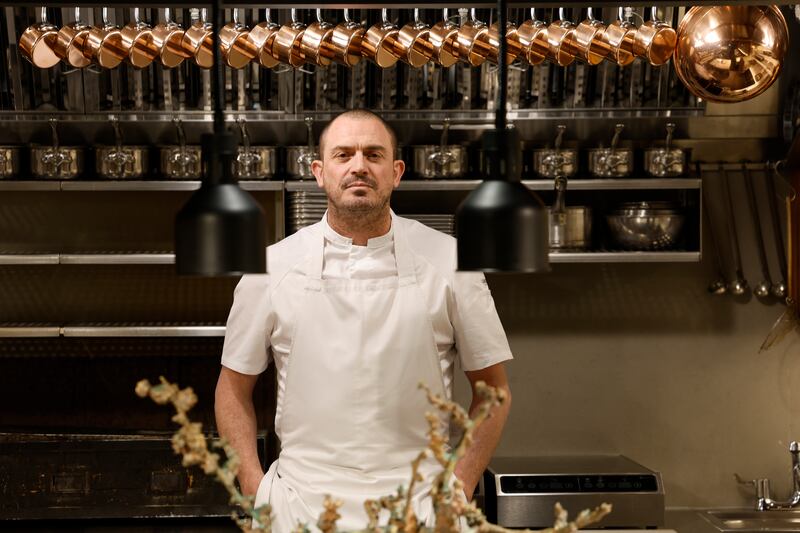
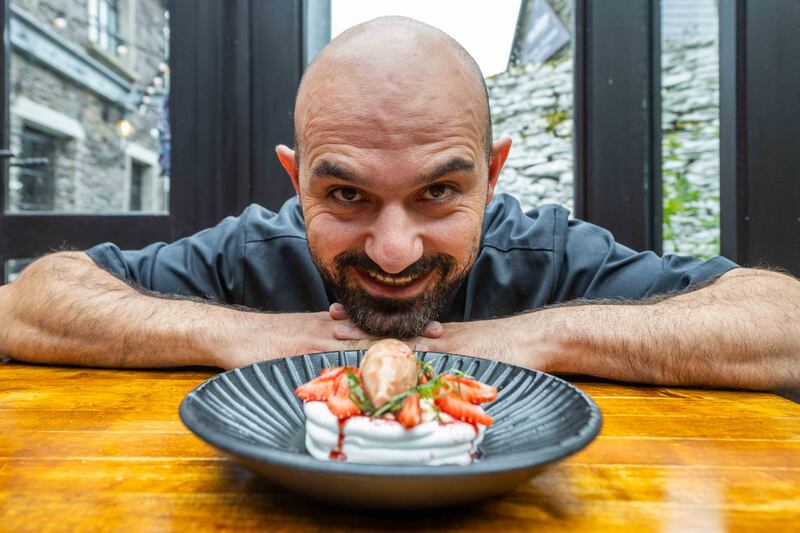
None of this guarantees anything: Michelin neither promotes on rotation nor corrects perceived gaps in national hierarchies. Ireland’s lack of a three-star restaurant has been remarked upon for years, but commentary alone does not move inspectors.
It is worth noting, however, that a double three-star promotion is not without precedent. In the 2021 Michelin Guide, Michelin awarded three stars to both Core by Clare Smyth and Hélène Darroze at The Connaught in London. When Michelin decides the moment has arrived, it is capable of making more than one statement at a time.
Any such decision would, of course, have to take account of what is happening in Britain. Writing on his Substack, Smashed, food writer Andy Lynes has suggested that among the existing 21 two-star restaurants, potential new three-star candidates could include Ynyshir, Ikoyi and Midsummer House.
A triple three-star promotion in a single year would be unprecedented in the Michelin Guide for Britain and Ireland.
Whether hosting the ceremony in Ireland for the first time will have any bearing is impossible to say. But what is undeniable is that Irish restaurants are now operating at a level where the question is no longer hypothetical. The discussion has shifted from whether Ireland can produce a three-star restaurant to which one, and when.
[ How do Michelin inspectors work? Does anybody really know? ]
That brings us to the wider field – the one-star kitchens pushing towards two, the restaurants circling their first star, and the names that inspectors keep revisiting without yet committing. That is where this year’s most interesting movement may yet be found. There is a sense that while a number of restaurants may be on the path to two stars, it is unlikely that this will be the year when they land.
Restaurants receiving a Michelin star for the first time are notified by email shortly before the ceremony and instructed not to disclose the news in advance. From that point on, the industry turns into The Traitors: chefs and food writers scanning behaviour, reading silences, and trying to work out who has had the tap on the shoulder from Michelin.
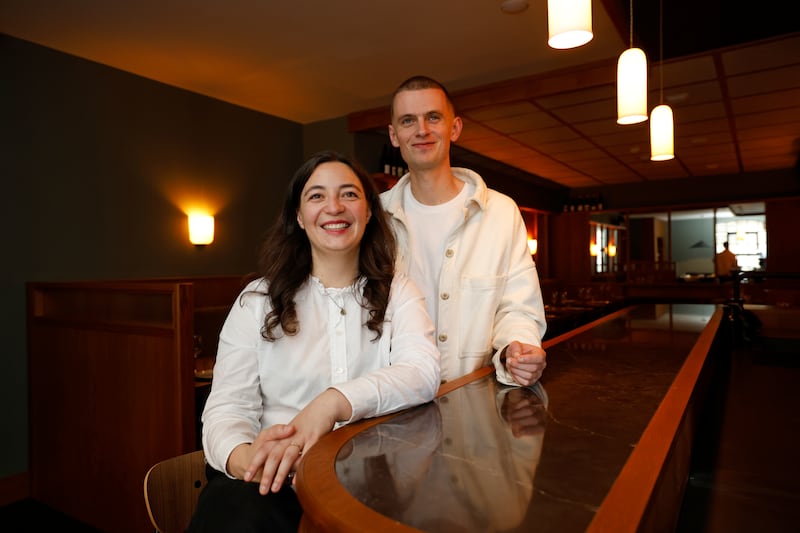
Restaurants added to the guide’s online listings are examined closely, as is activity on the Michelin Guide’s X account. Recent additions include The Old Spot in Dublin, Blackthorn at the Twelve Hotel in Co Galway, Kaldero, Vada, Borgo, Comet, Amai by Viktor, all in Dublin, and The Pullman in Galway.
Of those, there is a growing consensus that Comet, led by chef-patron Kevin O’Donnell with his wife Laura Chabal, and backed by Barry and Claremarie FitzGerald of Bastible, is in serious contention for a star. O’Donnell spent six years with the Kadeau restaurant group in Denmark and is cooking with precision and originality. When I reviewed it, a deboned quail on milk bread with foamy vin jaune sauce stood out, as did a sharply judged pommes boulangère. O’Donnell says they recognised an inspector’s visit in late summer after the dishes ordered appeared on Michelin’s social media, but they have no sense of how often inspectors have returned.
Michelin’s reaction to The Pullman has been unusually effusive. In its guide commentary, inspectors describe the restored Orient Express carriages at Glenlo Abbey, Galway, as more than theatrical backdrop, with the cooking rising to meet the setting. Praise centres on Angelo Vagiotis’s “exquisite cooking” and the quality of the produce, with a clear sense that this is not novelty dining, but a serious kitchen operating within an extraordinary frame. Vagiotis’s background as head chef at Terre under Vincent Crepel strengthens the case further. It places The Pullman firmly among the restaurants now being discussed as credible contenders for a first Michelin star.
Forest Avenue is a restaurant I have considered to be operating at one-star level for several years, and when I ate there last year the cooking felt more assured than ever. John Wyer was clearly on form, delivering dishes of clarity and restraint that played to the strength of the ingredients rather than reaching for effect. Michelin, too, seemed distinctly taken on its most recent visit, publicly admiring a glistening celeriac beurre blanc with cod, paired with a Rhodanian Viognier. Taken together – sustained consistency, inspector enthusiasm and a meal that confirmed its level – Forest Avenue looks well placed to finally convert long-standing promise into a first Michelin star.


Thyme in Athlone, Co Westmeath, which currently holds a Bib Gourmand, is another restaurant quietly testing the upper limits of that category. Michelin has already singled out the quality of the cooking here, notably praising the sika deer, and when I ate there the standard felt comfortably beyond the usual Bib brief. The roast beef was impeccably judged – a slab of aged rib-eye with a seam of fat keeping it basted as it cooked, served with an enormous, shatteringly crisp Yorkshire pudding. A favourite of Mickael Viljanen, chef-patron of Chapter One, it is cooking built on top-quality produce and clear, skilful execution. Whether Michelin is willing to push Thyme beyond Bib status – “tremendous value for money without skimping on flavour” – may come down less to what’s on the plate than to how strictly it still polices the line between excellent value and one-star cooking.
Finally, an Irish perspective from overseas. Lynes flags One Club Row in London as a possible first-star candidate, suggesting Michelin has a taste for the occasional wildcard.
I ate there recently, and the appeal is immediate: a clubby Victorian room upstairs, confident, unfussy cooking, and a burger that has quickly become a calling card. Mayo man and executive chef Patrick Powell has worked in Michelin-starred kitchens and previously headed up Wild Honey, also in London, under Anthony Demetre, and Chiltern Firehouse under Nuno Mendes. Whether Michelin agrees with Lynes this year remains an open question.
At this point, certainty is neither possible nor especially useful. Michelin gives nothing away in advance and it has never been swayed by narrative momentum. What it rewards, repeatedly, is clarity of identity, consistency under pressure and the sense that a restaurant has reached a level it can sustain.
That is why the days before the ceremony feel less like a countdown than a guessing game. WhatsApp goes into overdrive. Bookings are watched. Social media is scrutinised. Like The Traitors, everyone is looking for tells – trying to work out who has been discreetly tapped on the shoulder and sworn to silence.
Some of the restaurants named here will convert expectation into recognition. Others will not – at least not yet. My prediction is that Ireland will finally get its first three-star restaurant – either Chapter One or Liath, but not both. I also expect Comet, The Pullman and Forest Avenue to join the ranks of the one-stars. On February 9th, Michelin decides.