
Our hottest summer was in 2025, although it might not have felt like that as daytime temperatures were not as extreme as the memorable summers of 1976 and 1995. Last summer we had a run of very warm nights that pushed the average temperature into record-breaking territory.
Met Éireann’s assessment was that what started out as a rather unremarkable summer was transformed as “climate change has the power to turn previously unremarkable years into record-breaking ones, as baseline conditions steadily rise”.
Climate change also has the power to turn what would have been remarkable in the past, like the summer of 1976, into even more extreme events.
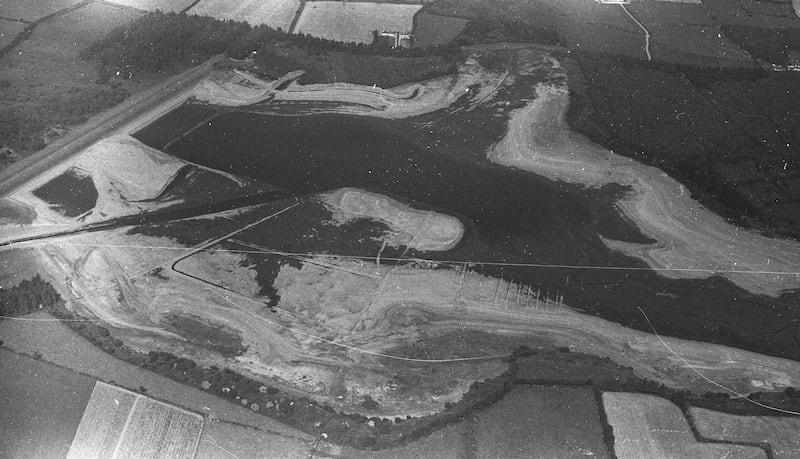
That summer 50 years ago was extraordinary for Ireland. Unaccustomed as we are to decent, predictable sunshine, it was remarkable – a heatwave that lasted 14 days with temperatures over 25 degrees every day. To be considered a heatwave there needs to be at least five consecutive days at more than 25 degrees, and 1976 smashed that definition. The longest recent heatwave was a mere six days in 2023 – 1976 was also the driest summer on record, with the worst drought in 150 years, affecting agriculture, water supplies and productivity.
READ MORE


Unusual weather occurs and with weather as variable as Ireland’s, there will always be extreme events around “business as usual”. However, climate change introduces something new into the mix. It alters how we can expect “business as usual” to be.
Climate scientists project that globally we are at more than 1.4 degrees above the average temperature in the pre-industrial period of 1850-1900. Back in 1976 the world was just 0.27 degrees above the pre-industrial average, according to Europe’s Copernicus Climate Change Service.
By 2056, a child born during the long, hot summer of 1976 will be 80. What would happen if we got a run of unusual weather, just like we had in 1976, in a world that is more than 2.5 degrees hotter than the pre-industrial average and more than 2.2 degrees hotter than 1976? (Earth is on track to be at least 2 degrees hotter by 2050 but Europe is heating up faster than the global average.)
[ Wild salmon are on the verge of extinction. There is not one fish to spareOpens in new window ]
New modelling by Professor Ed Hawkins from the University of Reading and the Co-Centre for Climate + Biodiversity + Water in collaboration with the UK Met Office explores this scenario. An operational weather forecast model, similar to that used by the UK Met Office, was run to simulate plausible weather events in a warmer climate.
The model for a 1976-like weather event over a background of a warmer world found temperatures in June 2056 would top 38 degrees in Ireland. To put that in context, the hottest temperature ever recorded in Ireland was 33.3 degrees at Kilkenny Castle in 1887 and the highest temperature we have experienced this century was 33 degrees in Dublin in 2022.

The word unprecedented gets bandied around a lot as we hit and exceed one climate record after another, but a 38 degree day in Ireland in my lifetime is almost unimaginable. The implications of days over 38 degrees for our roads, railways, animal welfare, our own health, wildfires, water availability and the functioning of our houses need to be imagined. We have to imagine it, because we can avert it if we act in time.
Ireland will not meet its climate action target of a reduction in greenhouse gas emissions of 51 per cent by 2030. The Environmental Protection Agency estimates that we will manage half of that reduction at best if we achieve everything in all of our climate action policies and plans.
Our continued reliance on fossil fuels puts us in this precarious position. Climate change is a global problem requiring globally co-ordinated action. If a well-resourced and well-informed country like Ireland cannot reduce its greenhouse gas emissions according to our international obligations, then how can we expect other countries with bigger problems than ours to do so?
When we are committed to change, big things can and do happen. It requires real political leadership as well as public commitment. Even with concerted action we will still be living in a world where we are at least 1.5 degrees above the pre-industrial average, making record-breaking summers a regular occurrence. We will need to adapt to this new normal, but every fraction of a degree that we can claw back matters for dialling down the extremes.
On our current path, that child born in the summer of 1976 will be in an equally vulnerable age group in 2056 and facing days of extreme heat in a country and infrastructure not equipped to shield us.
Professor Yvonne Buckley is co-director of the Co-Centre for Climate + Biodiversity + Water and is Professor of Zoology at Trinity College Dublin.


