

This very large fly has been hanging around the garden for the past couple of days. It’s a good-looking insect but I’m wondering if it’s a type of horse fly and if it bites humans? Greg O’Connor, Kinsale, Co Cork
Yes and yes. This is Tabanus sudeticus, the giant horsefly. Your picture is of the female, which can have a wingspan of 5cm. The scimitar-shaped antennae emerge from between the eyes, but the biting parts are the blade-like stylets in the mouthparts. The insect can fly at a speed of up to 50km/h and attacks its prey – large mammals and humans – while emitting a loud hum. After inflicting a painful bite with its blade-like mouthparts, it mops up the copious blood with a specially adapted spongy bottom lip. The male is a harmless poor divil that frequents flowers looking for nectar.
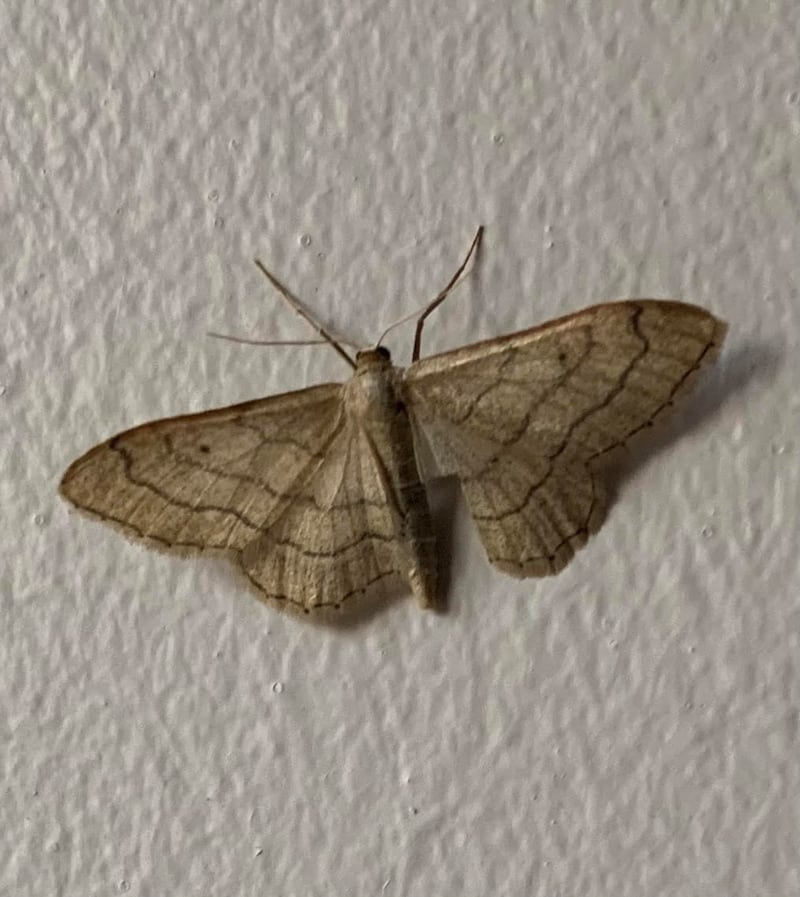
Even AI (man’s stupidest invention) couldn’t identify this. I am sure you can. Or have I discovered a new species? On a wall in a house in Swellan, Cavan town. Paul Connolly, Cavan
I can indeed. This is a riband wave moth, a widespread and common moth, that flies between June and August. Its brown caterpillars include gardens among their habitats, where they feed on dandelions, plantains and docks among others. MothsIreland, who track the 1,500 moths species that occur in Ireland, are interested in receiving records of moths through the Ireland’s Citizen Science Portal.
READ MORE


When in the garden at 8am one morning in late June, I spotted this very busy bee. Are these really two lumps of pollen collected this early in the morning? Catherine Nestor, Dundrum, Dublin
That is exactly what they are. As busy as a bee is no exaggeration. Bees are more temperature dependent than time dependent. They are indeed up at dawn if it is warm enough. By 8am in late June this year, there had already been four hours of daylight with plenty of heat, hence the large haul. Female worker bees collect pollen for three weeks, then they bring back nectar to the nest for the following three weeks, after which they die of exhaustion.
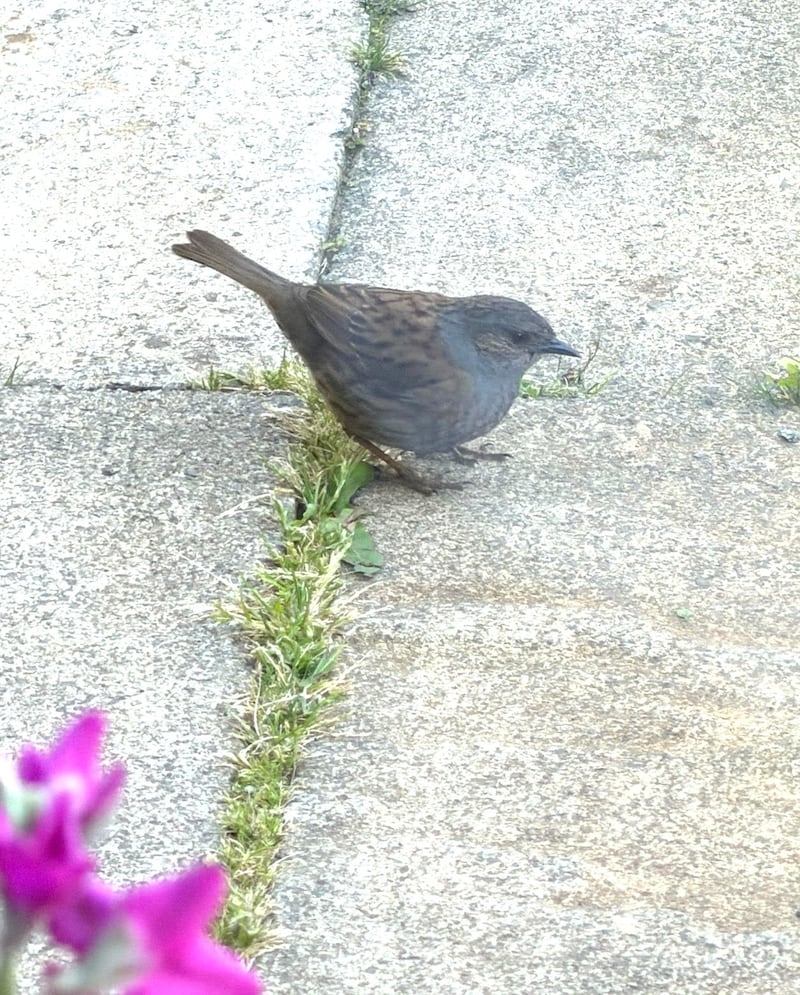
This little bird has been spotted in my neighbour’s garden. It appears to be a ground feeder and doesn’t feed from the bird feeders. Might it be a dunnock or what else it could be? Heather Barr, Lisburn, Co Antrim
This is a dunnock, also known as a hedge sparrow. It is common enough, recorded in more than two thirds of our gardens during the Birdwatch Irish Garden Bird Survey each year. It feeds mostly on insects, although it will take seeds scattered on the ground in winter. Put away your bird feeders until winter comes around again. The birds are all well able to find their own food at this time of year and there is a high risk of spreading disease at feeders during the warm summer months, particularly among finches.
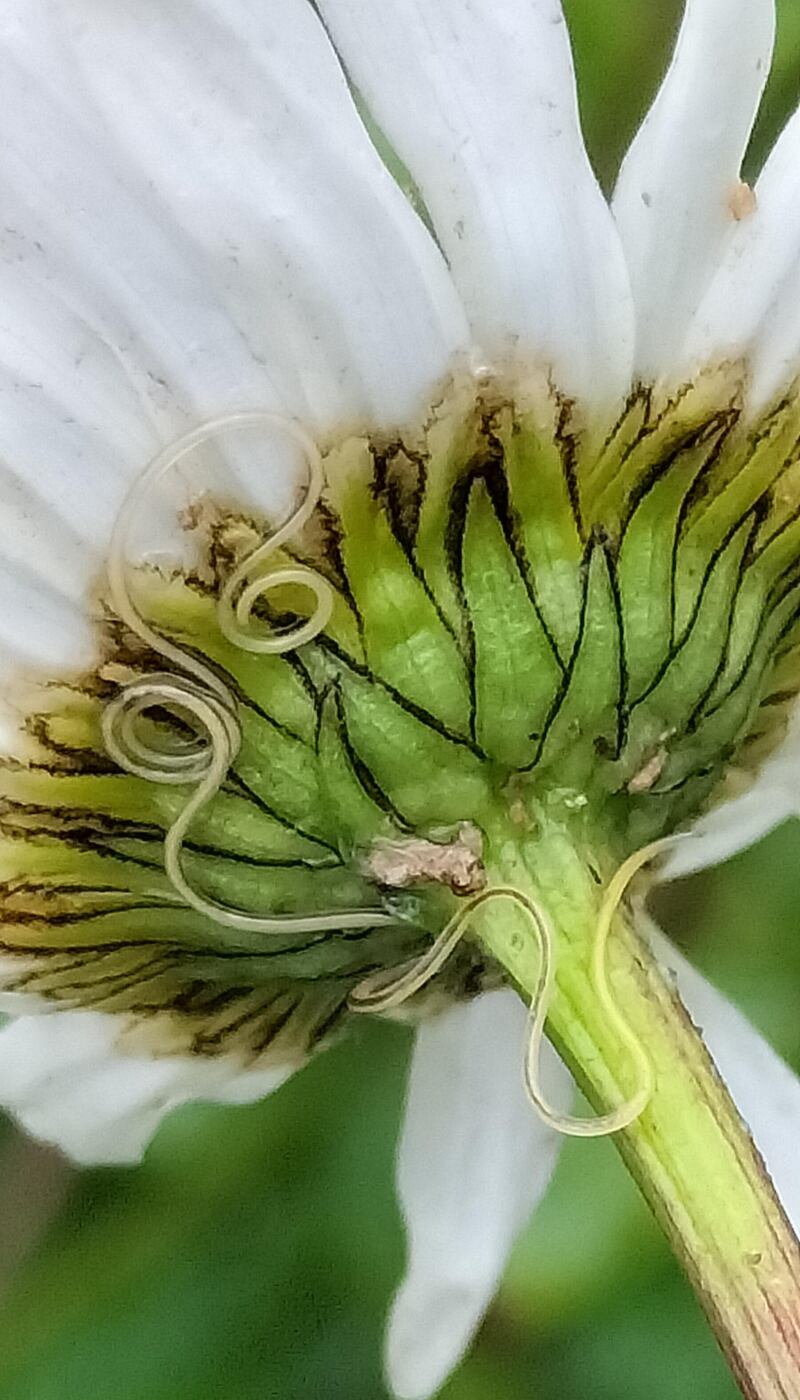
I spotted these white thread-like creatures on the back of an ox-eye daisy in my garden. Can you identify them? John Doherty, Drogheda, Co Louth
These are thunderworms, which appear overnight on garden plants in summer after wet weather. They can be up to 50cm long and look like threadlike roundworms. They lay eggs on the plants and then die. The eggs are eaten by grasshoppers and caterpillars and hatch out inside these creatures. They grow by digesting the body fluids of their hosts, whom they weaken but don’t necessarily kill. When big enough they leave and enter the soil, where they live until it rains heavily in June. They then emerge, climb plants and lay their eggs.
Please submit your nature query or observation, ideally with a photo and location, using the form below or by email to weekend@irishtimes.com


