
Devotees of the Irish spud might be alarmed to hear that potato growers are hesitating about planting this year.
Just after St Patrick’s Day is when farmers normally begin planting the crop but this year they are not so sure.
It is not the sodden soil hangover from January and February that concerns them, although the non-stop deluge did delay harvesting of the final 10 per cent of last year’s crop.
It is not even the increase in fuel and fertiliser costs arising from the war in the Middle East, though those will hit hard too.
READ MORE


The issue immediately worrying them is oversupply.
“It’s the carry-over from last season,” says Jason O’Leary, a Co Wexford grower and chair of the Irish Farmers’ Association potato committee.
“There was a really good growing season last year and a massive crop so there’s a lot of stuff left and no market for it. There’s a massive amount in cold stores.”
Irish households like Irish potatoes, so that end of the market generally holds up, but the market for peeled potatoes – for food processing, ready meals and chips – is under intense competition from imports.
“They’re nearly giving them away in the UK and France. You’d just have to pay the cost of the transport to take them away,” O’Leary says.
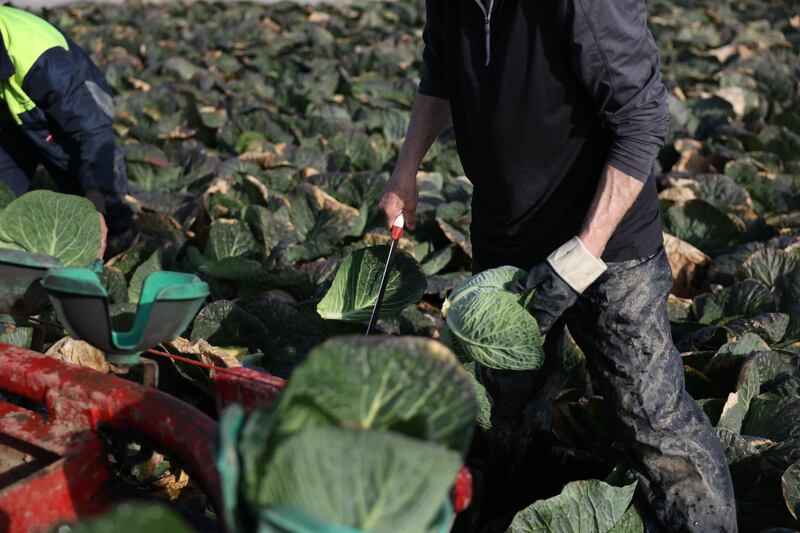
“We don’t want to tell lads here to cut back but we are telling them to grow for what you sell.”
That sounds obvious but it entails some crystal ball gazing, strong negotiating skills and luck.
And contracts? “In Ireland we don’t do contracts. It’s more of a handshake,” says O’Leary.
Welcome to the world of potato farming where, 180 years after the famine, it remains a precarious business.
Precariousness characterises much of the fruit and vegetable industry in Ireland, where earlier this month one of the largest carrot producers, Hughes Farming in Kilkenny, went into liquidation.
In court documents, the owners cited the relentless rain as a contributory factor along with input cost increases – inflation not matched by rising prices for their product.
Central Statistics Office data shows that from March 2012 to March 2023, the price of 1kg of carrots moved up and down by 10 to 14 cents but was slightly lower at the end of the period than at the start.
In the past three years, it moved upwards and the price has been between 11.5 and 18 cents higher than in 2012, a rise of 7 to 15 per cent, but general inflation over that period was 26 per cent.
Broccoli prices rose 16 per cent and the price of a 2.5kg bag of potatoes by 21 per cent.
It was that rise in potato prices, concentrated in recent years, that encouraged growers to plant more and has contributed to over-supply.
When the plight of Hughes Farming emerged, Minister of State with responsibility for horticulture Michael Healy-Rae said people must support Irish producers better.
“The reality is that we must all seek out Irish produce when buying fruit and vegetables and be prepared to pay a price that will sustain our local horticultural producers,” he says.
[ The rural Dublin family farm where the best chefs in Ireland source their produceOpens in new window ]
Another reality is that shoppers want a steady supply, wide choice and stable prices and, for the most part, that’s what they get.
“Recent weather in key regions has made this season more challenging for some crops, and we’re working with suppliers across multiple areas to manage any impact for customers,” said a spokesperson for Tesco.
Lidl responded similarly: “We continue to work closely with our local Irish suppliers and international partners to ensure consistent supply.”
Paul Hussey can vouch for the massive behind the scenes efforts to smooth out wrinkles in supply to ensure no gaps on shelves.
Hussey is trading manager at Donnelly Fresh Produce, which sources fruit and vegetables from its own farms and other growers at home and abroad for supermarkets and its own prepared meals business.
“We’re open to all the elements,” he says, and he doesn’t just mean the severe weather that has caused disruption domestically and in key suppliers such as Spain and Morocco.
Ramadan, the holiest month in the Islamic calendar when Muslims fast from dawn to sunset, also restricted output from Morocco, but that’s annual and can be prepared for.
The emergency fuel surcharge just introduced for haulage in Spain is a different matter.
“It’s like roulette – you don’t know what’s coming up next. If it’s a problem with carrots this week, it’ll be peppers next week,” says Hussey.
“So we have to be nimble and agile. There was a time we only had broccoli a few months in the year, when it was in season. We only had strawberries in summer.
“Now we expect everything 52 weeks of the year. Should we? Nature suggests otherwise. But it’s what people want so that’s what we try to give them.”
Irish strawberry growers have responded to widened demand and invested in tunnels, which protect them from weather but not costs.
“It has extended the season so you’ll see the first crop around Easter. They’re probably delayed just a week because of the weather,” says Hussey.
“It’s great to have the early crop because Irish strawberries taste much better, but if you have to heat the tunnels, that’s a big cost with the way fuel prices are. It’s a lot to absorb and retailers are slow to raise prices.”
Seasonality – or the lack of it – is also a challenge for Leo Murphy, who grows cabbages in north Co Dublin.
He harvests year-round to keep supply flowing and the conditions between December and February were tough.
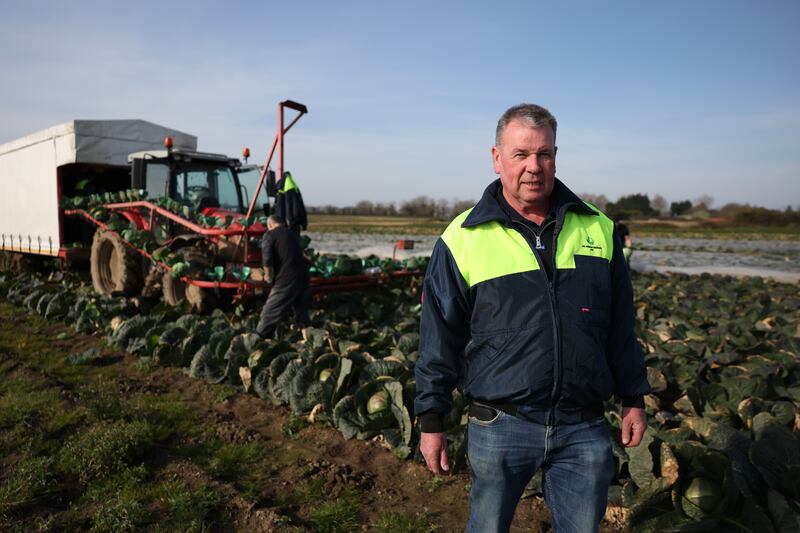
“We had to do more manually or have two tractors pulling the harvester because the ground was so wet,” he says. “It’s been heavy going for man and machine.”
Cabbage prices were stagnant for years but he says an upswing in the last few years boosted production.
But although households have kept buying, they are getting more picky about what they buy.
“Supermarkets want sweetheart cabbage because that’s the customers’ favourite and we don’t have that between December and April so they buy from Spain instead,” says Murphy.
“We can give them savoy and green cabbage but they don’t want so much of that. I think if they put these on the shelves and emphasised they’re Irish, customers would buy them because people do like an Irish product.”
That may be so, but 83 per cent of the fruit and vegetables consumed in Ireland is imported and the number of growers has plummeted from 600 in 2000 to about 70 today.
Although many imports are varieties that will not grow here, some could be substituted by Irish alternatives.
So does the power really lie in the hands that hold the shopping basket?
Michael Kilcoyne, chair of the Consumers’ Association of Ireland, doesn’t believe so, arguing shoppers have little control over supply.
[ ‘It’s not just a male industry’: The young women changing farming stereotypesOpens in new window ]
“The customer doesn’t have time to sort through labels to see where something is grown and it’s not always clear – the shop might be using an own brand,” he says.
Kilcoyne is concerned that both source and price will come under pressure as the Middle East conflict continues.
“Growers are selling into a market which is getting tighter and tighter in terms of people’s spending power and people have less and less in their pockets,” he says.
The Government must be more proactive in helping both sides, he says.
“They say they’re monitoring things but that’s like watching every day to see if the sun sets. You won’t change it by watching it.”


