
A single data centre in west Dublin consumes 10 times the electricity of a nearby pharmaceutical plant employing 2,000 people, equivalent to enough power for 200,000 homes, according to an internal Government document.
The paper, released to Sinn Féin MEP Lynn Boylan after a freedom-of-information request, shows the pharma plant requires 10 megawatts of power “and provides 2,000 jobs”, while the data centre has a “smaller people footprint but a power requirement 10 times greater, the equivalent of circa 200,000 homes”.
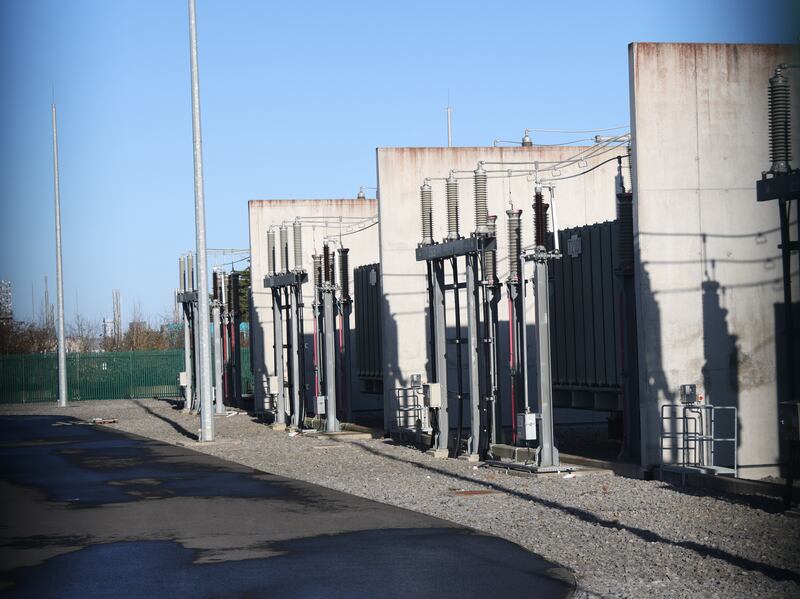
The Castlebaggot 220kV substation was intended to relieve pressure on the grid and support housing and industrial growth, but officials noted the “sheer volume and energy density” of data centres in the area “completely consumed the capacity of the new reinforcement”.
The Department of Energy has said a repeat of the scenario in west Dublin is now effectively ruled out, but the document shows the new substation had no capacity left to support “major housing expansion” or other enterprises in the area.
READ MORE


The impact of data centres at the substation has come to light before. Last year the Commission for the Regulation of Utilities (CRU) said the substation’s capacity was “almost entirely used by data centres applications”.
Ms Boylan said the document also highlights the impact of building more data centres outside Dublin.
Requests to connect data centres in these regions would “very likely create a constrained region wherever they seek to connect”, the paper states, impacting the ability to connect housing, enterprise or projects focused on electrification of heat and transport.
Ms Boylan said focusing on regional development of the facilities would be “moving the problem around the country”.
“That’s not balanced regional development, instead it’s sacrificing the power that regional communities need to grow.”
A Department of Energy spokesman said the scenario in the paper arose due to a “historically high concentration” of data-centre applications, but that under more recent CRU decisions, constrained electricity capacity must be considered as a criterion when assessing data-centre connections.
He said this “effectively rules out the type of scenario presented in that specific historic case study arising at present”.
The Cabinet this week approved the Large Energy User Action Plan, which “will ensure that capacity and network expansion planning for data centre growth will be developed via regional green energy parks rather than in areas of high urban growth,” he said.
A spokesman for EirGrid, which connects large users to the transmission system, said its policy is governed by the CRU and that, since 2021, data-centre requests have been reviewed while factoring in constraints in high-demand areas.
He said a new engagement and connection process for data-centre connections would be published by the end of March.
“Once published, potential new applicants will be provided with the appropriate guidance required to advance new possible data centre connection applications.” He said EirGrid was required to offer connections to all parties and without prioritisation.
EirGrid said it would be delivering “unprecedented” amounts of new infrastructure in the years ahead to meet increasing demand, including in housing, climate and industry. The operator is progressing new projects to support development in the west Dublin and Kildare region, it said.
EirGrid’s best estimate is that overall electricity demand will increase by 45 per cent between 2023 and 2034, with very strong growth from data centres and new technologies initially, followed by lower but continued growth.
Demand from the electrification of transport and home heating will also grow, it said.
The department said €18.9 billion will be invested up to 2030 to support housing and climate targets and delivery of the National Development Plan.


