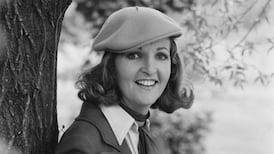

For some time now, teacher and television presenter Róisín Ní Thomáin has suspected she might be neurodivergent.
“I’m ticking a lot of the boxes,” she says early in the informative documentary Intinní Áille – Beautiful Minds (RTÉ One, 10.15pm). One of her children has dyspraxia, a neurodivergent-adjacent condition that affects co-ordination. She wonders if he might have inherited the trait from his mother.
“I’m an anxious kind of person. As I studied to be a teacher, I felt I wasn’t good enough in many ways. I feel that I never stop. I’m constantly on the go.”
She is far from alone in feeling it might be helpful to have a diagnosis in adulthood. Podcaster Blindboy has talked about his autism, while comedian Tommy Tiernan has revealed he has ADHD (Attention Deficit Hyperactivity Disorder). So, too, has radio DJ Ray Foley, who meets Ní Thomáin as she is on her way to a private consultation with a neurodivergence expert in Dublin.
READ MORE


“I was quite sceptical about it,” he says, feeling that his serial disorganisation was “my personality type – I’m the type of person, I’m just a mess.”
But no – he was neurodivergent, and his thoughts on the subject confirm to Ní Thomáin that she is correct in looking for a diagnosis. She also talks to the parents of children on the spectrum, many of whom struggle to receive the treatment they require.
She meets Robbie McMahon, whose son Riley is autistic and cannot find an appropriate place in secondary school. Robbie talks with despair about being “on a waiting list to get on the waiting list.” He adds: “We’re stuck in limbo. No parent should be in this position.”
[ Ray D’Arcy: ‘I’ve lost my job and my mother. What’s going to happen next?’Opens in new window ]
This is a well‑made documentary, though the twist at the end – Ní Thomáin probably isn’t neurodivergent – is unexpected. “I have to think about myself and my stress levels,” she says. “I’m glad I did it, and I’m not disappointed now I have a definitive answer.”
She seems satisfied, but as Ní Thomáin would no doubt acknowledge, she is in the fortunate position of being able to pay for a private diagnosis, where so many people with children requiring special care are denied the proper resources.
Left unstated is the sobering message that this is a country where well‑to‑do adults are free to seek treatment even if they can get by without it. Meanwhile, kids urgently needing help are left to their own devices.