On the Calculation of Volume, Book Three (Faber, £12.99, 194pp) is by Solvej Balle and translated from Danish by Sophia Hersi Smith and Jennifer Russell. It is part of what is to become a series of seven novels about Tara Selter, a French woman who has found herself in a time loop. Every day Tara wakes up to discover that it is November 18th. Balle first started work on the idea in 1987, several years before Groundhog Day was released.
In Book One we saw Tara struggling to come to terms with her situation. In Book Two movement was introduced as Tara travelled around Europe trying to experience the seasons once again. That instalment concluded with a bombshell – Tara encountered Henry Dale, who is also stuck in November 18th.
Book Three brings a distinct shift in the story. In it we see that the time loop phenomenon is not unique to Tara. This broadens out the scope of the story in terms of human interactions and its exploration of wider moral dilemmas about whether it is right to intervene in the world. On this, we see a generational divide, with youthful idealism rubbing against the sage caution of maturity. Balle is skilful in progressing the core narrative while introducing a greater depth of ideas. A series that started as something lonely and interior, is now becoming more social and resonant.
Sophia Hersi Smith and Jennifer Russell have taken on translation duties for this volume, following Barbara J Haveland’s work on the first two instalments, but the transition is seamless.
READ MORE


This septology is an intriguing project, with each new volume building towards what feels like a work of substantial literary value.
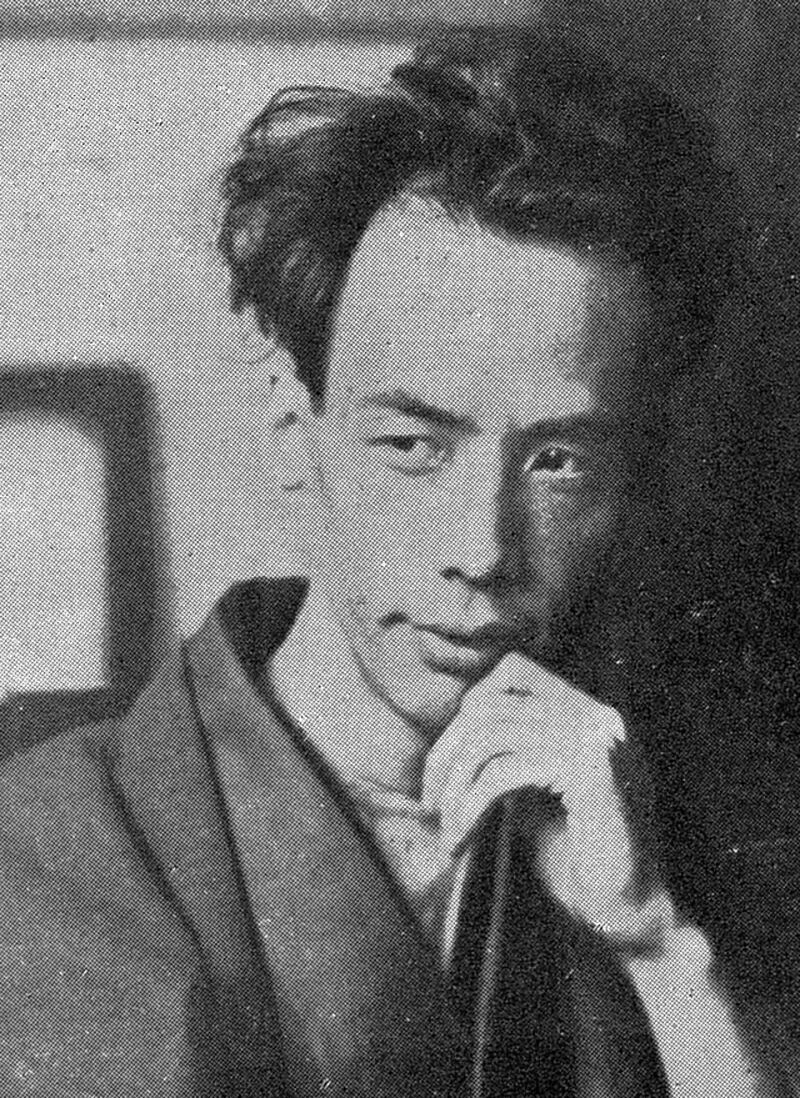
It is almost 100 years since the death of Ryunosuke Akutagawa by suicide in 1927 at the age of 35, so it is timely to republish his novella Kappa (Pushkin Classics, £9.99, 140pp, including the introduction) in the 1970 translation by the late Geoffrey Bownas.
The story is reported to the narrator by a patient in a mental institution. The narrator is walking through a misty mountain valley when he encounters a Kappa – a small, monkey-like humanoid with webbed hands and feet and a saucer shape on its head. He chases it down a deep hole into which he falls and loses consciousness. When he awakes, he is in Kappaland where they speak Kappanese. He is a traveller in a strange land that provides a funhouse mirror through which he contrasts the values of the world he has left behind with the one he has arrived at.
This Gulliver-like journey to an alternative topsy-turvy world offers a chance to satirise Japanese society and its harsh attitudes (authoritarianism was on the rise in Japan by this point).
Kappa was published in the year Akutagawa took his own life and there has been speculation that this is foreshadowed in the book. However, the depiction of suicide here does not feel charged with despair; rather it is used as a way of lampooning the egotism of the poet seeking to enhance his posthumous reputation.
Though not Akutagawa’s strongest work, Kappa remains a curious novella that provides a greater insight into his views on wider societal and political questions that, sadly, remain relevant today.
I Don’t Care (Penguin Classics, £10.99, 96pp) is by Hungarian writer Ágota Kristóf and is translated from French by Chris Andrews (Kristóf emigrated to Switzerland and wrote in French).
Kristóf is known for her magnificent Notebook Trilogy. I Don’t Care is a collection of her shorter writing. The title story is a brief Beckettian exchange between two people working on a tram that has no passengers. They are getting by, but only just. They share a weary warmth; a hard life made liveable by faith and companionship. Northbound Train features a train station statue depicting a man kneeling and hugging his dog. An old man says he is the statue and that his dog is buried under it. Amid his confused ramblings, truth becomes dissolved in delusion.
This collection reveals the influence of Kafka on Kristóf. Vignettes of meaning are stripped of their context, like overheard conversation fragments or lives glimpsed from an upstairs window. With their quiet poignancy, the stories also remind me of the films of Roy Andersson. Spare and austere, but never unfeeling, Ágota Kristóf’s writing shows the brutal side of tenderness or perhaps the tender side of brutality.
She Who Remains (Peirene Press, £12.99, 156pp) is by Bulgarian author Rene Karabash and is translated by Izidora Angel. It is set on the plateau surrounded by the Accursed Mountains of the Albanian Alps at a time when the ancient patriarchal Kanun laws applied with iron force.
The novel begins with a woman taking an oath to become a “sworn virgin”, thereby committing to live as a man, to wear only male clothes, and to toil in the fields. Her name is changed from the female Bekija to the male Matija. This is her way of escaping from an arranged marriage, though at the expense of initiating a blood feud with her would-be husband’s family.
The nonlinear storytelling allows for a slow unfurling of ramifications and the concealment of surprises. At times this creates problems for the plot machinery so the narrative has to rely on exchanges of letters to fill in the gaps. Nevertheless, there is much to admire here in terms of the originality of subject matter and setting, and the way the novel sustains a simmering tension.

Tibetan Sky (Sinoist Books, £15.99, 424pp) is by Chinese writer Ning Ken and is translated by Thomas Moran.
The book is set in Lhasa, Tibet, where a Chinese philosopher from Beijing, Wang Mojie, is teaching in a middle school. He is opinionated and earnest, which isolates him from others, as do his masochistic sexual proclivities. His close but unconsummated relationship with Ukyi Lhamo is central to the story. She is half Han Chinese, half Tibetan, and comes from a line of independent-minded women steeped in Buddhism. Ukyi Lhamo is a student of Ma Dingge, a French guru whose philosopher father visits to engage him in debate about their respective intellectual and spiritual viewpoints.
The translation by Thomas Moran strikes a perfect balance in retaining esoteric terms where appropriate, while keeping the conversational flow of the prose.
With its unabashed preoccupation with philosophy and male sexuality, this is a book that could be easily misinterpreted by people who use words like “manosphere” unironically. At its heart though, this is a novel that contrasts alternative ways of being: the rigour of French philosophy duels with ancient Tibetan spirituality; the shallow modernity of the Chinese interior is set against the traditional purity of Tibet. This works at character level, too. Wang Mojie is seen as sexually depraved, yet he is emotionally honest; Ukyi Lhama is beautiful, popular, and sincere in her Buddhist practice, but lacks an independent vision of her own.
For my money, contemporary Chinese writing is the most interesting literature being produced today. Tibetan Sky is another fine example of the deep and original fiction becoming available in translation in recent years. However, for reasons that escape me, Chinese literature is not as widely read or appreciated as, say, Japanese fiction. Let’s change that.