“This is the West, sir. When the legend becomes fact, print the legend,” declares the newspaper editor to Ransom Stoddard, after James Stewart’s character finally unspools the truth to the story of The Man Who Shot Liberty Valance in John Ford’s classic 1962 western.
When you have traversed the roughly two-and-a-half thousand pages that comprise The Lonesome Dove quartet of novels by Larry McMurtry (republished again thanks to the 40th anniversary of the titular, best-known book) you realise that the Texan, who grew up in a family of ranchers, also falls somewhere between legend and fact in his western writing.
Does this sense of softened reality diminish a reader’s pleasure? As one of his characters might say: hell, no.
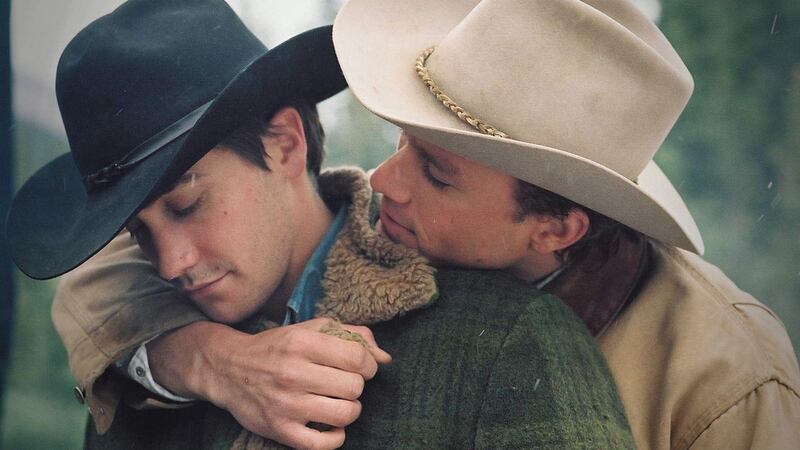
McMurtry died in 2021, aged 84, after a writing life adorned with acclaim and awards including Academy Award nominations, eventually winning one in 2005 with Diana Ossana for best adapted screenplay of Brokeback Mountain by Annie Proulx. The rancher’s life was never for young Larry, though. Instead he went to college and then taught for a few years before early respectable literary success allowed him to dedicate his time to writing.
READ MORE


McMurtry was also an avid bibliophile and in 1988 attempted to make his hometown Archer City into a “booktown”, with four stores alone needed to hold his personal collection. In a 2012 auction he sold off some 300,000 volumes.
In writing the frontier books, McMurtry wished to shoot down balloons of myth and romance floating in a modern reader’s mind when it came to the American West, and yet it must have caused him some consternation when the novel Lonesome Dove went on to sell more than a quarter of a million hardback copies upon its release in 1985, garnering the author significant wealth, a Pulitzer Prize and a TV adaptation a few years later with Robert Duvall (his finest hour) and Tommy Lee Jones that is as beloved as the source material.
The western skyline McMurtry was keen to clear of dewy-eyed dreams of cowboy life had suddenly become rich and rosy again, like the golden era of American western films from the late 1930s to 1970s. Is it possible, anyway, to fully deromanticise stories that involve riding horses while wearing hats, leathers and boots, or sleeping under the stars by campfire with the idea of living one day at a time, with your primary concerns being the next hot meal, whiskey and maybe a wash; and (optimistically) a companion to spend time. Well, you can if you focus on the women of the West, which McMurtry does admirably. But more on that anon.
[ Quiet Man director’s love for Maureen O’Hara revealed in letterOpens in new window ]
The Lonesome Dove miniseries is more blameworthy for any soft-focus romanticism of the West compared with the novels; its episodes are based on the largest book, which hinges on the greying, give-and-take, prickly but endearing friendship of Texas Rangers Woodrow Call and Augustus McCrae, as they journey on a life-changing cattle drive. The two men are the yin and yang of the yeehaws, encapsulating the duality of the dust with the dogged, gelid Woodrow like a pragmatic proton to the gregarious adventurous waves of wonder from Gus.
The latter likes to lollygag, drink from a jug on the porch while the sun sets, gambling, and chasing whores, while the former lives for little but the work, and is happy roping and shoeing, whittling a stick, or going for solitary river walks at night. In big-screen cowboy settings, both the boisterous and banal are alluring. But still, they are killers.
The novels vastly differ from the miniseries with the levels of sheer brutality and cruelty that permeate almost every part of western life for the characters. If the television version could be considered PG, the books are undoubtedly rated 18: bloodlust, assaults, rapes, arbitrary killings, torture, scalping. At times, reading McMurtry requires a strong constitution, such is the barrenness of humanity that oftentimes makes the land feel like a gruesome garden filled with groans from the descent of man.
In the first book, Dead Man’s Walk, the tracks of Woodrow and Gus begin with their joining the Rangers as teenagers, in a story which immediately captivates with rich dialogue, eccentric characters, and scenic narrative. It feels a few miles too long towards the end, and has a wildly unexpected finale, but it reads differently, and McMurtry has the foundations for a sprawling, picaresque saga, with his unhurried episodic writing style that never colours purple.
The second volume, Comanche Moon, is the most satisfying overall after the epic masterpiece of Lonesome Dove that follows, it focusing more on the Comanches’ defiant stand against encroachment on their way of life, with the indomitable warrior Buffalo Hump and the clever Kicking Wolf, always outsmarting the cowboys, symbolising the proud Native American spirit.
We sense the tragedy of what is taking place across the land as we move through the pages, as do the characters themselves, with Woodrow left wondering: “They rode six hours without seeing a moving object, other than the waving grass, and one or two jackrabbits. Call had a sense of trespass, as he rode. He felt that he was in a country that wasn’t his. He didn’t know where Texas stopped and New Mexico began, but it wasn’t the Texans or New Mexicans country he was riding through: it was the Comanches he trespassed on. Watching them moving across the face of the canyon, on a trail so narrow that he couldn’t see it, had shown him again that the Comanches were the masters of their country to a degree no Ranger could ever be. Not one horse or Comanche had fallen, or even stumbled, as they walked across the cliff face - the Rangers had been on foot and had plenty of handholds when they went over the edge, and yet several had fallen to their deaths. The Indians could do things white men couldn’t do.”
The flickering lights of the main characters’ lives are lowered in Streets of Laredo, and it’s understandable that McMurtry closed the gate here as it is the weakest of the four volumes. The main problem (spoiler alert) is its Augustus McCrae-shaped hole, although the author does introduce another fantastically strong and complex woman in Maria, the proud Mexican mother of the bonkers young bandit, Joey, who feels a disappointing caricature who makes the Oedipus complex seem like a tic.
[ Kevin Costner’s no great fan of westerns. So how come he’s making another one?Opens in new window ]
Losing Augustus in the saddle leaves McMurtry with less room to roam. Gus’s natural levity could always shift the mood; a welcome diversion to the trials and suffering at times. One morning on the plains he welcomes the rancher Charlie Goodnight (another McMurtry name zinger) into his camp. He’s a tight-mouthed old cuss, anathema to the garrulous Ranger. “What good was a guest who consumed bacon but didn’t contribute conversation.”
“Do you fear God, Charlie?”, Gus asked.
“Nope, too busy.”
A reader who comes this far, of course, will ride on to the end of the journey to find out what happens to Woodrow Call and my favourite character of many, Lorrie, the prostitute who appears in Lonesome Dove. In the end, the most satisfying element of McMurtry’s hefty quartet is how it gets you beyond the easy attraction of all the “cowboying” and instead accumulates for a reader genuine admiration for the true heroes of this time: the women of the West, with their preternatural strength, humanity, and dignity in such a noisome environment. McMurtry’s women are always interesting and feel made flesh, like those in Ford’s films, not mere points to drive the narrative, and Lorrie’s arc is remarkable in surviving a cruel world, made all the more cruel by the presence of men. In her own small way, Lorrie eventually makes the world a better one to live in.
Surviving the horrors of kidnapping, she empowers herself through education (thanks to another noble woman Clara, Gus’s lost love), to reshape her doomed destiny of a life in prostitution into one of teaching at the new rudimentary local school. Lorrie also makes a (rare) happy marriage and family life for herself. Clara writes in a letter to her: “Learning may be the best thing we have. It may be all that we can truly keep.” Lorrie keeps reading this over and over.
McMurtry’s western world is not quite perdition, even if it comes pretty close at times. It never reaches the pure bleakness of, say, Cormac McCarthy, and it’s because of the women in his books; women that give hope in a world that seems intent on blowing itself all to hell (be it then or now).
Redemption never seems to be within reach for these long-riders of regrets, Call and McCrae, but they keep riding all the same, and it’s usually towards or away from women; for deep down they understand it is the womenfolk who will change the idea of so much killing and dying for a better one: a liveable, civilised reality. Hail the true heroes of the old American West.
Dead Man’s Walk, Comanche Moon, Lonesome Dove and Streets of Laredo have just been reissued by Picador, at £12.99 each
Further reading
Annie Proulx or Cormac McCarthy fans will undoubtedly enjoy the Lonesome Dove quartet and McMurtry’s other work, too. His debut in 1961, Horseman, Pass By is a small stark gem that became one of Paul Newman’s best performances in Hud a couple of years later; it needs a new print run. The Authentic Death of Hendry Jones by Charles Neider has just been republished, with a foreword by Will Oldham. Loosely based on Billy the Kid, the book captivated McCarthy, Sam Peckinpah, and Marlon Brando. True Grit is a minor masterpiece in 150 pages by Charles Portis, also adapted into films, told in the unique, unforgettable voice of 14-year-old Mattie Ross. Elmore Leonard’s Westerns are indispensable, from Valdez is Coming, to the classic short story Three-Ten to Yuma. Penguin recently republished them individually, but for better value Library of America has gathered all of them in one handsome volume.