
The death of Yves Sakila in Dublin on May 15th has caused outrage in his home country of the Democratic Republic of Congo (DRC), a poor central African state torn by conflict and a rapidly spreading Ebola outbreak.
Footage of his death has circulated widely on social media, triggering an outpouring of anger and disbelief. Congolese news organisations, which seldom look beyond their own borders, also covered the story.
“I’m truly shocked,” said Promesse Kitakya, an entrepreneur in the Congolese capital Kinshasa, who saw the video of security guards restraining Sakila on Dublin’s Henry Street.
“No one should die like that,” he added, explaining that it seemed to him as if some lives had less value than others.
READ MORE


Following an outcry, Congo’s ministry of foreign affairs said it was following “with deep emotion and grave concern” information surrounding Sakila’s death.
It added that it was in contact with Irish authorities to establish the circumstances of his death and to ensure a transparent investigation.
For many in the DRC, Sakila’s death has fed a perception that Congolese people fleeing hardship at home often face prejudice and discrimination abroad.
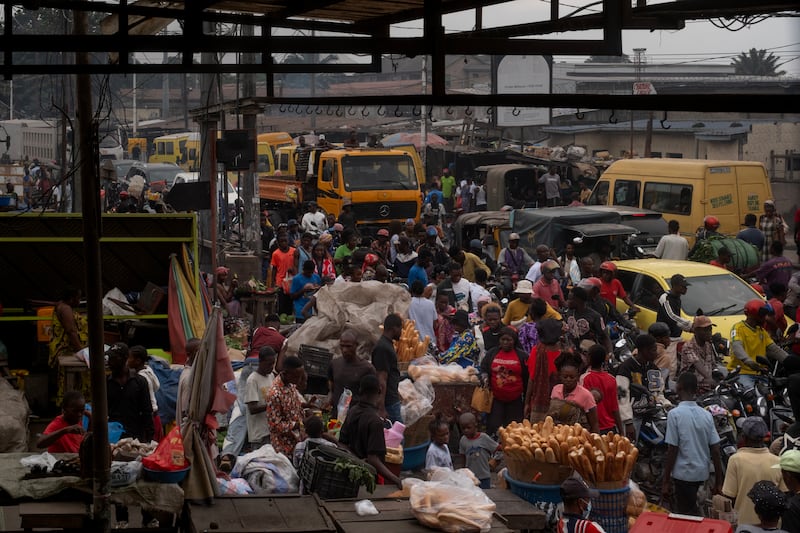
The DRC is a vast and mineral-rich country with a population of about 120 million people and a large diaspora spread across Africa, North America and Europe.
However, the country is one of the five poorest in the world, according to the World Bank, with more than 80 per cent of the population surviving $3 (€2.60) a day or less.
Persistent conflict tied to dozens of armed groups has also ravaged eastern DRC for decades.
In late 2021, rebels from the Rwanda-backed M23 group launched an insurgency and have since captured swathes of territory, including eastern DRC’s two largest cities, Goma and Bukavu.
The DRC is also currently in the grip of an Ebola outbreak, which health responders are struggling to control as cases proliferate across the conflict zones in the east of the country.
Jacques Issongo, a member of the Congolese pro-democracy activist group LUCHA, described living conditions in the DRC as unbearable.
“There are millions of Congolese people, like Yves, who left to seek a more peaceful life,” he said. “We flee Congo because Congolese people can’t live with dignity in their country.”
Issongo added that Sakila’s death was “completely unacceptable” regardless of whether he had been accused of committing a crime.
Yves Sakila had lived in Ireland since 2004 and had been homeless for several years. He had allegedly been involved in a shoplifting incident at Arnotts in Dublin and died after being restrained by security guards outside the shop.
Arnotts said it was deeply saddened by the death and the company was “actively co-operating” with the Garda investigation.
Little is known about Ireland in the DRC, where the official language is French.
Reagan Miviri, a Kinshasa-based conflict analyst who lived in Dublin for a year, said Congolese migrants in Ireland can feel isolated because of cultural and language differences.
He also suggested that Sakila would have had a smaller support network in Dublin than he would have had in European cities with larger Congolese populations, such as Brussels or Paris.
Miviri said that he wasn’t surprised by Sakila’s death, describing how he had often felt unsafe as a black African man in Dublin.
“This is triggering lots of anger because many people think this happened because he was Congolese, and African,” he said.


