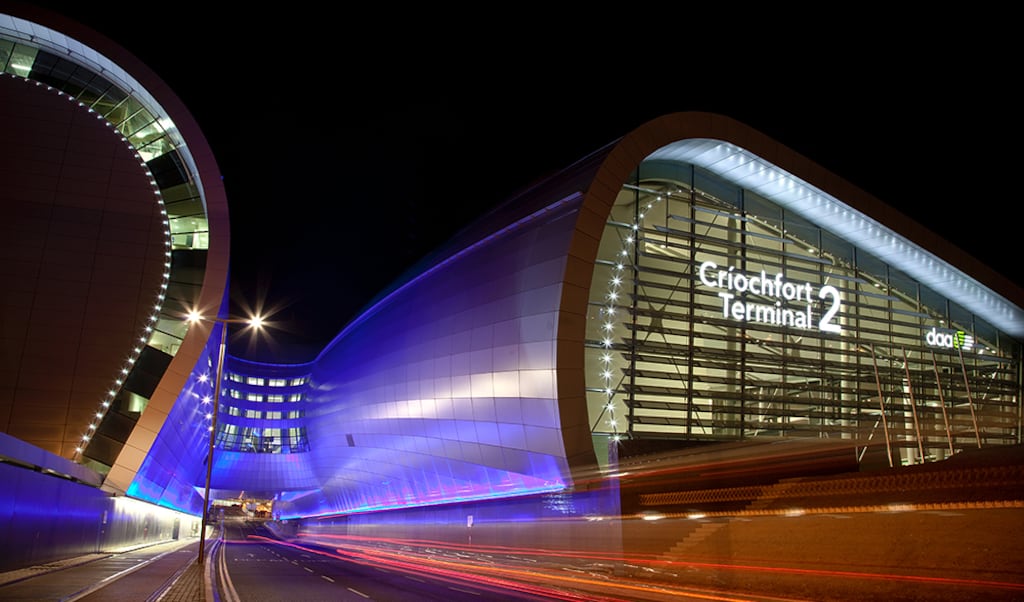
A European Union court will rule on a legal challenge by airlines to the 32 million-a-year passenger limit at Dublin Airport in two weeks, documents show.
The High Court referred questions raised in a lawsuit, brought by Aer Lingus, Ryanair and a group of US carriers in 2024, challenging a decision by regulators to take the passenger limit into account when allocating take-off and landing slots at Dublin.
The Irish court’s referral stalled the so-called cap’s implementation, allowing traffic at the country’s biggest airport to increase past the limit to reach 36.4 million in 2025, which this year is likely to be exceeded.
The Court of Justice of the EU is due to rule on the issue on October 15th in a decision expected to state that the regulator, the Irish Aviation Authority (IAA), should take the passenger cap into account when deciding the terms for slot allocation.
READ MORE


An advocate general’s opinion published in February held that the IAA was correct to apply the cap to its decision. That was not binding, but EU courts’ verdicts generally reflect advocates general’s opinions.
However, most industry figures argue that legislation passed this summer giving Minister for Transport Darragh O’Brien the power to increase or axe the Dublin Airport cap has sidelined any EU court decision.
Although the Minister has yet to make a specific order, Dublin Airport operator DAA formally requested last month that he increase the limit to 40 million, setting the process in train.

Should Ireland share its corporation tax bonanza with the EU?
Meanwhile, the IAA increased the number of slots available at Dublin Airport for summer 2027 by 28 in a draft decision issued this month. It does not take the passenger cap into account.
That will allow further passenger growth in the key period between March and October next year if the authority does the same in its final decision.
[ DAA asks Minister to formally increase Dublin Airport passenger cap to 40mOpens in new window ]
One senior industry source said that the next point at which the IAA could be forced to implement the cap’s terms would be next April, when the regulator is to decide on the terms for slot allocations for winter 2027/28.
O’Brien should have made the order increasing the cap by that point, the source said. That should override the EU court’s ruling or any conditions imposed by planners, the source also said.
An Bord Pleanála – now An Coimisiún Pleanála – imposed the cap on the airport’s two terminals in 2007.
Planners did not intend to hinder overall growth at Dublin, but believed it would need a third terminal to expand further.
Subsequent developments in air travel allowed both terminals to handle more passengers than 32 million a year.
Separately, the IAA proposes cutting the charges that DAA can levy on airlines from next year, a move that has prompted Dublin Airport’s biggest carrier, Ryanair, to say it will add more aircraft and seats at the gateway if the regulator follows through on its proposal.


