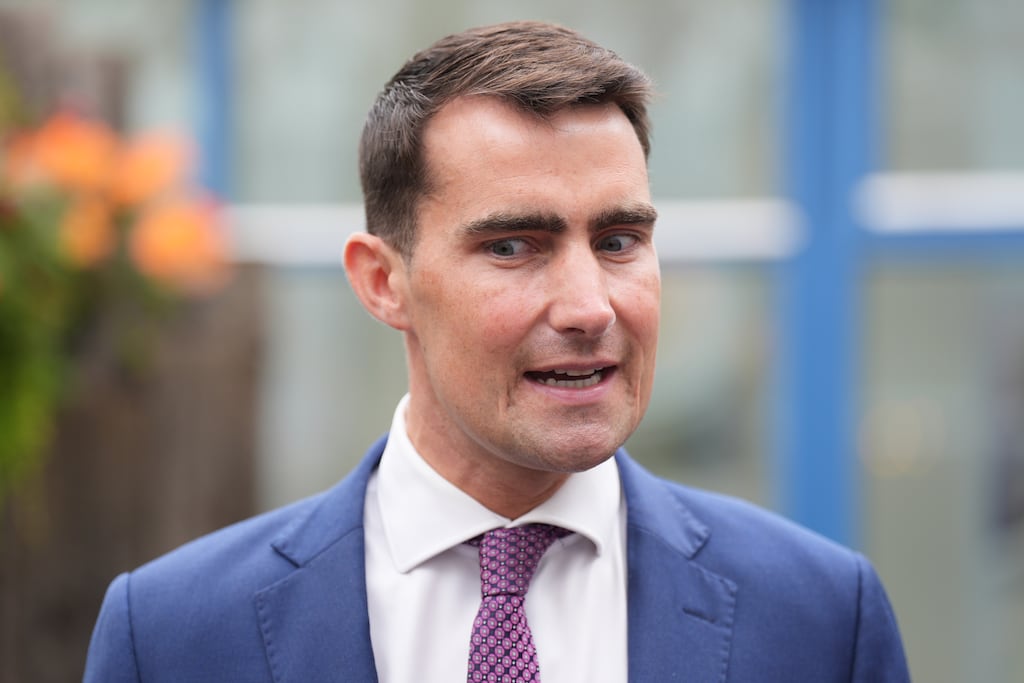
Public sector workers are “unwilling to sit down and engage” with the Government on a new national pay deal, Minister for Public Expenditure Jack Chambers has said.
Chambers said public sector unions have pre-emptively pushed ahead with industrial action when they could be in negotiations, as more than 100,000 civil and public servants commenced a work-to-rule on Wednesday.
Chambers told RTÉ Radio’s News at One that officials from his department were willing to meet union representatives for substantive talks on a new deal immediately, and are also willing to involve the Workplace Relations Commission.
Chambers said the last pay deal, which concluded at the end of June, protected public services workers, and cited the pay of one of the lower-paid grades in the Civil Service – clerical officers – which, he said, had increased by 33 per cent since 2019 while inflation had amounted to 23 per cent.
READ MORE


“The public pay bill overall has gone from about €21 billion in 2018 to €36 billion in 2026,“ he said.”
Responding to remarks by Fórsa general secretary Kevin Callinan that any talks needed to start with an undertaking that a new deal would address cost-of-living issues, Chambers said unions must first engage.
“We cannot predetermine the outcome before discussion commences,” he said. “This is just a parallel argument that is going on while unions are unwilling to sit down and engage.
“I am clear for weeks and months that the Government wants a pay deal. We want to sit down with trade unions, but the deal has to be safe, sustainable and affordable within our wider fiscal parameters and I think everybody understands that.”
[ Civil Service work-to-rule expected to disrupt EU presidencyOpens in new window ]
Earlier, Callinan said the unions’ position is that the vast majority of their members have seen their pay outstripped by inflation by “at least 5 per cent over the past five years”.
“The last agreement made some inroads into that during 2024 and 2025, but we have fallen behind again in 2026, and that just isn’t sustainable,” he said.
Callinan acknowledged the impact of the industrial action could be serious for service users in health, education and elsewhere, but said the responsibility for the work-to-rule going ahead lay with the Government.
The industrial action taken by members of unions including Fórsa, Siptu and the Irish Nurses and Midwives Organisation is set to continue over the coming weeks if talks do not restart.
Two of the three teachers’ unions have said they will take action from next Monday, and Callinan confirmed a second one-day strike has been scheduled for October 21st.


