
On the surface the GAA World Games at Waterford’s SETU Arena this week have all the marks of a well-organised, if enormous, GAA blitz. Players mill around carrying helmets and hurls, wearing their GAA team jerseys and O’Neill’s shorts with pride. On the pitches there are howls of joy and roars of passion befitting Croke Park.
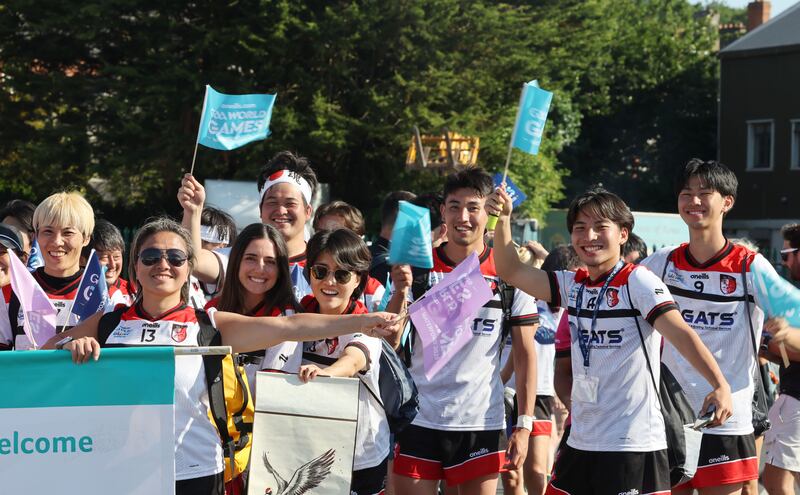
But the instructions hollered at players on pitch six are “seul seul” (“alone” in French, meaning a player is unmarked). The frustrated shouts at the referee over a disputed decision on pitch four are in east-coast American accents. The music from players on the sidelines sitting in the sun on pitch three are the beat of an African bongo drum. And as a light blue and white flag flaps in the gentle breeze at pitch two, the cheers of huddling Argentinians after a win echoe across the campus.
The games, which happen every three years, feel more like a small-scale World Cup tournament with more than 2,000 Gaelic football, hurling and camogie players and coaches from 113 teams from across Europe, the Americas, the Middle East and Asia.
Most of this year’s games are for teams with players not born in Ireland. It shows how far the sport, in the 570 clubs worldwide, has grown beyond a refuge for Irish emigrants. In Galicia 95 per cent of players are from that Spanish region, while in the United States, 65 per cent are US-born.
READ MORE


“We seem to be moving away from the diaspora, the traditional hotspots,” says GAA international manager Charlie Harrison.
Among those non-Irish players is Japanese business student Leon Shimizu. “My friend was studying in Ireland. So he came back to Japan. He knew about the GAA in Japan and invited me and I invited my friend,” says Shimizu, who is playing football for the Asia team of players from clubs around Japan, South Korea and China.
Shimizu used to play soccer but now prefers Gaelic. “In soccer we can only use our foot, but in Gaelic football we can use our hands as well.”
Capucine Chancerel, from Nantes, is one of more than 600 registered players with Brittany GAA, 95 per cent of whom are non-Irish.
“I was searching for a volleyball team and it was full, and my colleague said, ‘Why don’t you join the GAA club? We’re searching for girls’,” the engineer says. Many in France don’t know GAA and “think we’re playing quidditch like in Harry Potter”.
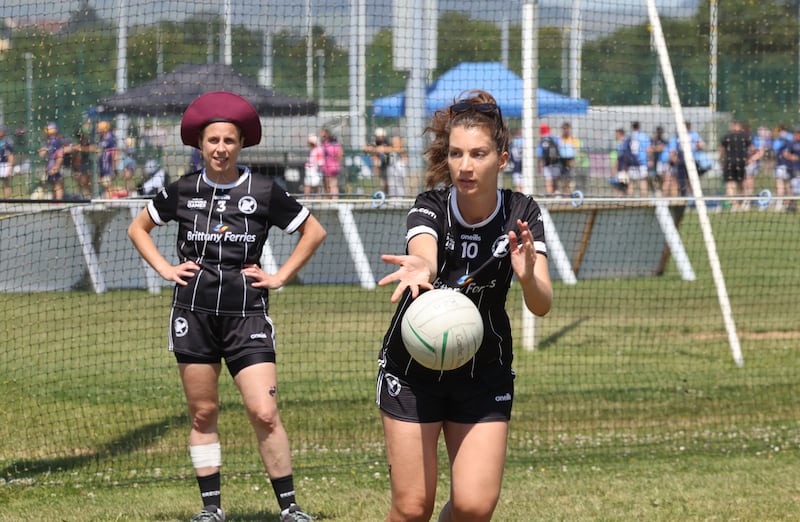
She loves being in Ireland to see the reaction of the Irish to the games, even the referees: “It seems like they are really excited to see people from other countries playing their sport.”
Chancerel has enjoyed learning about the history of Gaelic games but more than that she loves belonging to a community. “You meet people from other teams at tournaments and they start to be friends, though not on the field, but after the game we share a drink.”
The sport in Brittany has developed a reputation for its atmosphere and friendly people: “That’s why I stay.”
It is this sense of community and friendship that comes up over and over again among players at the games.
“The GAA internationally is probably something the GAA was here maybe 20 or 30 years ago. It’s much more relaxed, participation based, about coming out and meeting friends rather than high level,” says Harrison.
The Dairy Girls bring the “fun vibe”, explain coaches Colette Lawlor (Carlow), Ura Bursav (Donegal) and Louise Burns (Waterford) as they pin their cow-print flag to the fence on pitch five.
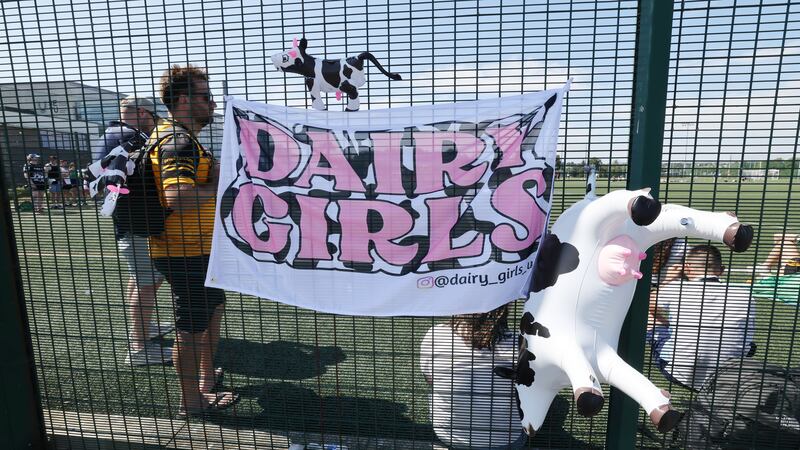
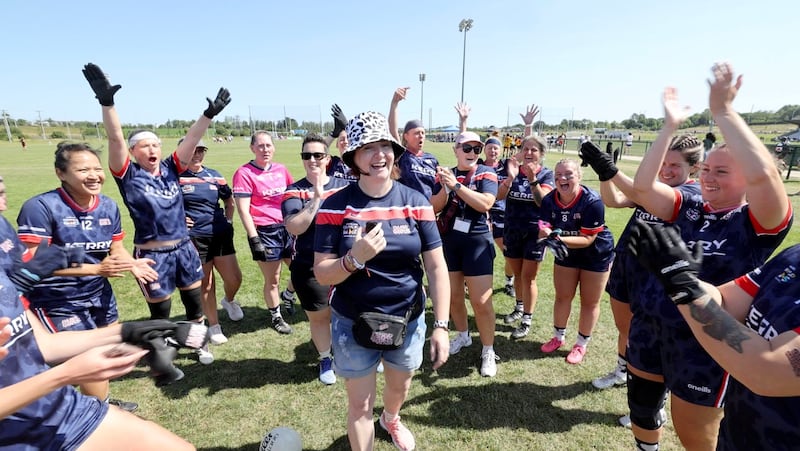
The team started 10 years ago in Wisconsin, known as the Dairy State. It has since has merged with Milwaukee and grown to 40 players, with a focus on building up local players.
Many players came from soccer, rugby and volleyball and other sports. “A lot are older, but they want to continue fitness in a less competitive game,” says Bursav. “For others, they get to play multiple sports in one.”
Bursav had a 17-year hiatus from football. Now she is playing again, has taken up camogie, and her American wife is on the US-born team playing in Waterford this week. “She has no Irish connection; she watched me for 10 years and eventually tried it.”
“It’s phenomenal to watch them playing but to watch them all being friends is even better. We all hang out, we’re all family together, we’re all each other’s people now,” says Lawlor.
The idea of team becoming family is quite literal for James Breen and Gráinne Fitzpatrick.
“Where are you from?” The Irish Times asks Breen. After hearing his Irish accent with an American lilt, we wait to hear which county. “Yonkers,” says Breen, who was born and bred in the New York City suburb to a Kilkenny father and Irish-American mother.
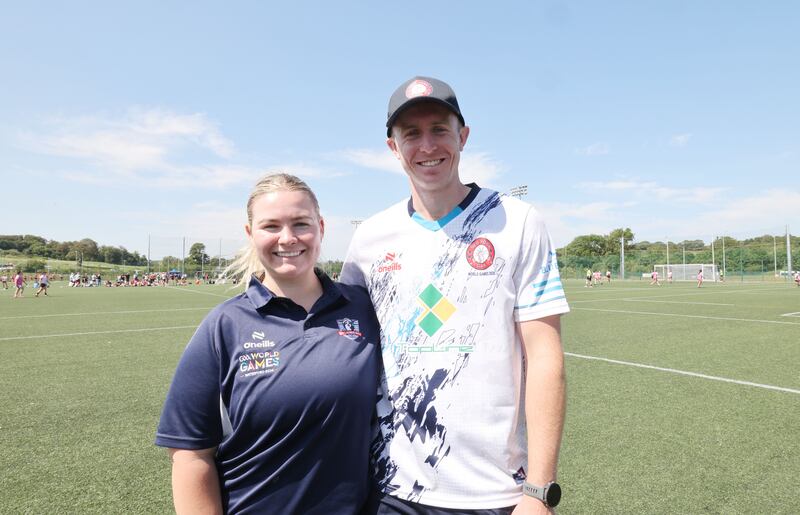

The coach of the New York hurling team is standing on the pitch with his fiancée, New York football team manager Fitzpatrick also from Yonkers, but the pair didn’t meet until Waterford seven years ago, celebrating wins on the last day of the World Games.
Both grew up steeped in Irish-American family and culture, playing GAA since they were young. Hospital worker Fitzpatrick’s parents are from Cavan, where she and Breen plan to get married next year.
They glance across to the team of New Yorkers who’ve just finished playing: “Look at the friendships you make. A lot of my friends are from football. None of us ever went to school together. But the GAA community in New York is tight-knit.”
The Irish diaspora stretches far and wide, and Argentinian football player Camilo Urquiaga would fit right in at many a GAA club thanks to his red-tinged hair. “My great grandmother is from Co Offaly,” says the teacher. She was among thousands of Irish to move to Argentina in the late 18th and early 19th centuries, giving it the largest population of Irish descendants outside the English-speaking world.
Argentina is known for its soccer and rugby, and it was rugby that Urquiaga played before taking up Gaelic football, finding many of the skills transferable.


He lives in Hurlingham, a city outside Buenos Aires (not named after the sport) and plays in the Hurling Club . “It’s a good way to know that Ireland’s not that far from home. When I go to the club I feel like I’m in Ireland.”
“I try to spread the Irish culture around. It’s getting bigger and bigger ... Argentinians are really passionate about anything, especially sports. Whenever they see the game [Gaelic football], they really want to try it.”
The journey to Waterford was much shorter for Annie Driver from Birmingham, who plays camogie for Britain.
With a Co Wicklow father, she grew up playing football. But the teacher and journalist has noticed a growth in camogie in recent years and feels it’s part of a wider revival of Irish sport, music and the Irish language in Britain.
“There’s something very special about the Irish in Britain, because we really have to keep hold of that identity and heritage.”
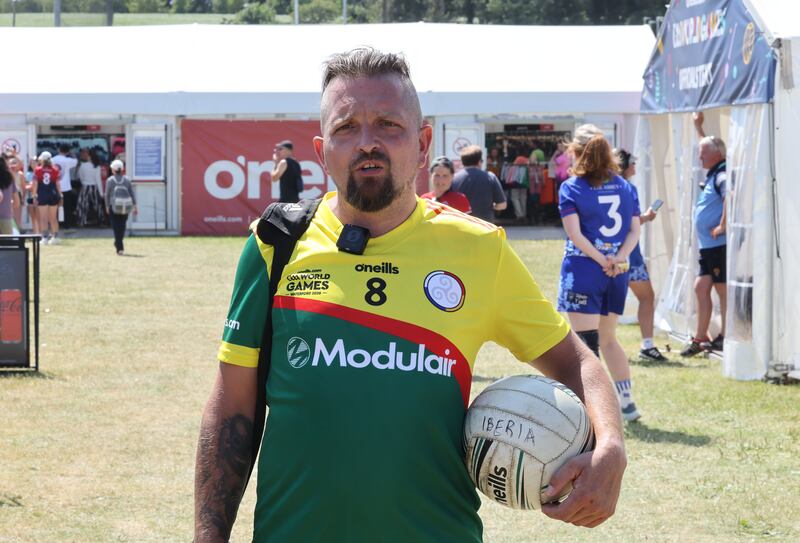
Ricky Ketteringham, who is from Britain and has no Irish roots, took the circuitous root to Waterford. The window fitter has lived in Spain for 28 years, and discovered Gaelic football thorough an Irish bar near Marbella. He is Ireland for the first time this week to play football for Iberia.
“I’ve fallen in love with it; it’s my life,” says Ketteringham. “It’s a full contact sport ... with Gaelic you clash, you hit the floor you get back up again.”
He now plays twice a week, describing his club, the Costa Gaels as “one big family”. He says other British people sometimes ask him “is that the mad game?”

For one team, it wasn’t just their first time in Ireland, but their first time on a plane and, for many of them, even out of Kabwe, Zambia. The city has one of the largest slums in southern Africa.
“We take these youngsters off the streets. They’re living in mud huts; there’s no running water; they’d be very malnourished,” says former school principal Pádraig Fanning, who has been working with children in Zambia for 25 years. He and his wife run Sables Nua school in Kabwe for more than 300 children through the charity Zamda Ireland.
Sometimes instead of coaching them in soccer, the former hurling manager would take out an O’Neill’s football and kick it around: “I’d tell them we’ve a real game in my country – we call it football.”
So when Fanning heard the World Games were coming to his native Waterford, he had an idea. The Sables Shamrocks began training in January. “They took to it like ducks to water,” says Fanning.
Player Moses Sakwiza says he “loves the green” in Ireland and swimming in the sea, coming from landlocked Zambia. “We’ve never even gotten close to a plane before ... It’s a dream come true. It’s a win for every Zambian.”
With the GAA announcing it has applied for Unesco status for Gaelic football, to add to hurling’s recognition, there are hopes this will solidify its global growth. Unesco status “is like an open door” and getting such recognition helps with access to sporting facilities around the world, says Harrison.


