Budget 2027 fired money around in various directions to try to address the cost-of-living crisis and react to the demand of a whole range of sectors, but you would search hard to find a central theme.
Perhaps it is responding to events and that is in part understandable, given the big increases in energy prices and their impact on inflation.
But budgets are about priorities and when the package emerges from fractious last-minute negotiations between the two big parties of Government, some of these can be fudged or lost. Tactics get priority over strategy. And the ante is inevitably upped when it comes to how much money is dispersed as both sides argue for “their” policy.
The questions about Budget 2027 rest on two things. The first relates to the overall extent of the money allocated and whether the budget numbers will be held to. The second is whether the resources were well spent – and what the political reaction will be.
READ MORE


Like any other budget of recent years, the Irish health warning applies. Due to the influx of corporation tax, the Government has leeway not afforded to most other EU countries.
It can spend more, tax less, announce an extra €1 billion next year for one of the two funds saving cash for the future – and still target a budget surplus of €9.5 billion. Take the windfall element of the corporate tax money away, the Department of Finance calculates, and this surplus becomes a big deficit.
[ Budget Q&A: Submit your questions to our expert panel on budget dayOpens in new window ]
In response to cost-of-living pressures, the Government decided to roll the dice again and spend the vast bulk of the corporate revenues. And perhaps Ireland will get lucky again. The real exposure is impossible to calculate, but Ireland’s reliance on a few very big companies – four or five – is obvious.
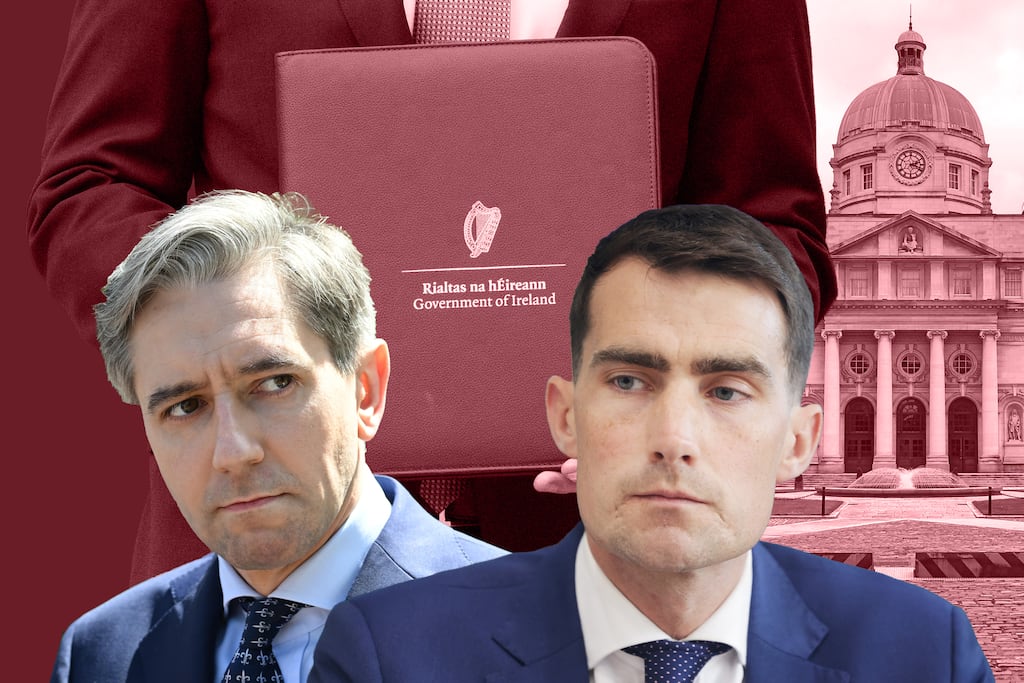
In reaction to this, the Government has committed to reduce spending growth to 6 per cent – in many recent years it has been 9 to 10 per cent. Jack Chambers, the Minister for Public Expenditure, incurred the wrath of Cabinet colleagues by ensuring the budget increase stuck to this figure.
He has also put in place a public spending efficiency taskforce to oversee current spending and try to increase efficiency.
Budget 2027: what's in it for you?
But the big question is whether the new targets can be stuck to or will spending, as has happened in recent years, again run way over target.
A lot hangs on this. The full cost of overruns this year may again not have been counted into the base for 2027. There is, crucially, a public sector pay deal to be done. The pressure to increase spending further will be intense. To reduce future risk, a way must be found to stop the runaway spending train.
This was the framework. What about the details?
Having made a big political error last year by having no income tax package in favour of cutting the VAT rate on hospitality, the Coalition tried to make amends. Its tax package aimed firmly at middle earners, who will see less income taxed at the higher 40 per cent tax rate. A single middle earner will gain some €700, when account is also taken of higher PRSI next year. The changes are more than would be required to index the band for next year’s wage inflation - ensuring tax does not take a higher chunk of income - and to make up a bit of ground from the non-indexation this year.
The cash gains for lower earners are a lot less – they do not earn enough to benefit from the extension of the tax band. This is a political point of exposure for the Government, immediately tackled by Sinn Féin finance spokesman Pearse Doherty.
And the risk for the Coalition is that with general cost increases elsewhere many people will still feel worse off next year. Selling the budget in the context of this will be difficult enough.
The Government is trying to do what it can to hold down energy costs, but is entirely reliant on international events. This is a key exposure heading into 2027 – and could yet lead to adjustments in tax and spending plans next year.
What happens to excises on tax and petrol, for example, if come next March when they are due to increase, prices are still at or above current levels? Or if inflation heads back towards 5 per cent?
As has been the case for many years now, this is a “spending” budget, with a lot more allocated here than to cutting tax. There is a hike in investment and cash for current spending spread across a whole range of areas, meaning incremental changes in many.
The Government will feel it has made a step forward on childcare by cutting costs to parents even if places remain an issue in many parts of the country. In other areas progress was slower. Promises of a cost-of-living payment for disabled people turned into a once-off €500 payment.
[ Ireland’s new personal investment accounts: Here’s how the scheme will workOpens in new window ]
The much-discussed second rate of child benefit to tackle poverty remains undelivered. The €10 welfare increases will only go so far to meet rising prices. Having raised expectations across the board, the Coalition will still face flak.
At a wider level, a Government strategy for how to manage the public finances as the population ages remains absent. As does a strategy to meet Ireland’s vital climate goals and avoid paying large fines.
The cash being put aside and the promise to slow spending growth are welcome. But Budget 2027 was one for the now, rather than the future. With capital and income taxes both being cut, there is no medium-term strategy for paying the costs of ageing and climate change – beyond hoping for the best on the multinationals.
Perhaps it is politically difficult to address this when the topline budget figures are still in huge surplus. But it will surely be even harder when the public finances tighten.