The United Nations shipping agency on Thursday paused an evacuation effort, which aimed to get hundreds of stranded ships and thousands of seafarers out through the Strait of Hormuz, after a vessel was attacked in the Gulf of Oman.
“I have been informed of an attack today in the Gulf of Oman on a vessel which passed through the Strait of Hormuz. This vessel did not transit under IMO’s evacuation framework,” Arsenio Dominguez, secretary general of the UN’s International Maritime Organisation (IMO), said in a statement.
“I have decided to temporarily pause its implementation in order to reconfirm that the necessary safety guarantees continue to be in place for the ships on our evacuation list and all those in the region.”
The initiative, which was launched on Tuesday, was a voluntary option for ships and their crew to sail out of the Gulf using two routes: one via Iranian waters and the other via Omani waters with US oversight, the IMO said this week.
READ MORE


Some 57 ships carrying an estimated 1,100 seafarers had transited the Strait of Hormuz under the evacuation plan from June 23rd until the morning of June 25th, initial IMO data showed earlier on Thursday.
The IMO provided no details on the vessel attacked.
A container ship reported a suspected attack as it attempted to pass through the strait close to the coast of Oman on Thursday, British navy agency UKMTO said earlier.
One maritime security source said the vessel was likely targeted by a drone, although it was not clear yet who carried out the strike.

Earlier, Iran rejected UN-backed plans for the mass evacuation of ships through the strait.
The proposal, backed by Oman, was potentially the first phase of a broader Omani proposal to consult on setting up a new management of the strait based on voluntary fees and modelled on the Malacca and Singapore strait mechanism.
The intervention showed that Oman and Iran’s visions for the strait may differ, although they were consulting each other to try to align their plans.
Iran’s intervention also damaged efforts led by Saudi Arabia to convene a conference to normalise relations between the Gulf States and Iran in a new proposed non-aggression pact.
Shipping through the strait had been steadily increasing since a memorandum of understanding was signed last week by Iran and the US. As part of the deal, Tehran agreed that it would make its best efforts to ensure full freedom of navigation was restored to the strait and no fees or tolls would be imposed for a minimum of 60 days.
A pre-existing transit separation scheme (TSS) route remains impassable due to mines. The IMO proposed two routes, one to the north of the TSS in mined Iranian sovereign waters, and another that was much more passable to the south in Omani waters.
The IMO and Oman had advised that the evacuation of hundreds of ships, some which have been trapped for months, had to be co-ordinated with both organisations so that transit days and waiting areas could be allocated. The statement issuing the co-ordinates was given by the Oman National Hydrographic Office, but it appeared from the Islamic Revolutionary Guards Corps’s (IRGC) negative reaction that it did not have Iran’s agreement.
The IRGC force described any alternative transit routes as “unacceptable and completely dangerous”.
“Traffic of vessels outside the official routes is prohibited, and we warn against any traffic outside the communicated routes,” it said.
The statement further emphasised that co-ordination with the IRGC Navy was “mandatory” for any transit through the strategic waterway.
The strait has proved to be Iran’s key negotiating lever, and it does not want to weaken that lever while bargaining is still under way on lifting US sanctions, asset relief and the future of its nuclear programme.
The speaker of Iran’s parliament and its chief negotiator, Mohammad Ghalibaf, said the chokepoint would not return to the status it enjoyed before February 28th, the date of the first combined US-Israeli attack on Iran.
“Everyone should know that the administration of the Strait of Hormuz will never go back to the way it was before the war,” Ghalibaf said.
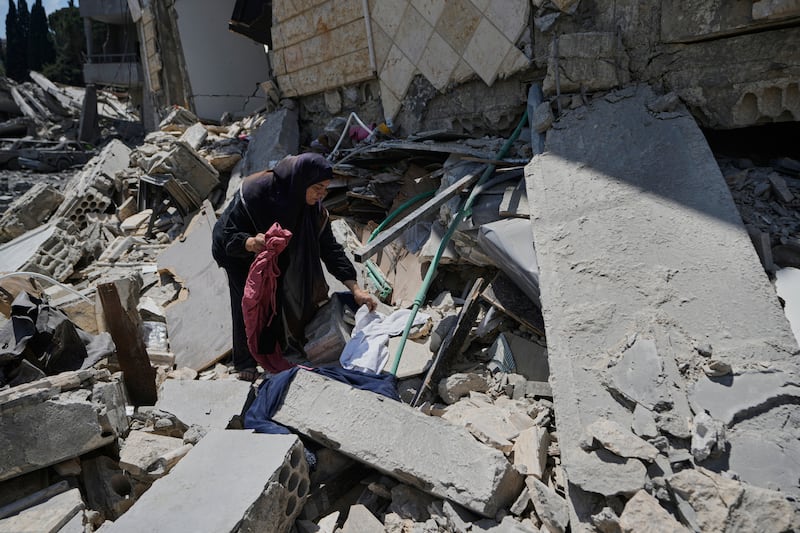
Lebanon, along with the strait, has emerged as the stumbling block for US-Iran talks which are meant to lead to a permanent peace after 60 days of talks. Iran has demanded that Israeli troops withdraw from southern Lebanon, where they occupy more than 600 sq km of land.
Israeli and Lebanese officials denied on Thursday that there had been any Israeli withdrawal from southern Lebanon, pushing back on a statement from a US official who said Israel had called back some troops in a gesture of goodwill towards the Lebanese government.
In recent weeks, Lebanon and Israel have been discussing a phased withdrawal of Israeli troops. The Lebanese army would take control of the vacated areas to prevent Hizbullah from re-entering them and also to destroy any facilities belonging to the armed group.
Israeli government spokesperson David Mencer said on Thursday that any “redeployment” of the Israeli military in southern Lebanon would only come after Hizbullah was disarmed. - Reuters/The Guardian