
The UK government’s move this week to tweak planning laws to save pubs from redevelopment is as good an opportunity as any to reflect on what I now recognise as my embarrassingly-vast personal experience of British watering holes over recent years.
I arrived in Britain more than three-and-a-half years ago with the intention of talking to as many people as I could. I found plenty of them at the bar across myriad hostelries.
Yet there is angst over here about the Great British pub, just as there is about many of the traditional institutions of this nation that still seems so ill at ease with itself.
Housing secretary Angela Rayner this week announced plans to make it harder for pubs to get planning permission to be rebuilt as flats or offices. She said pubs are where Britons “celebrate, grieve, argue and belong ... [and are] part of who we are as a nation”.
READ MORE


Rayner said that “letting so many of them slip away without a fight” recently was an “outrage”. Figures from industry lobby group, the Campaign for Real Ale, suggests that almost 800 of Britain’s 44,000 pubs may have shut this year, with about 80 reconverted.
Rightly or wrongly, and to varying degrees, the narrative of Britain that most of its people currently recognise is one of decline. If many Britons see themselves and their nation’s character in its boozers, then it makes sense that these closures spur such concern.
Personally, I have done my best to help keep as many of them open as possible.
Irish people naturally can have mixed feelings about British pubs, with the corporate chain efforts that abound here and those infernal slot machines and dodgy carpets. And why are so many canines allowed into pubs? I like dogs, but they never talk back to you.
Pubs are one of the two instances where the Irish genuinely feel culturally superior to the British, the other being how we handle death. Yet pushing aside my inherent Irish pub-smugness, I realise I’ve had a whale of a time traipsing through Britain’s boozers.
It seems, however, that I haven’t always been to the cream of the crop. Time Out magazine recently published a list of the 22 best pubs in Britain. I was horrified to discover that I had been to just one: the Golden Lion in Todmorden in Yorkshire.
Tod is an attractive but eccentric town in Calder Valley near the border with Lancashire. It is also Britain’s answer to Roswell, with the amount of alien sightings over the years.
The town’s quirkiness is reflected in the Golden Lion. It looks and feels like an ancient English boozer, yet serves top class Thai food at the bar and is a secret hangout for the world’s best DJs, who sometimes entertain locals by spontaneously hitting the old decks parked against the back wall. The local UFO society meets upstairs each month.
I spent an evening at the Golden Lion during the UK’s 2024 general election campaign drinking with three locals who swore blind to me that the kindly grandmother who was my accommodation landlady had once appeared topless in a motorbike magazine.
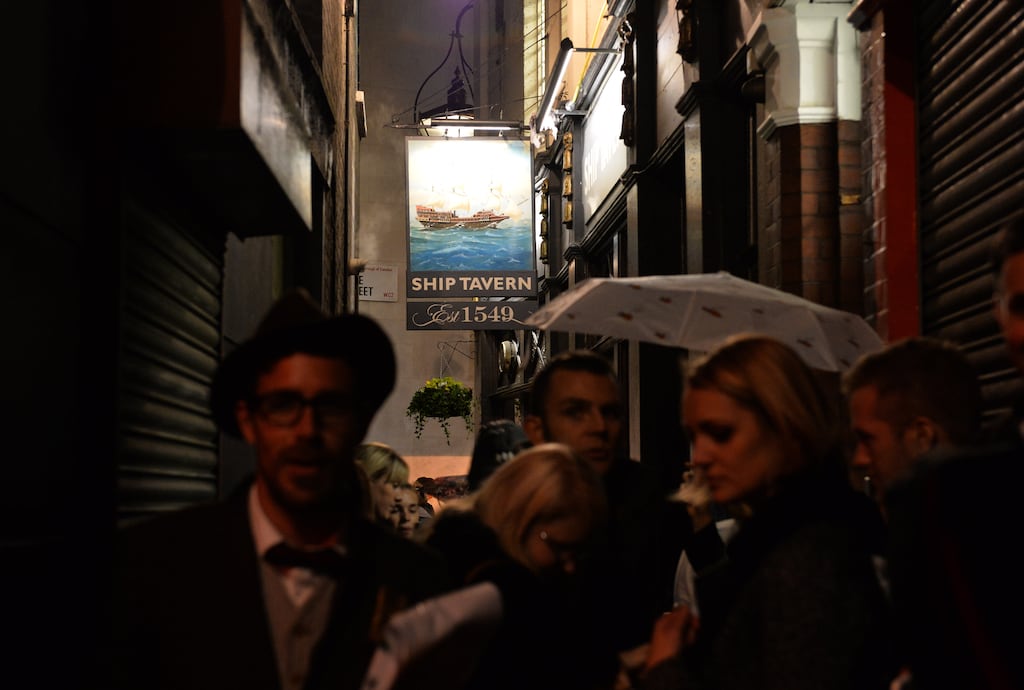
The Great British Pub awards are next month. There are 93 pubs nominated (the Black Swan in North Walsham, Norfolk, has two) across 16 categories. Again, I believe I was in just one of the pubs mentioned, the classic Ship Tavern in Holborn, London. I know I went there ostensibly on a work assignment. I just can’t remember much else.
Up the road in Scotland, one of the best pub nights I ever experienced was in the Grant Arms in Glasgow. Scotland were beaten 5-1 by Germany in Euro 2024 but it didn’t dampen the party mood. There was an unfortunate bar brawl that was expertly handled by the staff and some locals. The pub gave out free pies and the karaoke was intense.
In Wales, I once hung out for a few nights in the Angel Inn in the modest little coal valley town of Troedyrhiw. The owner, Steve, was a builder who had acquired the pub in recent years. Not for redevelopment, but to protect it from such a fate. The man bought his local boozer because he enjoyed his social life so much he didn’t want it to change.
A regular haunt in London is the Star Tavern in Belgravia, which is often the pub for “afters” following an event at the Irish embassy, just up the road. It is also the pub where the Great Train Robbery was planned.
Stranger’s Bar in the House of Commons is only so-so, compared to the bar in Leinster House. But the terrace outside can be great fun and every journalist in Westminster goes there for political gossip. Rayner, the would-be saviour of British pubs, supposedly walked into a door in Stranger’s recently during a night of enthusiastic unwinding after her parliamentary work, according to a gleeful first-hand account in the Daily Mail.
The UK’s Labour government hopes that by showing concern for the dwindling (for some) futures of traditional British pubs, it might help it to reconnect with some of the working class voters it has lost to Reform UK.
Meanwhile, Tory-run Westminster council recently discussed proposals to discourage what some joyless bureaucrat called “vertical drinking” (having a pint while standing up). Labour’s London mayor Sadiq Khan (a teetotaller) ordered it to scrap the plan.
Now, that would have been a pub disaster.