

He remains the UK prime minister for now, but Keir Starmer is mired in the fight of his political life. He has stubbornly refused to quit in the face of ratcheting pressure from his own Labour MPs, while Tuesday brought a slow drip-drip of ministerial resignations.
This is exactly how Starmer’s old foe, the former Tory leader Boris Johnson, was forced from Downing Street in 2022. His own MPs rounded on him first. Then, when that didn’t work, ministerial aides quit, followed by junior ministers, to crank up the pressure.
Finally, the co-ordinated resignation, or threatened resignation, of a slew of senior cabinet members sealed a grisly end of Johnson’s premiership. The pressure was too much to bear. Could Starmer face the same?
His internal Labour rivals would be loath to admit it, but they seem to be following the Tory playbook with their co-ordinated, slowly escalating pressure campaign, which Starmer is now fighting desperately to repel.
READ MORE


Meanwhile, as the Labour leader remains under siege in Downing Street, clinging on to office, he draws further unwelcome comparison with Johnson for every hour, day or week that he manages to keep his assailants at bay.
Central London was bathed in sunshine on Tuesday morning, yet a dark cloud hung over Starmer’s near two-year tenure.
Upwards of 80 MPs had publicly told him to go over previous days, following disastrous elections last week. Starmer tried to fight back on Monday with a defiant speech: “I will prove my doubters wrong.” But his perceived obstinance only worsened things.
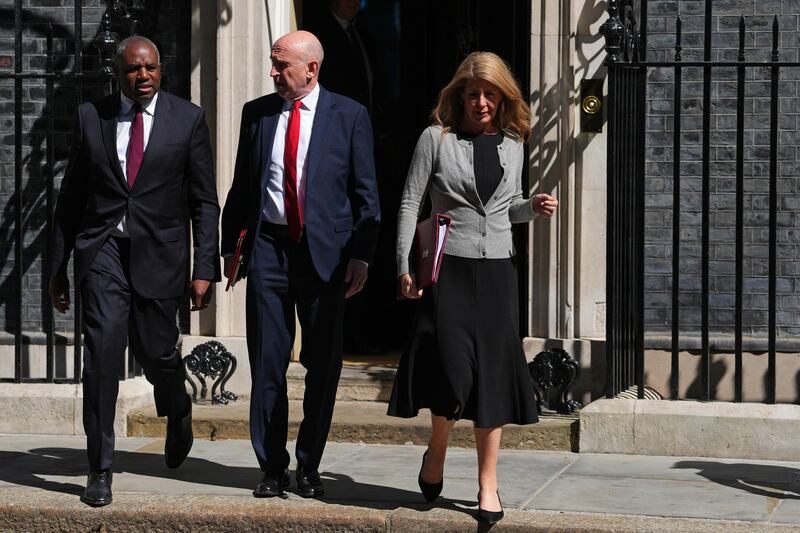
The UK government’s weekly cabinet meeting was set for Downing Street at 9.30am on Tuesday. It was expected to be a doozy, as splits among ministers over Starmer’s future emerged on Monday night: home secretary Shabana Mahmood was widely reported to have told the prime minister he needed to set out a timetable for his exit.
As a phalanx of media gathered outside the famous black door of Number 10 to shout questions at ministers entering, Starmer let it be known from inside that he planned to tell his cabinet he was not going to quit.
“The Labour Party has a process for challenging a leader and that has not been triggered,” he said, in comments redolent of John Major’s infamous “put up or shut up” remark to his cabinet challengers more than 30 years ago.
[ Labour leadership: Wes Streeting faces narrow road to party members’ favourOpens in new window ]
Starmer continued: “The country expects us to get on with governing. That is what I am doing and what we must do as a cabinet.”
He laid down the gauntlet, then, to his putative Labour rivals, including the UK’s health secretary Wes Streeting and the Greater Manchester mayor Andy Burnham. Acolytes of both had been prominent among those criticising Starmer on Monday and Tuesday morning. Burnham’s allies called for an “orderly transition” to give him time to get back to Westminster via a byelection; Streeting’s allies – the “Swifties” – wanted a “swift timetable” for Starmer’s exit, so as to have a contest before Burnham was ready.
Starmer prepared to defy them all. Yet even as he was inside Downing Street, insisting to his cabinet that he was going nowhere, frontbenchers were resigning.
There was a frisson through the Downing Street media pack at about 10am – Miatta Fahnbulleh, a housing minister, had quit, while calling on Starmer to go too. She had been on Westminster’s “resignation watch” list anyway.
Meanwhile, Larry the cat, the longest-ever resident of Downing Street, patrolled the media pen while his sixth prime minister, Starmer, fought for his political life inside.

Reportedly, Starmer shut down opposition during the cabinet meeting, refusing to give his would-be opponents an opportunity to directly speak to him.
An hour after the meeting started, cabinet members left one by one through the front door. Starmer loyalists, such as business secretary Peter Kyle and housing secretary Steve Reed, took the unusual step of walking over to the cameras to offer words of support for the prime minister. They used the same words, suggesting it was all co-ordinated.
Streeting left without saying anything, his face like thunder as he walked off to his ministerial car. Meanwhile, the reportedly insubordinate Mahmood was nowhere to be seen. It was speculated that she must have left Downing Street unseen via a back door.
There were blows for all the protagonists on Tuesday. Streeting, it appears, will have to go formally “over the top” with a challenge to oust Starmer if he wants his job. The health secretary has been loath to move first, but now it seems he must.
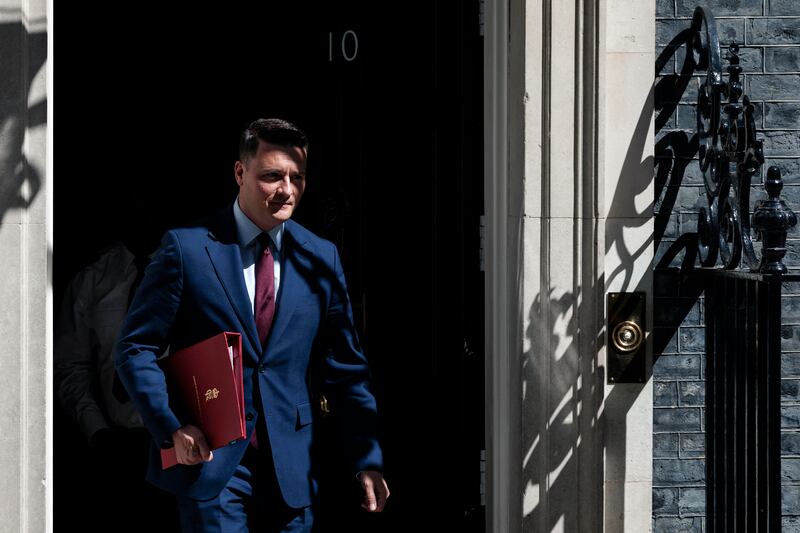
Burnham, meanwhile, was spotted arriving in London at Euston Station on a train from Manchester, hours after Marie Rimmer, the MP for St Helen’s South, just below Merseyside, said she would not step aside to facilitate the return of the Manchester mayor to parliament.
Starmer, meanwhile, was dealt another blow when Jess Phillips, a junior minister for violence against women and girls, became the second minister to quit on him on Tuesday. She told the prime minister he was “fundamentally a good man” but, in effect, that as a prime minister he was not good enough.
[ Andy Burnham seeks path to Westminster to launch Labour leadership challengeOpens in new window ]
Two more ministers had quit by the early evening including, crucially, a junior health minister, Zubir Ahmed. The significance of his departure is that he worked in Streeting’s department and was, separately, seen as his close ally.
His resignation is being viewed in Westminster as a direct retort by Streeting’s camp to Starmer’s stubbornness, a message: “Streeting isn’t going away, you know.”
It wasn’t just Starmer’s rivals who were co-ordinating throughout the day. The prime minister’s desperate rearguard action to save himself included some clearly planned interventions. David Lammy, the deputy prime minister, just happened to amble by a microphone on Downing Street as the evening drew in.
Of course, he paused to state that Starmer was standing firm and that he had his full support: “We must put country before party. Let’s get on with the business of running this country and government.”
Lammy also made the salient point that if any of the prime minister’s challengers – read Streeting – had the numbers in terms of MP backing for a direct challenge, surely they would have formally launched one by now.
Could this be what is holding Streeting back, the niggling doubt that if he launches a challenge, that he hasn’t got the numbers to win?
Starmer’s allies also organised a letter signed by more than 100 Labour MPs calling for the prime minister to stay. The Labour leader promised to fight all comers and seemed determined to stick to his word.
He holds on for now, with the pressure expected to ratchet up as time wears on. There may be a lull in hostilities as the houses of parliament gather on Wednesday for a speech by British king Charles III – nobody will want to embarrass the monarch by rowing in his presence.
But after that, the war to oust Starmer will, surely, resume. For how much longer will he hold out? Johnson lasted barely a week when it happened to him.
It seems as if Starmer’s stubbornness is about to be tested to the hilt.