

Locals call Jersey the “nine by five” – nine miles by five miles wide. Despite the island’s modest size, economically it punches harder as an offshore banking mini-powerhouse. Yet, some on Jersey fear its near future might not be as bright as its recent past.
I was on the island recently speaking to locals about assisted dying – the self-governing crown dependency had passed a law giving the terminally ill the right to choose death.
The heavy weight of the topic seemed totally at odds with my bucolic surroundings. The island, just 19km (11.8 miles) off the coast of France, was bathed in spring sunshine. It seemed as if life was springing up everywhere with sweeps of daffodils gilding every ditch.
I traversed the nine by five over and over, marvelling at the stunning views while trying to think up any excuse to justify a return visit. The locals were friendly. All seemed ordered, neat and tidy. I saw not the barest hint of deprivation to warrant the use of the word.
READ MORE


On the surface, Jersey seemed like the wealthy little paradise that, for many, it surely is. The island’s residents are on average 1½ times richer than people in the UK.
After a few hours in pretty little stonewalled parishes such as St Martin, I returned to the capital, St Helier, to meet local government officials. Afterwards, I stopped for a coffee and a read of the Jersey Evening Post. A banner headline caught my eye.
“We are approaching a perfect storm,” it warned ominously, pointing to an article by former politician, Ben Shenton. Yet all I could see around me was sunshine and smiles. The banner said it would be his final column for the paper. This mic drop I had to read.
Shenton (65), an investment adviser, was health minister between 2008 and 2011 but left the states assembly (Jersey’s parliament) soon after that. His father, Dick Shenton, had been a senator before him. The first Shenton to arrive on Jersey had been a member of the Dragoons regiment who had come to the island from Ireland in the 1820s.
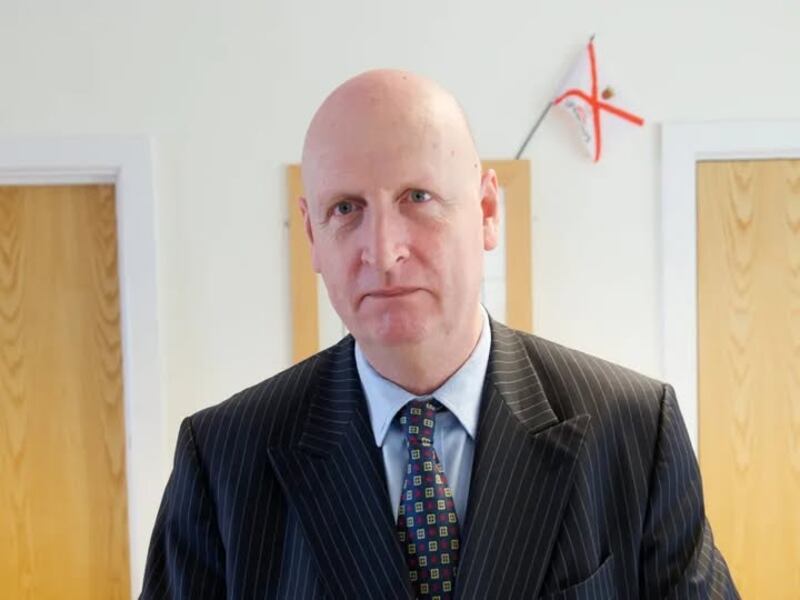
Shenton wrote in his column how he felt the “confident, balanced, fun” Jersey of his youth “no longer exists”. He complained the island’s establishment had become “sluggish”. He warned that artificial intelligence (AI) would soon eat up its banking jobs.
The housing market had stagnated, he argued. I had indeed read before that Jersey’s expensive housing market was bloated, with homes out of reach for many locals, especially those not in banking. Shenton said Jersey had lost its competitive edge.
As someone who came of age in Ireland’s Celtic Tiger bubble and bought my house just before the great crash, I recognised a few of the little signals to which Shenton pointed.
“I find there is very little I can say that is nice about the island of my birth,” he said. Then he added something startling for its candour: “It has taken me a long time to admit to myself that I no longer have the enthusiasm for politics that once energised me.”
I checked economic data sites. Jersey’s economy shrank by 0.7 per cent in 2024. There had been a lull in investment. A survey of local business leaders in January by the Institute of Directors suggested that two-thirds of them expected things to get worse.
I asked the current health minister, Tom Binet, who was previously infrastructure minister, if he was worried about whether Jersey was going in the right direction. He admitted the island had got “complacent” but said it was working hard to reverse this.
[ Jersey: An unusual little island that feels surprisingly familiarOpens in new window ]
Next day, I met Shenton for coffee before flying back to London. He pulled up on his motorbike at the Old Courthouse pub on St Aubin’s pretty little harbour. We spent the next hour mostly laughing and joking, as he regaled me with tales of the island.
This guy doesn’t seem to have lost his enthusiasm for anything at all, I thought, maybe he was just having a bad day when he wrote the column.
But Shenton said Jersey’s villages were fighting to keep their young people, while some small, independent businesses were struggling to survive. His argument was that over-regulation and an oversized, powerful public sector were holding the island back.
I checked the proportion of Jersey’s workforce that are public sector employees – about 15 per cent. That is less than the UK, where it is 18 per cent. Then again, Britain isn’t exactly a hotbed of exuberance these days either. Ireland’s share is 20 per cent.
But Shenton argued that the politicians weren’t really running the show: “They give the illusion of control.”
I asked what he thought would happen to Jersey if a revolution of AI did, as he had warned, end up trashing its base of well-paid jobs in banking and professional services.
“We’re going to become a lovely little retirement village,” he said, smiling.
In fairness, there are plenty of worse places to while away the years.