

At a lunch gathering of cross-party poll watchers in London on Thursday, while the defection of Robert Jenrick from the Conservatives to Reform UK was still playing out, a strategist with links to the Tories deployed an old, acerbic but still funny political cliche.
“Defections from the Tories to Reform,” he said, “tend to raise the average IQ in both parties.”
Jenrick’s dramatic journey from would-be leader of the Tories to now the biggest beast in Reform after Nigel Farage has also raised the temperature between these two rival parties on the restive, churning but disempowered right wing of British politics.
Its impact could be far-reaching.
READ MORE


The move – or, at least, the way it played out – has in the short term strengthened the position of Tory leader Kemi Badenoch, now shorn of her biggest leadership rival who had made no secret of coveting her job.
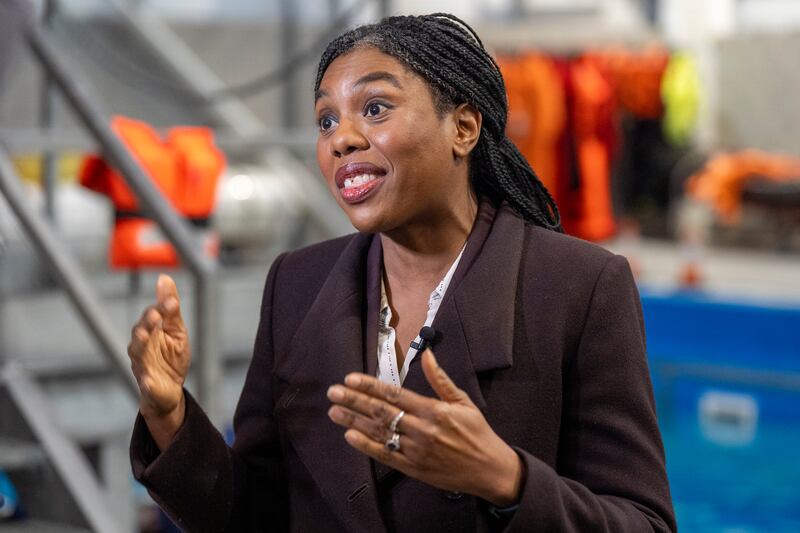
Her stock has also risen in her own party for the decisive and brutal way she handled it – pre-empting Jenrick’s move by sacking him first, then releasing a video damning him for his disloyalty.
Her swift intervention also wrong-footed the Reform leader Nigel Farage, who later hastily welcomed Jenrick as a defector.
Jenrick’s move to Reform will also have consequences for that party.
The former Tory, who was previously an immigration minister under Rishi Sunak before quitting in 2023 and styling himself as a hardline anti-immigration MP, is perhaps the first potentially credible alternative Reform leader to Farage. It allows the current Reform leader to push back against accusations that he leads a “one-man band”.
But this very same point also brings risks for Farage – and for Jenrick. History shows that colleagues who compete with the Reform leader for attention or try to cross him generally meet a grisly political end. Jenrick, however, is known in Westminster for being, in the words of one of his former colleagues, “insanely ambitious”.
Badenoch beat Jenrick in the Tory leadership race in November 2024. Ever since then, he is viewed as having plotted against her, practically openly.

The Tory leader wryly flicked at this when she sent a message to Farage about the apparently regicidal predilections of his new charge: “Robert Jenrick is no longer my problem. He’s now Nigel Farage’s problem. It’s not a blow to lose someone who lies to his colleagues.”
Jenrick’s defection to Reform may also have consequences at a broader political level. The bitterness of his defection and the enmity it has stirred is said by many Westminster insiders to make it far less likely that Reform and the Tories, at least under Badenoch, will enter any electoral pacts. A disunited right gives hope to Keir Starmer’s Labour.
[ Is Britain’s ailing Conservative Party finally over?Opens in new window ]
Farage has always said that he intends to kill off the Tory party with Reform, not do a deal with it to keep it alive. Meanwhile, the Conservatives regularly warn prospective Reform voters they are splitting right-wing opposition to Starmer’s Labour government.
Jenrick tried to turn this point on its head in an interview on Friday with the BBC’s Laura Kuenssberg. He told her that, actually, it was loyal Tory supporters who were splitting the vote. He said that it was clear that Farage was the leader best placed to challenge Starmer and that Reform was, the polls suggest, best placed to usurp Labour.

Backing Farage in his mission to destroy the Conservative Party was the way to heal divisions within the right wing, Jenrick suggested. If there is no Tory party any more, there is no division, he seemed to suggest. “This is uniting the right.”
His switch to Reform was the second high-profile defection from the Tories in less than a week. Former Conservative MP and party chairman Nadhim Zahawi made the move last week. He is thought to want a peerage; senior figures in Reform suggest they will seek scores of peerages if their party wins the election.
Zahawi, who quit as Conservative Party chairman in 2023 in a tax scandal, could be easily waved away by his former Tory colleagues as a “has-been”. However, Jenrick – who polling showed was one of the most popular Tory MPs with grassroots members of that party before he switched – cannot be dismissed in such fashion.
Jenrick said in his BBC interview on Friday that some of his former colleagues in the Tory party were “arsonists” who had wrecked Britain while in power, and that he had decided to “put personal ambition to one side” to back Farage in the fight against Labour.
That last point may be seen as debatable – the rumour in Westminster is that Jenrick covets the role of chancellor of the exchequer if Farage leads Reform to general election victory.
If he formally seeks that position now as spokesperson for Reform, it could spark rivalry with other senior figures such as deputy leader Richard Tice or Zia Yusuf, the party’s top strategist – apart from Farage, of course.
Farage has long promised that Reform is also capable of attracting defectors from Labour, which would buttress his claim to be leading a broad-based political movement, and not just a right-wing one that is becoming a home for disaffected members of the party – the Tories – that he blames for ruining the country.
But for now, he will have to make do with the coup of landing Jenrick.