

The B-word that in recent years dared not breathe its name is returning to Westminster. Brexit is back in British politics after a bit of a hiatus.
This time, the source of the noise isn’t Reform UK or Tory opposition complaining the Brexit vote was “betrayed”, a tune they’ve sung heartily in the past. Rather, it is the Labour government blatantly signalling a desire to get closer to the European Union.
“The idea that leaving the EU was the answer to all our cares and concerns has clearly been proved wrong,” said Keir Starmer on Monday in a speech to the City of London. It was his most direct intervention as prime minister on the matter to date.
The motivation for his growing brazenness on Brexit is the pursuit of economic growth.
READ MORE


Post-budget forecasts by the UK’s Office of Budget Responsibility (OBR) show growth in Britain’s economy flatlining below 1.5 per cent – or even declining slightly – between now and the next election due in 2029.
The OBR has blamed Brexit for a 4 per cent shrinkage in the size of Britain’s economy over the long term. The modest “reset” in UK-EU ties agreed at a Lancaster House summit this year will claw back less than a sixth of the losses for Britain, according to analysis by the Centre for European Reform, a London think tank.
Without better growth, Labour will struggle to fund the rebuild of public services it needs to have any chance of staying in power. Meanwhile, stronger growth might also lessen disenchantment that stems from economic deprivation in Labour’s old heartlands where Reform now struts, threatening to swamp the governing party.
On the political front, a platform that argued for closer EU ties to roll back the worst economic effects of Brexit – or perhaps even to roll back some of Brexit itself – would represent a clear dividing line between Labour and its right-wing political opponents at the next election. Polls suggest a majority of the UK public could back it.
[ Starmer’s new Brexit line: it’s a disaster – and Farage is to blameOpens in new window ]
In the Westminster rumour mill, a slow-creep back towards the EU is also being touted as evidence that the influence on Starmer’s Downing Street operation of his chief of staff, Morgan McSweeney, may not be as all-encompassing as it was. The Corkman had pushed the prime minister, a Remainer by instinct, to accept Brexit.
The evidence that Labour is gently pivoting its stance on the EU can be seen in what it has said; in what it has not said; and what it has done.
In terms of what it has said, the subtle approach of recent months was bookended by landmark speeches.

The most recent was Starmer’s address at the City’s lady mayor banquet on Monday. The first was a speech at the end of August in the offices of Spectator magazine by Nick Thomas-Symonds, the UK’s paymaster-general and the minister who leads EU negotiations for Starmer, his point man with Brussels.
NTS, as he is known around Westminster, told the crowd that 16,000 British businesses had stopped exporting to the EU since 2021 due to the barriers raised by leaving the trading relationship. He said such exports were down 20 per cent.
“No one voted [in the 2016 referendum] for the kind of change I’ve talked about,” said the Welshman. “Thankfully, Britain still has choices.”
He suggested Britain would, as a sovereign nation, accept more “shared rules” with the EU in parts of its economy to spur growth. “We know we’re going to have a fight on this,” he said, suggesting a growing inclination to resume the fight with some Leavers.
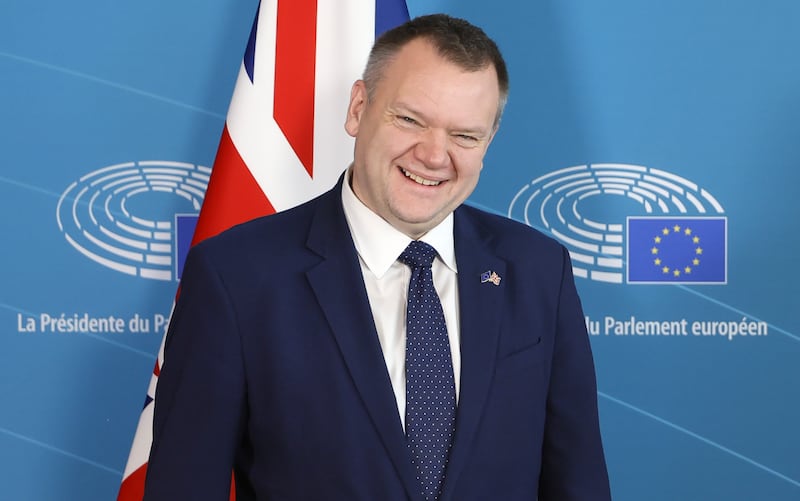
On Monday’s speech in the City, Starmer’s feelings were clear. He said Brexit as a policy template was “utterly reckless”. He said Britain needed to “confront the reality” that leaving the EU had hurt the economy.
Meanwhile, even chancellor of the exchequer Rachel Reeves got in on the act, blaming a “chaotic Brexit” for the fiscal straitjacket from which she has struggled to break free in the last bruising year-and-a-half.
In terms of what it has not said, Starmer’s Downing Street operation made no effort to deny UK media reports last weekend about Minouche Shafik, the prime minister’s economic adviser, who was said to have privately urged him before the budget to consider taking Britain back into the EU’s customs union.
The prime minister and his EU minister, Thomas-Symonds, are still insisting that the UK’s so-called Brexit “red lines” – no return to the customs union, no free movement and no return to the single market – remain intact. But for how long?
Finally, in terms of what it has done, Starmer’s government has sent a clear signal that closer ties with the EU are high on the agenda. This week, it emerged Symonds-Thomas, the equivalent of a junior minister, had been promoted to sit at cabinet from now on.
If NTS is rising in importance, that suggests his brief – relations with the EU – must be too.
Negotiations started last month on a long-awaited (in the UK, at least), sanitary and phytosanitary agreement with the EU on exports of food and animals.
It seems there could be more talking after that.


