
A senior Russian official has said Moscow could deploy its navy to protect Russian-linked vessels from potential European seizures.
The threat raises the prospect of retaliatory action against European shipping as pressure on the Kremlin’s so-called shadow fleet intensifies.
Nikolai Patrushev, a former FSB director who heads Russia’s maritime board, said on Tuesday that the country’s navy should be ready to counter what he described as “western piracy”.
“If this situation cannot be resolved peacefully, the navy will break any blockade and move to eliminate it. And let’s not forget that many vessels sail the seas under European flags – we, too, may take an interest in what they are carrying and where they are headed,” he told the Russian newspaper Argumenty i Fakty.
READ MORE


Patrushev added that any attempt to impose a maritime blockade on Russia would be illegal under international law, claiming that the EU’s use of the term “shadow fleet” had no legal basis.
The term shadow fleet refers to an estimated 1,500 ageing or lightly regulated oil tankers operating under opaque ownership structures to help Russia export crude to buyers such as China and India while circumventing western sanctions.
[ Why is a Russian ‘shadow fleet’ using Irish waters?Opens in new window ]
More than 600 vessels have been targeted by sanctions from the EU, UK and US. These measures have helped curb Russian oil revenues.
Patrushev’s remarks came as European defence ministers met on the sidelines of the Munich Security Conference to discuss possible moves to seize tankers linked to Russia’s shadow fleet.
Despite growing political pressure, European governments have struggled to develop a coherent legal mechanism for physically stopping or confiscating the ships, relying instead on sanctions, insurance restrictions and inspections.
Western allies have warned that vessels lacking proper documentation may be treated as stateless ships, potentially widening the scope for intervention at sea.
Earlier this year, the French navy briefly intercepted a tanker suspected of operating within the shadow fleet before allowing it to continue its journey.
The US has, in recent months, moved to physically interdict and seize several tankers linked to shadow fleets carrying sanctioned oil from Russia, Venezuela and Iran.
Patrushev’s comments, however, appeared to focus primarily on Europe, suggesting the Kremlin is wary of escalating tensions with Washington while delicate negotiations over Ukraine continue.
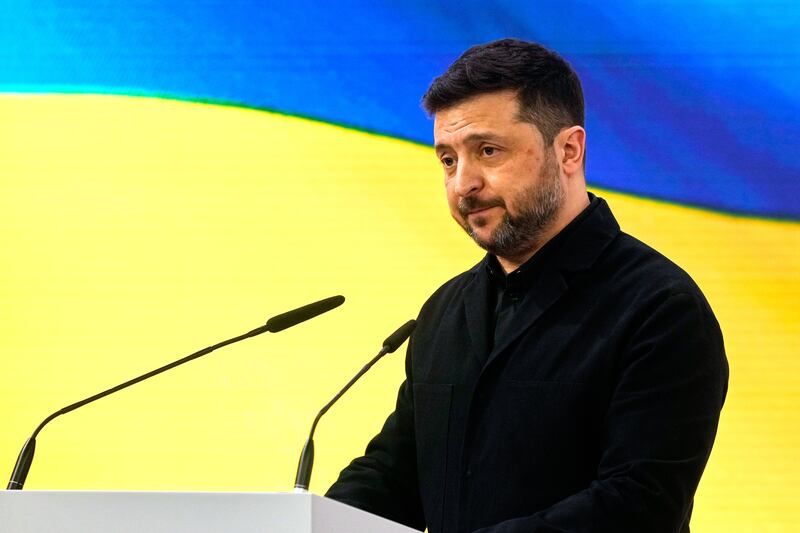
Senior Ukrainian and Russian officials are due to meet in Geneva on Tuesday for the latest round of high-stakes talks brokered by the Trump administration, as the fourth anniversary of Moscow’s full-scale invasion of Ukraine draws near.
Russian forces, meanwhile, pounded Ukrainian power infrastructure in advance of the peace talks, killing three energy workers and leaving tens of thousands of people without power and heat, officials said on Tuesday.
President Volodymyr Zelenskiy condemned the overnight strikes on 12 Ukrainian regions that came under attack hours before the scheduled start of US-backed trilateral talks involving Kyiv and Moscow in Geneva.
“It was a combined strike, specially calculated to cause as much damage as possible to our energy sector,” Zelenskiy wrote on X, calling for diplomacy to be backed by “justice and strength”.
Russia, which began its full-scale invasion of Ukraine in February 2022, has frequently carried out attacks on Ukrainian energy facilities this winter that have knocked out power and heating.
Ukraine’s deputy energy minister said the three workers were killed when a Russian drone struck their car near the Sloviansk power plant, in a frontline area which Moscow wants Kyiv to cede in exchange for peace.
Power infrastructure supplying Ukraine’s strategic Black Sea port city of Odesa suffered “incredibly serious” damage, said private energy company DTEK.
“Repairs will take a long time to restore the equipment to working order,” the company said on social media.
Deputy energy minister Artem Nekrasov said homes in five regions had suffered power cuts as a result of the strikes, and also reported disruptions to heating supply in Odesa and Sumy, a regional capital in northern Ukraine near the Russian border.
Ukraine’s air force said Russia launched nearly 400 drones and 29 missiles. Most were downed, but 13 targets in Ukraine were hit, it added.
Ukraine, meanwhile, said its drones hit an oil facilities in Russia overnight.
The Ukrainian military said that it had struck the Ilsky oil refinery in Russia’s Krasnodar region.
Kyiv’s general staff added in a statement that the strike on the refinery, which it described as one of the largest oil facilities in southern Russia, had sparked a fire. – Guardian and Reuters


