
In November 1972, 50,000 people turned up at Tokyo’s Ueno Zoo to snatch a glimpse of two Chinese pandas. LanLan and KangKang were instant stars, symbols of thawing ties between two old enemies.
By the time both had died in 1980, the pandas had been viewed by more than 30 million people. Their 12 successors have all been celebrities in Japan.
This week, four-year-old twins Xiao Xiao and Lei Lei were shipped back to China’s Sichuan province, leaving Japan without a giant panda for the first time in more than half a century. Beijing has declined to give replacements, or an explanation. But the Global Times, a nationalistic Chinese tabloid, has repeatedly blamed “right-wing forces” represented by Japanese prime minister Sanae Takaichi for curdling ties.
In truth, the atmosphere between China and Japan was souring long before Takaichi took office last October. About 90 per cent of Chinese and Japanese citizens have a negative view of the other country, according to nonprofit organisation Genron, which has conducted these opinion surveys annually since 2005. “Japan-China relations are currently in a perilous state”, warned Genron as far back as 2023.
READ MORE


Politics and jingoistic media coverage is partly to blame, but the wider context is economic and military rivalry. China has come a long way from its weak and disorganised state in 1972, overtaking Japan as the world’s second-largest economy in 2011. This warp-speed growth has been accompanied by a 13-fold increase in military spending over the last three decades.
Japan has responded in kind. In 2015, then prime minister Shinzo Abe passed milestone security legislation allowing the Self-Defense Forces (SDF) to engage in “collective self-defense” and support allies (meaning mainly the US). In 2022 it announced a doubling of military spending to 2 per cent of GDP and an expansion of military options, including the ability to strike enemy bases. All this represents a profound shift in Japan’s military policy, concluded the Stockholm International Peace Research Institute.
Japan is now on course to have the third-largest defence budget in the world by 2027, after the US and China, fuelling an arms race in Asia. The likely flashpoint is the self-governing island of Taiwan, Japan’s first colony and now a renegade province, to be united by force if necessary, says China.
In 2023, Taro Aso, a former Japanese prime minister not known for diplomatic tact, stirred this witch’s brew by saying that Japan should not back down in a fight over Taiwan. “I believe that now is the time for Japan, Taiwan, the United States and other like-minded countries to be prepared to put into action very strong deterrence. It’s the resolve to fight.”
A protege of Aso and Abe, it was never likely that Takaichi would turn down the diplomatic heat and so it has proved.
In November she outflanked both by dropping Japan’s strategic ambiguity on Taiwan. Going off script, Takaichi said that any attempt by China to use force against the island would likely constitute a “survival-threatening situation”, compelling Japan to respond. Abe had avoided making such a statement while in office.
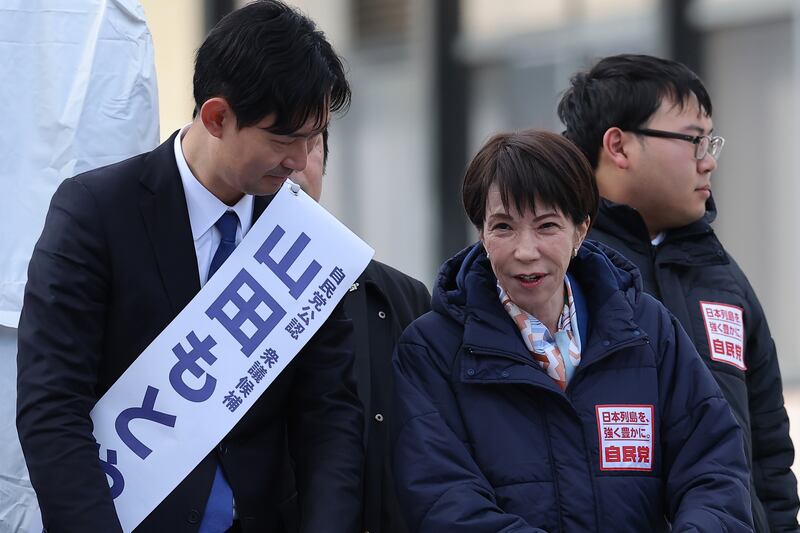
Despite a calibrated burst of nationalist fury from China, Takaichi has declined to back down. During a televised election debate this week, the prime minister said Japan would “have to go to rescue Japanese and American nationals in Taiwan” in the event of a Chinese invasion. “The Japan-US alliance would collapse if Japan did nothing and ran away while jointly operating US forces came under attack,” she said.
Officially, Japan still recognises the one-China policy of 1972, that preceded the arrival of LanLan and KangKang. That agreement acknowledges, though does not explicitly accept, Beijing’s claim over Taiwan, and says the dispute should be resolved peacefully.
This is the formula followed by most post-war Japanese prime ministers until Takichi’s intervention.
With the fear of conflict growing, some experts have urged Takaichi to offer a diplomatic peace pipe. “Tokyo should explicitly say that it does not support Taiwan’s independence,” wrote Mike Mochizuki of George Washington University after her statement. “In addition, Japan should declare that it opposes unilateral changes in the status quo, including the independence of Taiwan.”
Making such a move, however, would be political suicide for Takaichi, who has built her hawkish political brand on standing up to China. She is banking that the public will back her in a general election on February 8th, which is being fought mainly on economic issues, particularly the cost of living.
The public is divided: a survey by Kyodo News Agency this month found nearly 49 per cent in favour of Japan exercising its right to collective self-defence against China, with 44 per cent against.
With just over a week to go until polling day, the signs are that Takaichi will increase her Liberal Democratic Party’s strength in the lower house and may even win a majority. All of which means that those giant pandas are not returning to Tokyo any time soon.