
Seán Deely must have cut an unusual figure as a westerner, sweating on the side of a busy six-lane highway in the smog of New Delhi for 90 minutes. The Nenagh native remembers the date clearly – November 26th, 2005 – because it was the day before his birthday.
The newly appointed UN peace adviser in Nepal was there with the UN resident coordinator, Matthew Kahane, hoping to make first contact with the leaders of the Maoist insurgency which had been wreaking bloody havoc in the Himalayan kingdom for almost 10 years.
A car pulled up and they were bundled into the back, sandwiched between two burly gentlemen. They took off at speed and did an illegal U-turn on a bridge over the Yamuna river to shake off anyone who might be following them.
Like a scene out of a John le Carré novel, they were ushered into a bedroom on a top floor of an abandoned high-rise building on the outskirts of the city. A single light bulb illuminated the bare room.
READ MORE


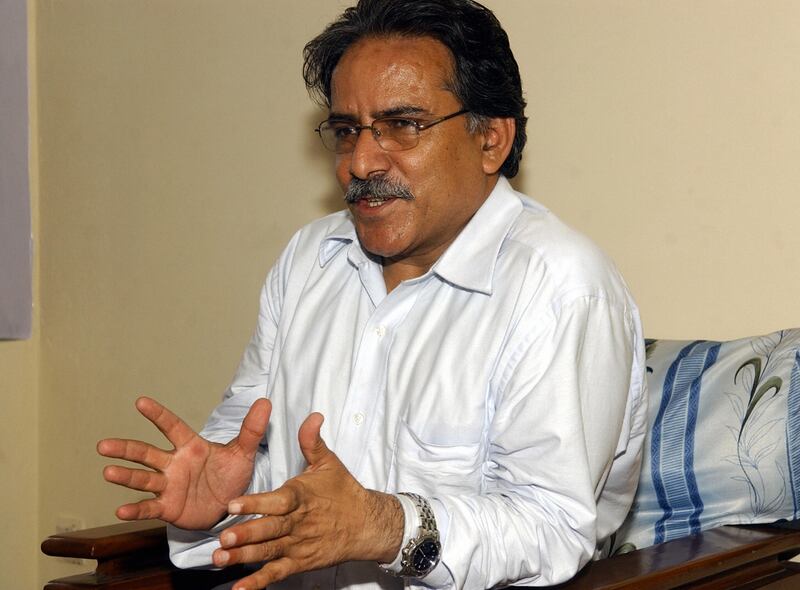
Sitting quietly on a bed in front of them was the leader of the insurgency and head of the Maoist Communist Party of Nepal, Pushpa Kamal Dahal, better known as Prachanda, accompanied by his top lieutenants. None of them had been seen in public for years.
Deely’s ambition was modest. “My job was to explain that we had developed, in consultation with different community groups, a series of guidelines and principles based on international humanitarian law and human rights law to allow people access to humanitarian assistance, and to respect those who were delivering it because there had been so many detentions of aid workers by Maoist combatants.”
Above and beyond that, there was the overall objective of ending a conflict characterised by war crimes, including summary executions, massacres, child soldiers, mass rapes and kidnappings. More than 17,000 people had died, including civilians, insurgents, soldiers and police, and hundreds of thousands of people had fled their homes in rural Nepal.
The Maoists wanted the UN to act as a neutral third party to help with negotiations for a ceasefire and to ensure that any agreement would be upheld once mediation of a settlement was concluded.
Come what may, Prachanda told Deely that the Maoists would enter Kathmandu en masse in time for the Hindu new year in April the following year.
It was the beginning of the end. The king abdicated. Resistance now took the form of largely peaceful pro-democracy demonstrations. A UN-monitored comprehensive peace agreement was signed almost a year to the day after Deely first met Prachanda, who went on to become the democratically elected prime minister of Nepal.
The Nepal peace process stands out now as a rare recent example of meeting the UN Charter’s obligation on member states to use mediation for the peaceful resolution of conflict between warring parties.
It was an encouraging chapter in the life and times of Seán Deely and his lifelong quest to bring mediation to bear on the most intractable situations in more than 30 years of field work with the Red Cross and the UN in conflict settings including the Balkans, Somalia, Myanmar, Syria, Lebanon and Afghanistan.
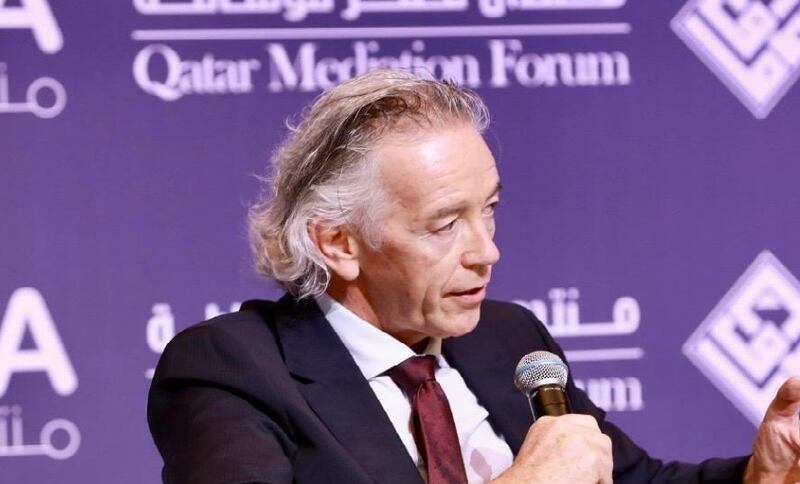
He is now a senior fellow at the Centre for Conflict and Humanitarian Studies in Doha where on Thursday he launched the World Mediation Report 2026 – “Peace Mediation in an Era of Normative and Institutional Collapse”.
It follows his management of the Qatar Mediation Forum last December, held in parallel with the influential Doha Forum attended by 6,500 representatives from more than 150 countries, convening heads of state, ministers, diplomats, policymakers and global experts.
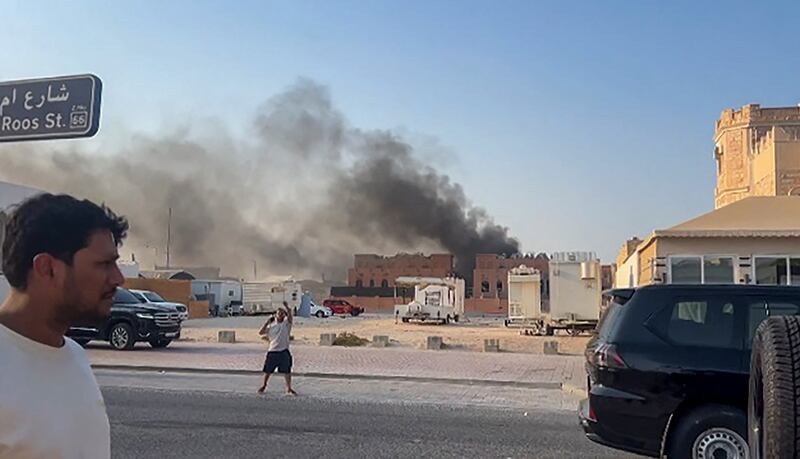
There is a telling irony in the location given the deadly Israeli air strikes last September on a team of Hamas negotiators in Doha discussing a ceasefire proposal in the Gaza war.
According to Ghassan Elkahlout, the director of the Centre for Conflict and Humanitarian Studies, the report demonstrates “that mediation outcomes cannot be understood independently of the paralysis of the UN Security Council, the selective application of international law, the erosion of prohibitions on territorial conquest, and the rise of purely transaction diplomacy”.
It throws a harsh spotlight on the role of the US, Russia and China, three of the five UN Security Council permanent members, in ending the ban on the use of military force to seize another state’s territory in breach of the UN Charter and effectively sidelining the UN as a forum for mediation and peaceful resolution of conflicts.
US president Donald Trump is referenced more than any other world leader for his promise ‘to end wars’ while making economic benefits a central focus of any mediation efforts
The report brings together a cast of respected academics and thinkers about war and peace.
Their concerns focus on the collapse of legal, ethical and humanitarian norms, diminishing trust in multilateral institutions, and the growing complexity of conflicts in areas such as Sudan, Gaza, Syria and the Democratic Republic of Congo (DRC) which have suffered genocide and mass killings of civilians.

US president Donald Trump is referenced more than any other world leader for his promise “to end wars” while making economic benefits a central focus of any mediation efforts.
The custodians of the Geneva conventions, the International Committee of the Red Cross, says the number of armed conflicts has doubled in recent years to 130 recorded in 2024, and 204 million people live under the full or contested control of armed groups (up from 175 million in 2022).
[ Trump’s contempt for the United Nations builds on a long American traditionOpens in new window ]
The report makes the point that “the era of sustained mediation backed by substantial aid packages, as was the case in the early 2000s, seems long past”. Even more so with the disappearance of USAid and the inability of the world to raise $50 billion annually to meet the most pressing humanitarian needs as presented by the UN.
The lack of respect by Russia and Israel for the territorial integrity of Ukraine and the Palestinian Occupied Territories, and Trump’s own pursuit of Greenland, actively encourages combatants, such as like Rwanda’s proxy the M-23 paramilitary force, to continue fighting in pursuit of de facto annexation of Congolese territory regardless of the human suffering they inflict.
[ M23 rebel spokesperson killed in DRC army strike, officials sayOpens in new window ]
The report highlights how the consensus about how UN member states should behave is crumbling and 80 years after the UN rose out of the ashes of the second World War “the possibility of great-power war is once again on the table.”
There is stark evidence here of a world preparing for war rather than peace in an examination of trends in global military spending which increased by a record 7 per cent in 2024 to its highest ever level, exceeding $2.7 trillion.
The failure of nuclear diplomacy is on the horizon, with the lack of agreement between the US and Russia on extending the New Strategic Arms Reduction Treaty, their only remaining bilateral nuclear arms control agreement. New areas of competition between the US, China and Russia are opening in cyberspace, outer space and in the world’s oceans.
[ We face a real danger that the nuclear arms race might be about to resumeOpens in new window ]
Deely looks back wistfully to the UN’s first efforts to engage in “post-conflict peacebuilding” in the early 1990s, a trend that started to unravel with the US promulgation of US president George Bush’s so-called “Bush doctrine”, based on principles of unilateralism, pre-emptive war and regime change which resulted in the invasions of Afghanistan and Iraq. Direct and indirect deaths attributable in post-9/11 war zones are estimated at 4.5 million.

Deely concludes: “The world may come to regret the end of the rules-based order. It was far from perfect but it compelled powerful states to justify their actions against established norms, shared standards and international law. It created a space for morality, for decency. Abandoning it will allow these states to act with impunity. Peace in that world looks a lot less like Nepal and a lot more like Gaza.”


