The enormous factory floor is spotless and thinly populated with workers and the machinery is so quiet that you can have a conversation without raising your voice.
But this BYD plant in Zhengzhou, a city in central China, produces more than half a million electric vehicles a year at the rate of one every 50 seconds.
The production process on the S-shaped assembly line is almost entirely automated, with robotic arms reaching out to each car to perform one function after another as it moves along.
Automatic forklift arms lift each vehicle from one station to another, to have a battery fitted, for interior decoration or painting.
READ MORE


Humans are here mainly to complete checks and inspections, especially at the end of the process, when each vehicle undergoes a series of tests simulating real-life driving conditions. Some of these are conducted on the factory’s racing track, China’s first dedicated, all-terrain circuit designed for EVs.
When the cars roll off the assembly line, some of them roll on to freight trains bound for Europe at the railway hub next to the factory. The journey takes as little as 15 days, so the vehicles are at BYD dealerships all over the European Union less than a month after they leave the factory.
BYD started 2026 with the news that it has overtaken Tesla to become the world’s biggest manufacturer of electric cars, selling 2.26 million pure EVs in 2025. That’s up 28 per cent from 2024 and far ahead of the 1.64 million Tesla sold, a 9 per cent annual drop for Elon Musk’s company.
[ Tesla loses crown as world’s biggest maker of EVs to China’s BYDOpens in new window ]
BYD’s success is part of a bigger picture that saw China’s trade surplus surpass $1 trillion for the first time in 2025, despite a fall in exports to the United States after Donald Trump imposed steep tariffs on Chinese goods. The trade imbalance is a growing cause for concern among EU leaders, who fear that they are facing a second “China shock” that threatens the European industrial base.
“These imbalances are becoming unbearable,” French president Emmanuel Macron said during a joint appearance with China’s leader Xi Jinping in Beijing last November.

Chinese goods exports to the EU grew by 15 per cent between November 2024 and the same month last year and the increase was bigger for some countries. Macron warned China that Europe has a number of instruments it can use if Beijing does not co-operate in reducing the trade imbalance, including tariffs and anti-coercion measures, but none of the EU’s actions so far have helped.
While the Chinese economy has grown by about 30 per cent over the past five years, European exports to China fell by about 29 per cent in the same period. For some of the EU’s biggest manufacturing countries, such as Germany, China is no longer even as important an export destination as other large EU member states.
As Chinese exports to Europe surge and European exports to China shrink, countries such as Germany that gained most from the trade relationship in the past are now most at risk. The first so-called China shock a quarter of a century ago saw much of Europe’s low-cost manufacturing fall victim to cheaper Chinese imports. But the impact of the next China shock could be much greater, affecting numerous sectors including those requiring the highest skills and offering the best-paid jobs.
“We’re talking about losing significant parts of the automotive sector and its supply chains, pressure on machine tools, chemicals, the wind industry in Europe that could be wiped out in the next couple of years. I think there’s just more and more concern about the fact that in all of these sectors, China is moving into a dominant or even monopolistic position,” says Andrew Small, director of the Asia programme at the European Council of Foreign Relations (ECFR) in Berlin.
“I think there’s less and less of a sense that thinking about this problem as a fair trade, level playing field issue makes sense in the same way when we’re talking about monopolistic levels of dominance and the risk of industries being wiped out.”
The European Commission enjoyed a political success when it persuaded enough member states to agree to higher tariffs on Chinese EVs. But the impact has been limited, not least because the appreciation of the euro in 2025 helped Chinese vehicles to remain competitive, while the cost in political capital has been high.
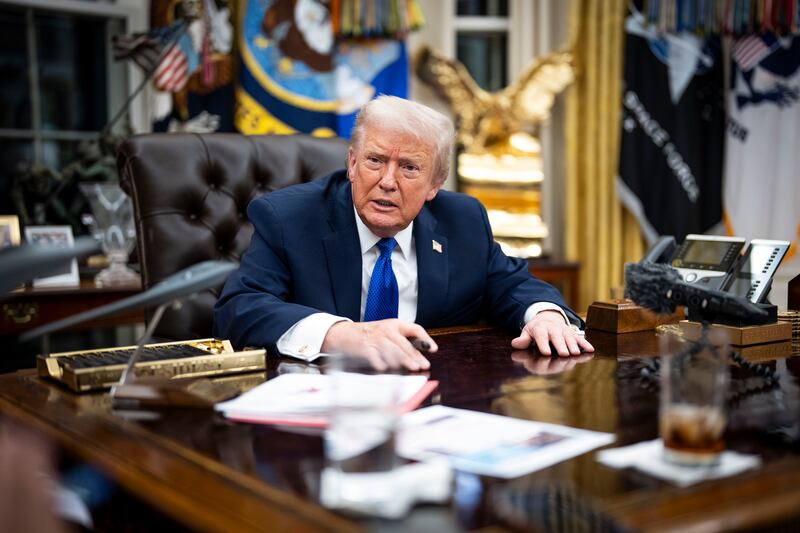
Some in Brussels thought Trump’s return to the White House could help to facilitate a reset in the EU-China relationship. But while Europe’s reliance on the US for security meant that the EU had to roll over when Trump threatened tariffs, China refused to bend, and its tough strategy has so far been successful.
Instead of embracing the EU as a potential partner in confronting Trump, Beijing saw that the change in Washington made Brussels more vulnerable.
“I think what became clear from the Chinese end was that the view would rather be that Europe is in a weaker position as a result of the situation in the transatlantic ties, and Europe needs to be the one to give things up. That’s what we’ve seen pretty much since then,” says Small.
“I think it’s understood more on the European end now that there’s not going to be a big difference in how Europe is treated, that there’s not going to be a distinctly beneficial post-transatlantic version of a relationship with China. That China is not interested in doing that version of exploiting the differences. If there’s an exploiting the differences thing, there’s been consistent pressure on the Europeans not to align with the US at certain points.”
Part of the EU’s difficulty in deploying trade instruments against China is that Beijing demonstrated in 2025 that it has levers it can use in trade disputes to devastating effect. The most powerful example was when China imposed export restrictions on rare-earth minerals, over which it has a near-monopoly.
These minerals and the powerful magnets they produce are essential to huge parts of advanced manufacturing, and when Beijing restricted US access to them after Trump’s Liberation Day tariffs last April, car factories had to halt production. The restrictions affect the EU, too, and China has shown that it is willing to weaponise rare earths if it believes its economic interests are threatened.
China’s dominant position in some manufacturing sectors offers leverage of its own, as the Dutch government discovered last September when it seized control of Nexperia, a Chinese-owned chip manufacturer. Beijing retaliated by blocking exports of Nexperia chips, which are mostly packaged in China and used throughout the European car industry.
Within days, car manufacturers warned that they would have to halt production if the supply of the chips was not restored. By November the Dutch government had “suspended” its action against the Chinese-owned company and Beijing is pressing for a full reversal of the move.
Beijing has long argued that the EU could help to rebalance trade if it were to agree to sell to China some advanced semiconductors and chip-manufacturing equipment that are currently subject to export restrictions. Under pressure from successive US administrations, the EU has invoked national security to justify these restrictions, along with the exclusion of Chinese companies such as Huawei from some European infrastructure.
But recent months have seen a shift in the US position as Trump has authorised the sale to China of some of Nvidia’s more advanced chips. This reflects a view among some White House advisers that restricting access to advanced chips has helped to incentivise China to develop its own semiconductor industry and that the US should instead encourage Chinese manufacturers to become dependent on American chip technology.
“The significance for Europe is now no one on the European side can bet on a technology controls framework from the US,” Small says.
“It’s also not the case that Europe can assume from this that they’re not still going to be under pressure on export controls and other things. It’s not even that people can then fully position themselves around a slightly different orientation from the US.”
Among the difficulties Europe faces in its competition with China is that it is unclear what steps Beijing could take that would most effectively address the trade imbalance. Part of the problem lies in the fact of Chinese industrial efficiency and the fierce competition within its domestic market that drives standards up and prices down.
Beijing has promised to address what it calls “involution”, when competition is so fierce that margins are squeezed so much that nobody can make a sustainable profit. But a major rebalancing of trade would also require an increase in Chinese domestic consumption on a scale that few policy analysts believe to be likely.
In the meantime, Germany’s export-driven economic model is facing simultaneous pressure from US tariffs and a weakening appetite for its goods in China. German imports from China continue to rise but its exports to the country fell by about 10 per cent in 2025 so that China is set to drop out of the top five German export destinations.
Small believes that the coming weeks will see Europe engage in its most intense debate about China in a decade as the EU considers how it can best protect its industrial base. Against those proposing tough action against China there will be member states seeking to engage with Beijing in the hope of attracting investment and technology transfer.
“The hinge actor on everything is always Germany. The decisions in Berlin are the crux for all of this,” he says.
“They’re the front line in terms of the industries that will bear the brunt of this, but they’re also the ones that have the fiercest lobbyists for not doing any of these things at all. I think a large portion of this is where the German piece on this breaks, and that’s still very much in play at the moment.”