Andy Farrell has continued to take much more of a squad-based approach to selection in his seventh Six Nations campaign.
Perhaps this is partly a recognition that too much was asked of the team’s core at the last World Cup and maybe there is one eye on the next one in Australia less than a year and a half away. Possibly it’s both, and also because this year’s more congested Six Nations simply demands as much.
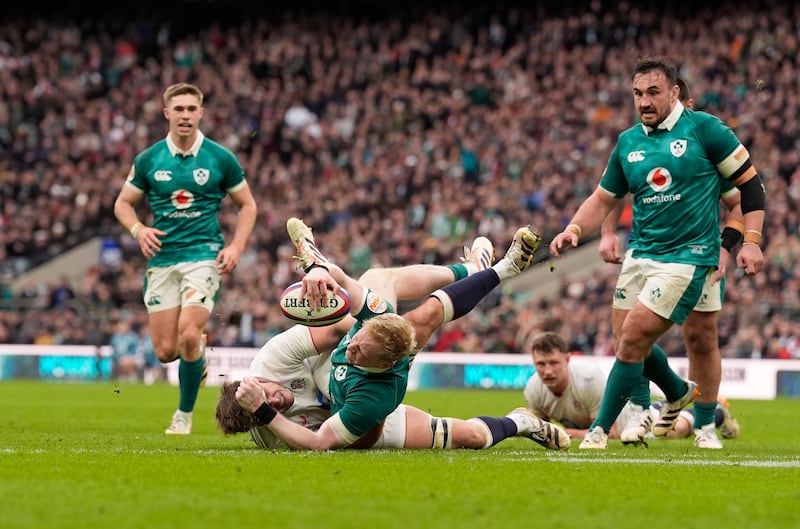
Farrell would have been perfectly entitled to leave well enough alone against Wales, save for the injuries to James Lowe and Jeremy Loughman, and stick with the rest of the matchday squad which secured a memorable record Irish win at Twickenham against England last time out.
Have Ireland changed their selection policy ahead of the clash with Wales?
However, the Irish head coach has been more inclined to see this season’s Six Nations as a means to an end as well as an end in itself. Hence, having made six changes to his run-on side for the round two game at home to Italy and five for the match against England, Farrell has made another five changes to the starting XV to face Wales at the Aviva Stadium on Friday (kick-off 8.10pm).
READ MORE


While naming Jacob Stockdale and Tom O’Toole for the injured Lowe and Loughman were enforced changes, promoting Rónan Kelleher and Nick Timoney from the bench in Twickenham, as well as restoring Jack Conan, was done at least partially to strengthening the squad’s depth.
After all, Dan Sheehan, Joe McCarthy and Josh van der Flier deserved to be retained for their performances in Twickenham. But perhaps no selection is more indicative of Farrell’s approach than affording Sheehan a rare weekend off after extending his phenomenal strike rate in the Six Nations with his 14th try in 21 games.

He will surely return for next Saturday’s finale against Scotland but not only is Kelleher worthy of a start, Tom Stewart merits further investment following his dynamic displays for Ulster this season. The 25-year-old is the kind of powerful, athletic, ball-carrying player Farrell is seeking, and looks the favourite to complete Ireland’s trio of hookers at next year’s World Cup.
Timoney is also cut from that cloth and a theme of this season is Farrell evidently believes age is no bar. Despite Van der Flier’s excellent performance in Twickenham, Timoney has earned this belated first Six Nations start at the age of 30; Farrell citing his improved consistency while noting that the flanker’s contact work has “improved out of sight” this season.
Indeed, this has been a campaign rich in redemptive Ulster stories, with Stuart McCloskey having something of a breakout season at 33, 10 years on from his debut. And Robert Baloucoune, at 28, is finally showing he truly belongs in this arena and, what’s more, offers Ireland a point of difference with his pace.
Now opportunity knocks for the 29-year-old Stockdale, who has his doubters, to revive his career fully eight years after he scored seven tries in his breakout campaign, when he was named player of the tournament.
Farrell’s judgment is rarely proved wrong and although this is O’Toole’s 20th cap, it is his first start at loosehead. The Irish head coach has never lost faith in O’Toole, and good judges believe he could be more suited to loosehead, even if Ulster don’t seem to share that view. But with four looseheads sidelined, now would be a good time for O’Toole to repay some of Farrell’s faith in him and state what would be a valuable case as a hybrid prop.
While it’s a little disappointing not to see more of Edwin Edogbo and Cormac Izuchukwu, Wales also demand respect and, besides, in addition to Test debuts for Edogbo and now Nathan Doak, another six players will have made their first Six Nations debuts.
What’s more, only four players have been ever present starters in Ireland’s first four games, compared to nine in five games at the last World Cup and six in last season’s Six Nations. Farrell will also have used 33 players in these first four rounds, as against 29 in all of last season’s Six Nations.
Follow our rugby WhatsApp channel