
The last byelection in Galway West in 1975 was a straightforward affair.
It was, in many ways, the story of politics during the first 75 years of the State: a straight battle between Fianna Fáil and Fine Gael, with Labour coming in third. Máire Geoghegan, who later became a European Commissioner, coasted home with 46 per cent of the vote on the first count, well in advance of Fine Gael and Labour.
Half a century later, the 2026 byelection, to fill the seat vacated by President Catherine Connolly, is a far more complex matter. With six weeks to go, who emerges from the field of 12 candidates is as unpredictable as a bumper race at the end-of-race meetings.
You could trace a path to victory for possibly six people. As with many byelections, the race could narrow down to two contenders – one from the centre-right and one from the left.
READ MORE


Connolly was an avowedly left-wing politician and remained doughtily independent. Sheila Garrity had volunteered for her for 20 years and realised Connolly’s presidential victory meant Galway West no longer had an Independent TD of the left.

“The group of original people who’ve been involved with Catherine for a long time met up” Garrity says, and asked themselves “are we hanging up the boots?”.
“The feeling was, we need an Independent TD. That was what we worked for all those years, and we want to maintain that. So faces turned to me.”
[ Catherine Connolly profile: Who is Ireland’s president-elect?Opens in new window ]
And so in a surprise even to herself, Garrity, a Canadian-born academic with an open manner and clearly-defined views, became the candidate, and was the first to declare.
Overall, looking at the 2024 election results, the constituency sways a little to what might be described as the rural right-of-centre.
The issues identified by most of the candidates from all hues are remarkably similar: a squeeze on housing; transport (the new Ring Road is mentioned but also public transport); and the cost-of-living and energy prices.
Collapse: How Labour went from boom to bust
Mayor of Galway Mike Cubbard became involved in politics at 23 when he was outraged at plans to erect a huge power pylon in the Westside area of the city where he lives. Since then, the Independent councillor has been mayor three times, has endured death threats and received 2,000 votes in the 2024 general election. He is probably the most centrist in the field, a practical politician with no strong ideological bent.
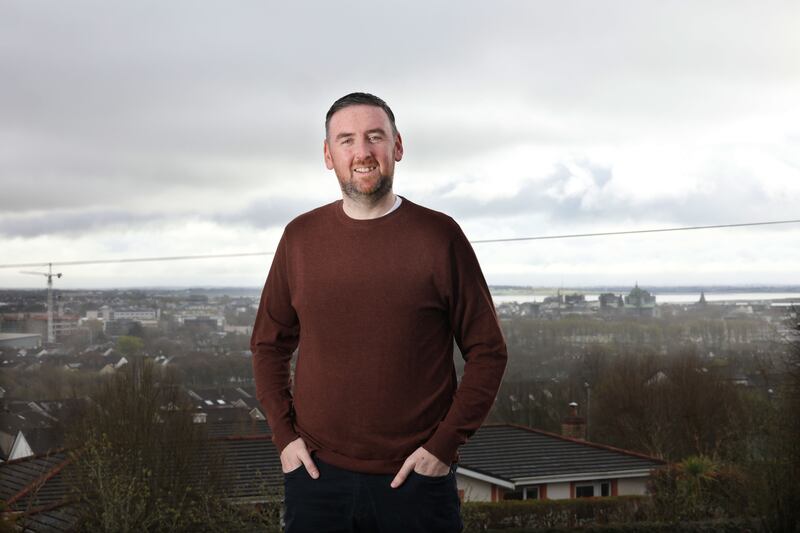
“I very much believe the grassroots approach, engaging with people and being honest in terms of, I can’t fix everything.”
Galway West can be divided into four distinct areas. There is the city; Irish-speaking south Connemara; English-speaking north Connemara; and a big area east of the city and Lough Corrib stretching from Clarinbridge to Annaghdown. In a one-seat race, it’s hard for any candidate to have cross-constituency appeal.
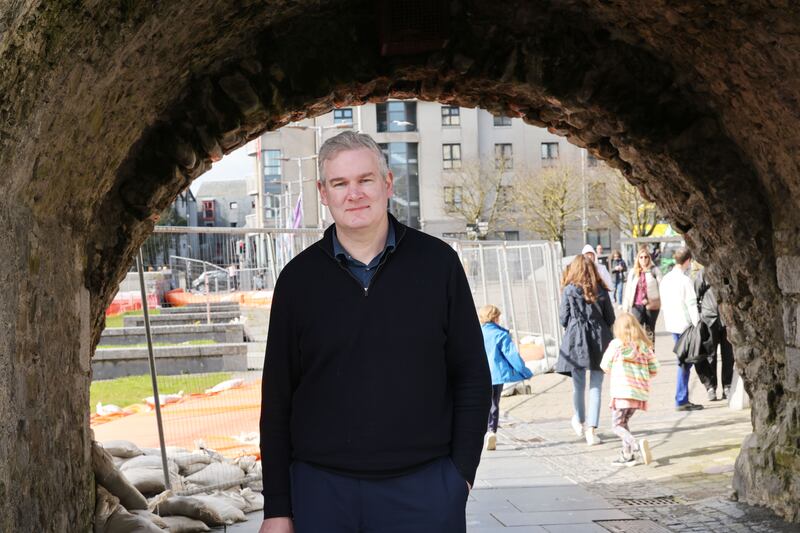
Fine Gael senator Seán Kyne is the person with the highest profile. He was elected a TD in 2011, was a minister for State and Government chief whip, and has been in the Upper House since 2020.
“I believe I have a track record in delivery across the constituency,” he says,pointing to the Maigh Cullen bypass and buying Connemara airport for the State.
At a recent hearing of the Workplace Relations Commission (WRC) a former chief executive of Inland Fisheries Ireland (IFI), Francis O’Donnell, said he made a statement to gardaí alleging he was being “blackmailed” by a senator to reinstate a suspended member of staff. It came during a bitter dispute during which Kyne was a vocal critic of governance at the body.
Asked if O’Donnell was referring to him, Kyne said “some people have taken it like that”. He said he had not been contacted by the WRC on this issue, nor by the Garda on any such allegations.
He says he stands over all his actions, pronouncements and statements, saying all were made in public.
“My only engagement with the former CEO was at the [Oireachtas] committee or at official meetings ... There has been a big story down through the years in relation to governance, accountability and the job [the IFI] was doing. The real issue is the protection of the waters and the lakes.”
Government parties rarely win by-elections so, to win, Kyne or the Fianna Fáil candidate, Cillian Keane, will have to buck the trend. At 25, Keane is a rookie councillor and the youngest candidate in the field. Still, he came through a bruising convention against seasoned councillors Alan Cheevers and Máirtín Lee. Fresh-faced and enthusiastic, he sees himself as hard-working and practical. “People talk about the parish pump but on the ground you see those things actually work.”

From Oranmore, he is only candidate from the east of the city and being new, does not have a big profile. However, he argues the Fianna Fáil machine remains strong.
If there is a non-Government threat from the right-of-centre it will come from two candidates who live close to Kyne in north Connemara: Tom Welby, an Independent councillor from Oughterard; and Independent Ireland’s Noel Thomas, from Maigh Cuilinn, a councillor since 2014.

Thomas is seen by some as a divisive figure. In late 2023, the Ross Lake Hotel in Roscahill which had been earmarked as an accommodation centre for asylum seekers was burned to the ground. While condemning the arson attack, Thomas, then a Fianna Fáil councillor also commentedthe “inn is full” and blamed what he called the “reckless open border policy our Government put in place”.
Faced with disciplinary action, he and Fianna Fáil parted company soon afterwards. As an Independent Ireland candidate he topped the poll for Connemara South in the 2024 local elections, and finished sixth in Galway West in that year’s general election. That puts him in a strong position in advance of the poll.
Asked about it now, Thomas says he condemned the arson attack on the night and agrees, when asked, that those behind it were “criminals”. He does however stand over his “Ireland is full” comments.
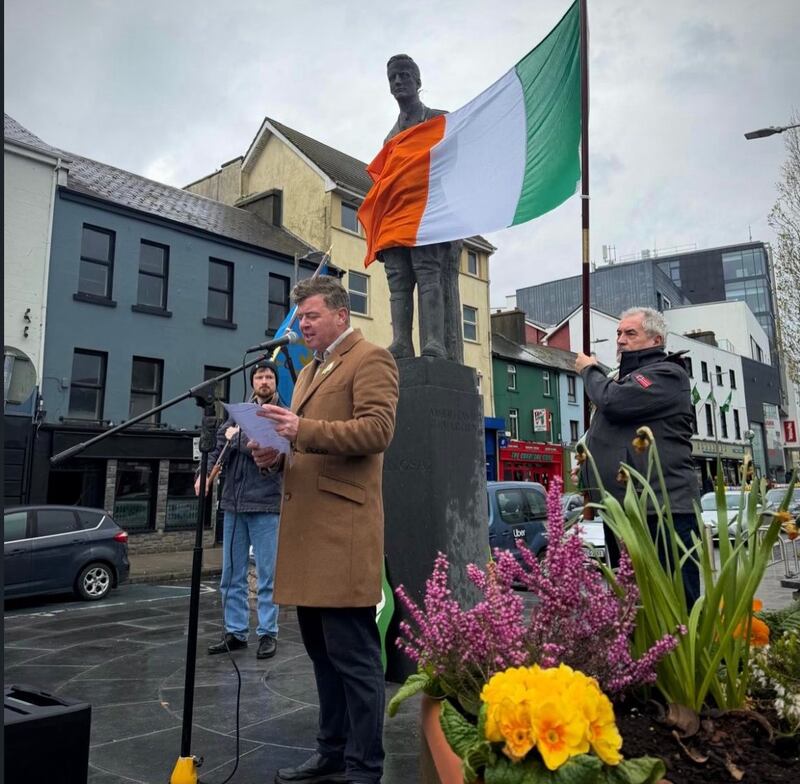
On the basis of Mairéad Farrell’s poll-topping performance in 2024, Sinn Féin’s Mark Lohan is seen as the leading left candidate. An experienced trade union official, Lohan is a former city councillor, with an interesting back story of political activism in Boston as a younger man, when he was an undocumented worker.
“Sinn Féin is the largest party of the left. We are pushing the Government to change, like Pearse [Doherty] pushing on fuel prices. The feedback we are getting on the doors is people recognise that,” he says.
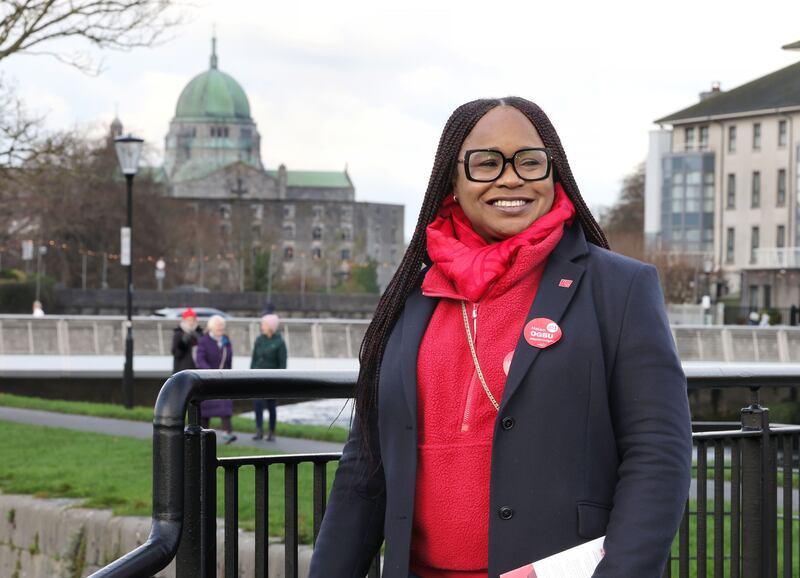
Unpredictable could mean another candidate of the left could pull a surprise. Labour’s city councillor Helen Ogbu stood in the 2024 general election and received 2,000 votes. “I don’t call myself a politician. I call myself a community and social activist,” she says. People trust her to be an agent of change, she adds, because of her 17-year track record in community development and her honesty.
Another outside possibility is Míde Nic Fhionnlaoich of the Social Democrats who has never stood for election and is a virtual unknown. However, her party has a strong brand and, unusually, she is a rural candidate for a largely urban party. Her rural corner is the south Connemara Gaeltacht.
She says coming from there is “a huge advantage in that I get the things that impact their lives”.

Larry Donnelly, a law lecturer from the University of Galway, has followed the campaign closely. Name recognition should be a factor and will benefit Kyne and Thomas, he says. Fianna Fáil’s Keane is not so well known and his base on the edge of the constituency may go against him, he adds.
“Of the candidates on the left, Lohan is the most strongly positioned. There will be a Connolly factor but will Garrity really get all the first preferences? I find that hard to believe. I can’t see Cubbard performing strongly outside the city.”
It will come down to transfers, he says: those of left activist network Tonn na Clé; between Fianna Fáil and Fine Gael; and geographical transfers, in Connemara North.