

Other parts of Ireland have squares. Ulster, for reasons best known to itself, has diamonds, a word used there to describe the central marketplaces of towns or villages, or sometimes just crossroads in the middle of nowhere.
The phenomenon is scattered over all nine counties of the province, although the diamond geometry varies greatly and in few cases justifies any dictionary definition of the term.
The one in Clones, for example, is a very rough diamond. So is Coleraine’s. The Diamond in Derry is, beyond question, a square. As for the Donegal town variety, it may hold a monument to the Four Masters, but has only three sides.
Not that idiosyncratic street geometry is confined to the North. Dublin’s famed Georgian squares are mostly rectangular, with the honourable exception of Mountjoy.
READ MORE



Brighton Square is, like Donegal’s Diamond, a triangle, perhaps apt for the birthplace of James Joyce, a man who didn’t quite fit in in Dublin and spent his life writing about it from abroad.
The diamonds of Ulster date from the Plantation and many were the deliberate result of urban planning. But the term is sometimes applied to any old widening of a main street where commerce is concentrated.
The writer Garrett Carr has wondered “if the hard, angular associations of the word diamond appealed, in some fundamental way, to the designers of the Plantation?”
Which may indeed explain it. In any case, as befits the term, it has attached itself to some of the North’s hardest places, including the one where the Orange Order was founded.
That followed the “Battle of the Diamond”, which was more of a massacre, really. The diamond in question there was a mere crossroads in north Armagh, near the more recently infamous Loughgall.
But it became a flashpoint for sectarian tensions, exacerbated by competition in the linen industry, which in 1795 led to a mass confrontation between the “Catholic Defenders” and the Protestant “Peep O’Day Boys”.
The latter were better armed, so dozens of the former died. And hatreds lingered for two centuries afterwards, helping create one of the grimmer pieces of geometry in the Northern Troubles: the Murder Triangle.
By complete and innocent contrast, I’m reminded that on childhood visits to my Auntie Mary, exiled by marriage from her native Monaghan to the hills of east Cavan, we always passed a crossroads called the Diamond. There was no known history of violence there. In fact, there wasn’t much of anything. But the crossroads straddled the county borders, so perhaps there was an upsurge of tensions during GAA season.
The Ulster-Scots who seem to have introduced the phenomenon to Ireland liked it well enough that, when they emigrated again, they also brought it with them to the US, especially Pennsylvania.
That’s the only other place I know where diamonds are found in the streets, or at least in street plans. Combined with the state’s most famous underground deposit – anthracite – this has sometimes caused confusion.
Witness Wilkes-Barre, which once boasted itself “coal capital of the world”. Tourism websites claim this also explains its nickname “Diamond City”, although, common carbon origins apart, turning coal into diamonds sounds like an overreach by the marketing department.
On the other hand, Wilkes-Barre is built around a market square that, unlike most of the ones in Ulster, is a perfect diamond shape.
It’s just called “Public Square” now, but an early 19th-century guide to the state included this observation: “In all the towns of Pennsylvania, of any size, the public buildings and offices are built on squares in the centre of their town ... These squares are uniformly called ‘the Diamond’.”
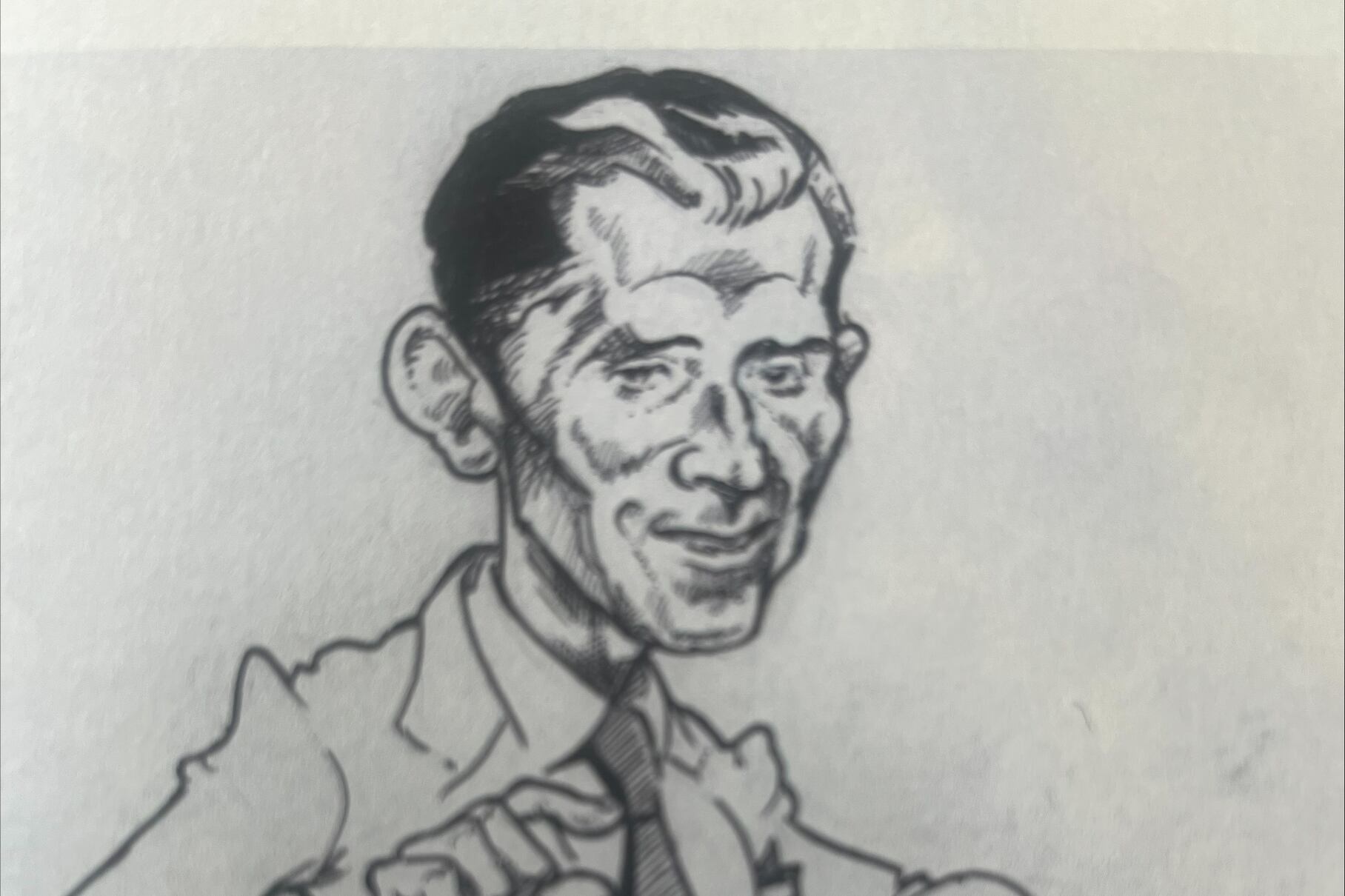
It was while mining archives for diamonds, by the way, that I first learned of the improbably-named Irish-American balladeer Con Carbon (1871-1907), a miner from the age of nine who lived and died poor but enjoyed enormous popularity for a time in the Pennsylvanian coal communities.
The “Con” was short for Cornelius. The “Carbon” came from his father, Frank, and may have derived from a French or Italian surname. But his mother was an Annie Breslin from Donegal. And although born in Hazleton, Pennsylvania, Carbon spent his short life writing and singing songs in a strong Irish accent.
He was said by one admirer to have “the sweetest tenor voice in the Wyoming Valley” (Pennsylvania’s main coal region). He was also noted for his “Irish wit and a sense of mimicry”. But all these gifts “were mere handmaidens to his outstanding talent – the ability to articulate in ballad form the thoughts, feelings, experiences and deepest yearnings of his fellow workers”.
This brought great local fame for a time, if not material riches. Frail health prevented him accepting most of the countless invitations to perform. Then, in keeping with his surname, he disappeared back into the landscape from which he had emerged. Con Carbon died at Hazleton in 1907, aged only 36, and is buried in an unmarked grave.


