

Not being a regular in Mulligan’s of Poolbeg Street, I didn’t really know the late Noel Hawkins, a barman there for nearly half a century, whose death the pub announced “with a heavy heart” this week.
But many of my readers did, including regular correspondent Damien Maguire. As an occasional customer, Damien knew him by first name only and found it ironic that, only last week, I was writing here about the history of Hawkins Street, around the corner from Poolbeg.
He wrote that he was saddened by the news of Noel’s death, describing him as the “grandest” of Dublin barmen. “Although I knew him since he started in Mulligan’s forty-seven years ago, I never knew his surname. Hawkins Street indeed.”
In fact, according to the pub’s official statement, Noel’s reign behind the counter was 49 years, and so even closer to the 53-year innings of Seán Kearney, late of Grogan’s on South William Street, who was reputed to be Dublin’s longest serving barman before he died in 2024.
READ MORE


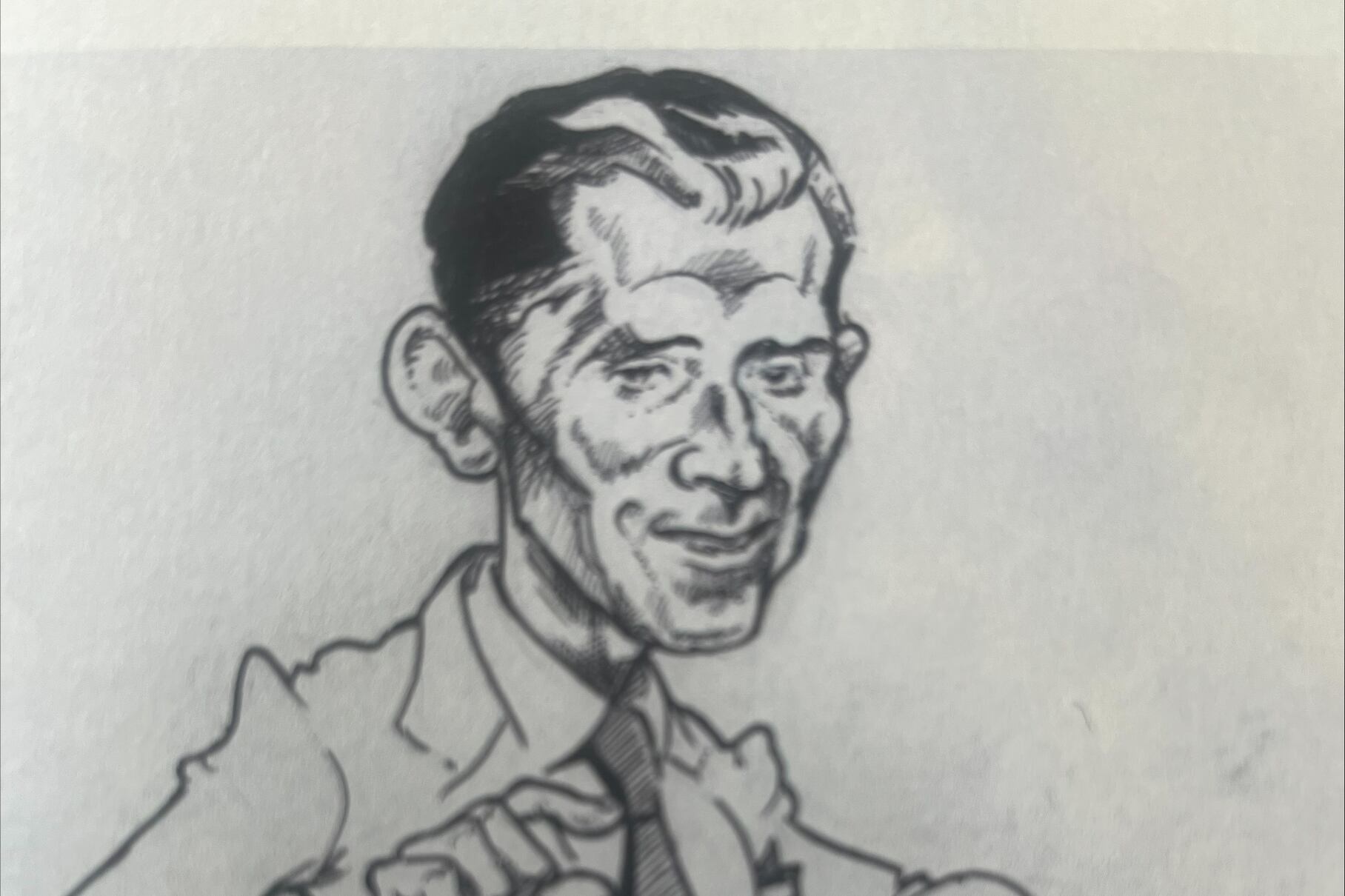

Hawkins’s sheer length of service apart, Mulligan’s lamented the loss of his company. “We will all miss his songs, his jokes good and bad, and the banter from a true Raytowner [ie a native of Ringsend, so nicknamed after the fish],” the statement said.
The sentiment was seconded by long-time regular Roy Curtis, veteran columnist of the Daily Star, who lamented on Twitter/X that Dublin was “a sadder place” now: “For more than 40 years, Noel Hawkins dazzled as a barman, comedian, and bottomless font of good humour. I never once saw him in bad form.”
But those feeling bereft also include my own, millennial-generation daughter Roisín, who got to know Noel only in recent times, while working next door to Mulligan’s in a restaurant called The Vintage Kitchen.
Being neighbours on a quiet and somewhat overlooked street – it long languished in the brutalist shadow of the late, unlamented Hawkins House – the two venues have an almost umbilical connection.
So during the short time Roisín knew Noel, they had many heart-to-heart conversations. “He was very much the spirit of Mulligan’s,” she says, “a great person, always happy just chatting to people all day.”
It was partly at her urging that, when I launched my memoir in a nearby bookshop last September, drinks afterwards were in Mulligan’s.
We both struggled to remember if Noel was working that night. This even though, as she says, one of the many reasons he stood out was that unlike most barmen, he never wore regulation black or white, preferring a more flamboyant attire (or as another of the social media tributes put it, “the maddest collection of shirts I’ve ever seen on one man”).
But sharing his picture with a group of my old Monaghan school friends, who had propped up the bar counter for much of that evening while I was chatting in various corners of the premises, I asked if any of them remembered him.
Sure enough, one did, as “an unusually friendly man”. So even if we never got talking, I’m glad to know he was present, somewhere in the background of that happy occasion.
Yet another of the social media tributes this week sounded a personal note. “If I went in there with a bitta weight on my shoulders,” it read, “I definitely wouldn’t leave with the same weight ... Noel always made you laugh.”
This reminds me, somehow, that there was a time in Ireland when barmen were known as “curates”. Maybe it was because, whatever about making you laugh, their duties included hearing Confession, and thereby lifting burdens.
[ Mulligan’s of Poolbeg Street: home of the alternative smart setOpens in new window ]
The concept was taken a step further in another Dublin pub, now known as The Confession Box. Located across the Liffey from Mulligan’s, on Marlborough Street, that used to be called The Maid of Erin.
But during the War of Independence, it was frequented by Michael Collins and others on the run, who made actual confessions there to sympathetic clergy. This and proximity to the Pro-Cathedral earned the pub’s nickname, since formally adopted.
A more recent regular on that premises was Micheál Ó Nualláin, last surviving brother of Brian O’Nolan (aka Flann O’Brien), who died in 2016, aged 92.
As a former art inspector with the Department of Education, he retained till the end the habit of visiting both the restaurant in the department’s HQ and the pub across the road. His son Oisín tells me Micheál died, peacefully, just after a pint in The Confession Box. He went out in what Catholics call a state of grace, clearly.
Getting back to Noel Hawkins, he seems to have been a Raytowner in more ways than one. Certainly, a common theme of tributes was his solar-powered personality.
This may have been more than usually necessary in the gloom of Poolbeg Street, where he lived to see off Hawkins House, but where an even bigger monolith has since risen in its place. Either way, it is generally agreed, he was a shining light.


