Vogue Williams’ Howth kitchen is pink and has the satisfying ridged texture of Polly Pocket’s home circa 1990. I remember vintage toys because I am old. Williams, meanwhile, is ageless. “Okay, she does NOT look 40” my nine-year old says and as the benchmark for what 40 looks like, I try not to feel offended. “I know some people would look at that and go ‘bleurgh’,” Williams says, gesturing to the pastel cabinets behind her. “But they make me happy.”
We’re watching the inaugural episode of Dermot Bannon’s Celebrity Super Spaces, and Williams is his first guest. It makes delightful intergenerational viewing as we critique the free-standing bathtub as “fabulous”, and the children’s bedroom “suspiciously tidy”. I’m explaining the concept of MTV cribs to my son when Williams’ husband Spencer Matthews saunters into shot in tiny shorts, a T-shirt held like a lame excuse in one hand. “There’s The Spencer” says Bannon, nonplussed, as though naming a perplexing water feature.
From Williams we move to jewellery designer Chupi Sweetman’s gorgeous Georgian townhouse, where the throughline is distinctly metallic – a gold staircase, (“what possessed you?” Bannon blurts out), brass cabinets in the kitchen and a gold leaf sunrise like a homage to Patrick Scott framing the master bed. “It’s Marmite. You either love it or hate it,” she says of her aesthetic choices.

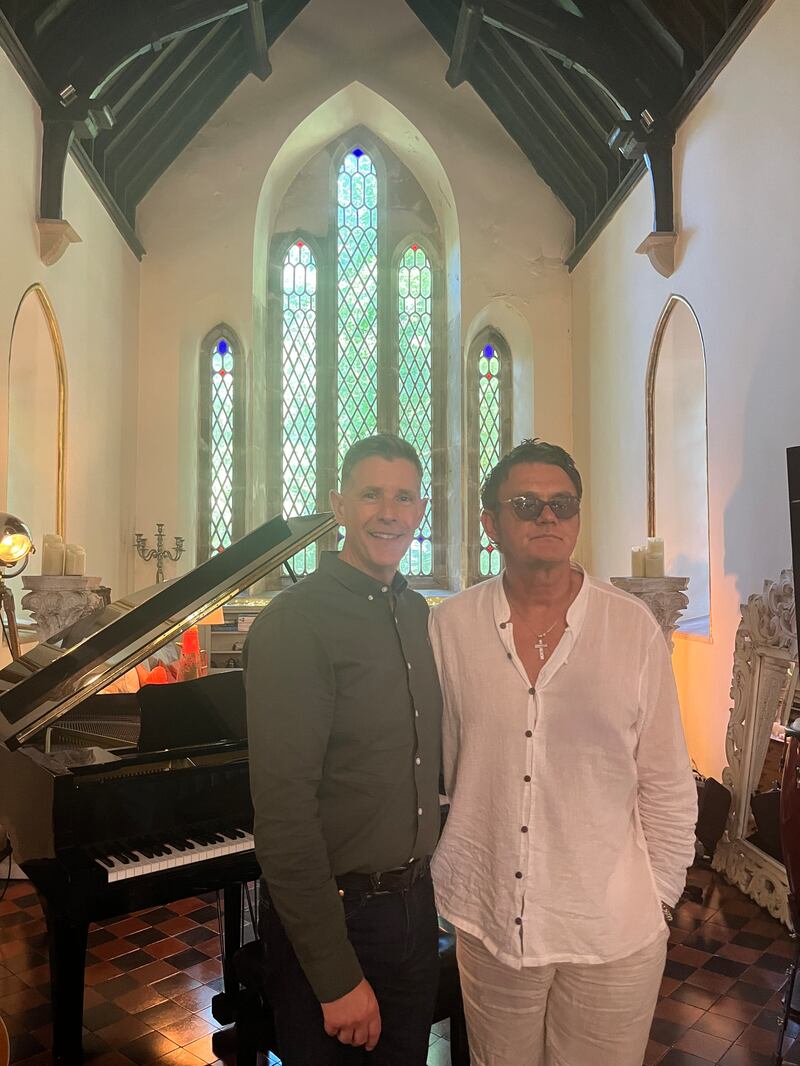
A deconsecrated church in Cavan belonging to musician Don Mescall has decor that feels part Meatloaf video, part Ikea showroom. “Bleurgh,” I go.
READ MORE


It’s not all in good taste. And maybe because of this, I love every second. I’d tuned in expecting polished interiors and some heavy-handed curation, and despite the heady celebrity, the spaces feel grounded in the tastes and passions of the people who call them home.
My childhood home was set back on an acre of land, bought from a neighbouring farmer and inspired by one of the 20 or so affordable plans in Jack Fitzsimons’ book, Bungalow Bliss. Bannon would have been an exotic creature in 1970s rural Ireland, where just 11 per cent of homes were designed by an architect. The rest were built by the families who would live in them with the help of Fitzsimons’ plans and a clash of inspirations: photo snaps, features gleaned from package holidays on the Continent, or from the TV soap Dallas. A series of opinion pieces in the late 1980s criticised the “rabid individualism” of Irish architectural taste. Journalists were physiognomic, like the Irish bungalow was an ugly debutante. Such houses sat on the Irish landscape “like a beached whale”, one journalist wrote, while David Norris described them as “acne disfiguring the face of rural Ireland”. But Adrian Dunne, author of Little Republics, looks on the bungalow boom as a moment of modern agency, where Irish people made and embraced what they liked or needed.
I go back to the first season of Room to Improve, where a baby-faced Bannon hashes out plans for modern extensions on tracing paper. The first season aired in August 2007 – just weeks before the financial crash – but this was still Celtic Tiger Ireland. In episode three, a couple with four children plan an extension to their home in Castleknock, Dublin. The father works in construction, and b-roll shows him atop the dockland cranes that would be grinding to a halt in a few weeks’ time.
Many of the ‘tasteful’ elements of the Celtic Tiger era – the blonde woods, leather and chrome, the high gloss surfaces – now feel dated, even ugly
Most of the focus is on the matriarch. Bannon has very specific ideas about the tasteful, light-filled extension he’d like for the family, and they contradict the cosy family-orientated interior she has in mind. The pair come to blows on several occasions. It’s a battle over what counts as good taste, I realise, but the woman in this house puts it better than I can: “It’s the difference between someone who gets a cheese board [after dinner] and someone who gets a banoffee.”
She tells Bannon when he makes yet another pained face at her choice of indoor fixtures, “I prefer banoffee.” Twenty years on, the correct choice is less clear-cut, as many of the “tasteful” elements of the Celtic Tiger era – the blonde woods, leather and chrome, the high gloss surfaces – now feel dated, even ugly.
Like Vogue Williams on Celebrity Homes, the Castleknock woman and her home are immensely likable because she knows exactly what she likes. That certainty feels rarer now. Today we have more endless cultural references and guidance, but we might find we’re less sure of our tastes - of what we really like and whether we (or the algorithm) truly like it. On Google trends in Ireland, design terms such as herringbone flooring, rattan furniture and modular sofas abound, but the standout search is now for AI interior design apps. I think of a Simpsons promo for a utopian town where a homeless person gets turned into a postbox in the before and after sequence.
Something similarly violent happens with AI interior design, where any personality in a space gets swapped out for safe, median forms. Our homes dissolve into the same mid-century curves and sludge tones, with “pops” and “accents” that act as shorthand for personal style. The risk is not bad taste, but the disappearance of taste altogether.
Celebrity Super Spaces - which airs at 9.30pm on RTÉ One on Sunday - feels joyful and a bit refreshing, then. There’s the obvious voyeuristic thrill of snooping in someone else’s home – especially someone famous – but there’s also the joy of seeing something that looks like real taste. “Style is about your personality coming through and what lights you up. That gives you your style,” interior designer Geri O’Toole tells Bannon, welcoming him into her stylish Limerick home. And for all the wealth and celebrity on display, that’s not really about the money.