
It seems all but certain now that the EU, following strong lobbying from both sides of the debate, is going to relax its proposed 2035 ban on the sale of new cars with combustion engines.
The original proposal was supposed to set the seal on 150 years of petrol- and diesel-powered European cars, since Karl Benz and Gottlieb Daimler first designed and built what we would now recognise as a functioning car.
The car industry in Europe has called for the softening of the regulations, mostly because it seems clear – or at least it seems clear right now – that European buyers won’t be ready for a fully-electric motoring world by then, as concerns over cost and, especially, charging continue to hold electric car sales back.
Critics argue the move effectively hands over leadership in car design to Chinese companies, as the Chinese home market – off the back of enormous government-level investment – is rapidly adopting electric power as the default standard.
READ MORE


According to German newspaper Bild, Manfred Weber, president of the EPP, the largest party in the European Parliament, said: “For new registrations from 2035 onwards, a 90 per cent reduction in CO2 emissions will now be mandatory for car manufacturers’ fleet targets, instead of 100 per cent. There will also be no 100 per cent target from 2040 onwards. This means that the technology ban on combustion engines is off the table. All engines currently manufactured in Germany can therefore continue to be produced and sold.”
If Weber is to be taken at his word, it means that enormous lobbying by the German car industry, and the German government, has worked on the EU, as it was German car makers who were most agitated about the prospect of a combustion engine ban.
Italy’s Giorgia Meloni, Poland’s Donald Tusk, Slovakia’s Robert Fico, Hungary’s Viktor Orban, Czech prime minister Petr Fiala and Bulgaria’s Rosen Zhelyazkov had all also been asking the European Commission to relax the rules.
The arguments are that the European car industry needs more time to reset, and to preserve high-value employment, concerned as it is by the influx of cheap Chinese brands, which have taken big chunks out of the European car sales market.
The idea that all of these Chinese cars are electric is wrong – many of them come with hybrid or plug-in hybrid engines, which are generally more in line with European tastes right now, and some use plain old non-hybrid petrol power.
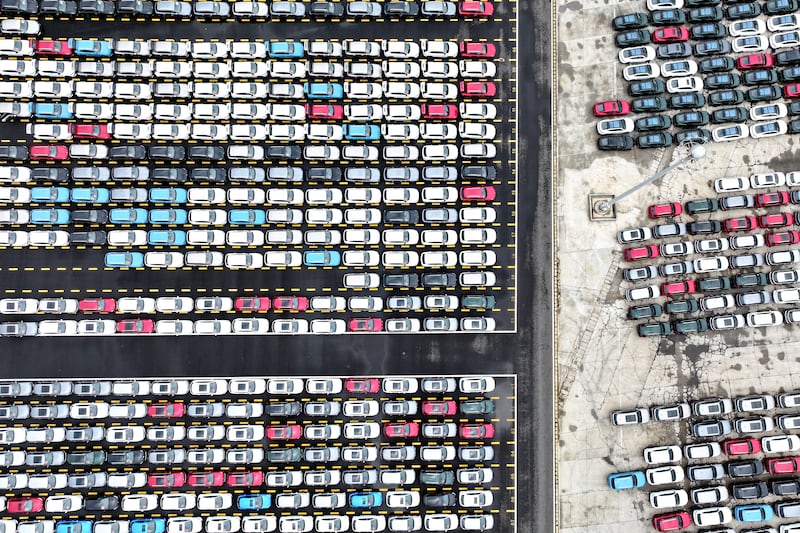
However, China’s lead in EV technology – a lead based on massive national-level investment and control of the supply of battery-specific raw materials – is generally acknowledged.
A switch to pure electric power, Europe’s carmakers worry, would hand the market on a platter to Chinese brands. Tariffs to protect the indigenous industry? Forget it: China’s big car makers are already building factories in the EU.
However, others, such as eco-think-tank Transport & Environment (T&E), say that a weakening of the 2035 standards would just allow Europe’s car makers to become lazy and to stop pushing new technology forward.
According to T&E: “Competition is forcing European automakers to produce better cars and sell them for lower prices. This is a good thing. It’s this competition that took us from the three-wheeled 1886 Benz Patent to Mercedes’s newest electric car, which can drive from Stuttgart to Brussels in one go and which can charge 260km of range in 10 minutes.
“Why this sudden burst of innovation? You guessed it: the car CO2 regulations spurred this progress by requiring EU carmakers to sell electric cars, and to invest and compete. The world is going electric with or without us. Europe’s carmakers must embrace competition and produce the electric, digital, and autonomous cars of tomorrow. Otherwise they’ll be consigned to history.”
One of the few European brands to have opposed the rollback of the legislation was Polestar, whose chief executive, Michael Loscheller, told the Guardian: “Pausing 2035 is just a bad, bad idea. I have no other words for that. If Europe doesn’t take the lead in this transformation, be assured, other countries will do it for us.”
It was, however, suspected by many that Polestar’s concerns – and those of its sister company Volvo – were being largely ignored because both companies are owned by Chinese car maker Geely.
The European Automobile Manufacturers’ Association (ACEA), the umbrella organisation that represents the European car industry at government and EU level, is defending the industry’s stance, with Sigrid de Vries, its director general, saying: “Is the European auto industry calling to abandon electrification, and go back to the internal combustion engine?
“The answer is a simple no. ACEA members already offer more than 300 electrified models in the EU, with many more on the way. They have invested hundreds of billions of euros. What more evidence is needed to show that the industry is delivering?
“In the meantime, EU governments and regulators have not invested in, nor demanded, sufficient levels of infrastructure and grid upgrades. Adequate market incentives are often inconsistent. And mobility needs and consumer preferences remain diverse. Success requires every part of the ecosystem to be in sync, but that is not the case. The consequence: the 2030 and 2035 CO2 targets for cars and vans are no longer realistic.”
The EU’s move comes at a time when electric cars are coming under increasing attacks on the other side of the Atlantic, with the decision by Donald Trump’s government to roll back Biden administration regulations, which would have forced car makers to improve the average fuel efficiency of the fleets of cars which they sell.
Under the Biden administration, US car makers would have had to improve the average fuel economy of their vehicle ranges by 10 per cent in 2026. The Trump reset lowers that to just 1.5 per cent, allowing car makers to ramp up production of what were once called “gas-guzzlers”. With petrol prices at five-year lows in America right now, there’s little other incentive to create more efficient vehicles.
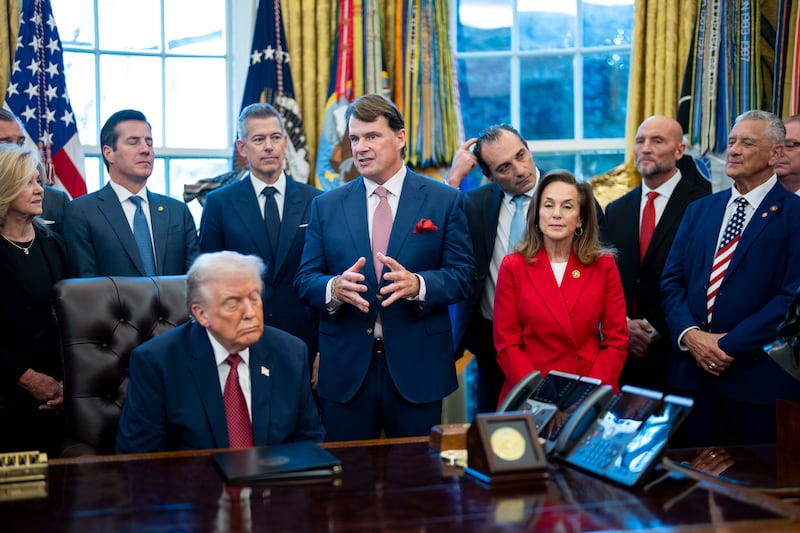
The move is “a victory for affordability and common sense”, said Ford’s chief executive Jim Farley. Speaking on Fox News, Farley said of Trump’s eco-rollback: “Frankly, the corporate average fuel economy was totally out of touch with the market reality. We were forced to sell EVs and other vehicles. We’re not going back to gas-guzzlers. We have a lot of EVs and a lot of hybrids at Ford, but now customers get a chance to choose what they want, not by what we force on them.”
Back in Europe, T&E says that the EU’s move may well have signed the death warrant for the European car industry: “Europe’s car industry was late waking up to the fact that it had fallen behind China.
“Part of the industry now risks repeating the same mistake and digging deeper into the combustion engine dead-end. It is very clear that the future is electric. Every moment, every year that Europe hesitates, it is another moment that China extends its lead. They won’t slow down on electrification because Europe prolongs the life of combustion engines.
“At home, European consumers won’t continue to buy an inferior technology. If the EU backtracks now, it risks missing the biggest industrial shift of this generation. It would abandon its ambition to master one of the most important technologies of the 21st century, and lose the industrial, economic and social gains that come with electrification.”


