Rain is already falling when we land in Chișinău. The taxi driver keeps one hand on the wheel and the other on the radio, tuning between Eastern pop and the news. The country’s pro-European party has recently won the general election – a result shadowed by allegations of Russian attempts to derail it. We drive through streets that look paused mid-restoration: Soviet-style apartment blocks dotted with the odd golden Orthodox dome gleaming faintly behind them. I think of the advice friends gave before I left: always eat what you’re offered, but never too much; bring flowers, always an odd number; never whistle indoors unless you want to be poor. Moldova, they say, runs on old customs.
If you haven’t heard of Chișinău, don’t blame yourself. One of Europe’s least-visited capitals rarely makes the travel lists. Modern Moldova sits between Romania and Ukraine, a landlocked crossroads long shaped by empires – Ottoman, Russian, Romanian, Soviet and more. It declared independence from the USSR in 1991 and, more than three decades later, still balances East and West while edging closer to Europe.
This isn’t just a trip, though. It’s my first visit to my partner’s home city and my first time meeting most of his family. We head to his mother’s apartment near Eroii Patriei Park, a modern flat with chandeliers and patterned wallpaper, proud in its grandeur. The welcome is formal at first – shoes off, gifts exchanged – but warm. She insists we eat, the table already crowded with meats, cheeses, bread and tomatoes from the dacha – summer houses on the city’s outskirts where Moldovans escape the heat in summer and tend their garden plots in autumn. When I hesitate, she gestures toward the plate. “Eat,” she says, smiling. It’s the first word I understand completely.
We start with sarmale with sour cream – cabbage rolls stuffed with pork, rice and herbs – and still-warm plăcintă, flaky pastries filled with cheese or cabbage that seem to appear at almost every meal. It’s early morning and I’m not hungry after the flight, but I’ve been warned: if something is placed in front of you, eat it. Each time I finish a portion, another appears in front of me. Conversation moves in broken English and patient Romanian, circling names, places, family news and gossip. The manners are old-world, the humour quick. The Irish mammy, I realise, may have found her match in the Moldovan mamă – proud, insistent and endlessly hospitable.
READ MORE


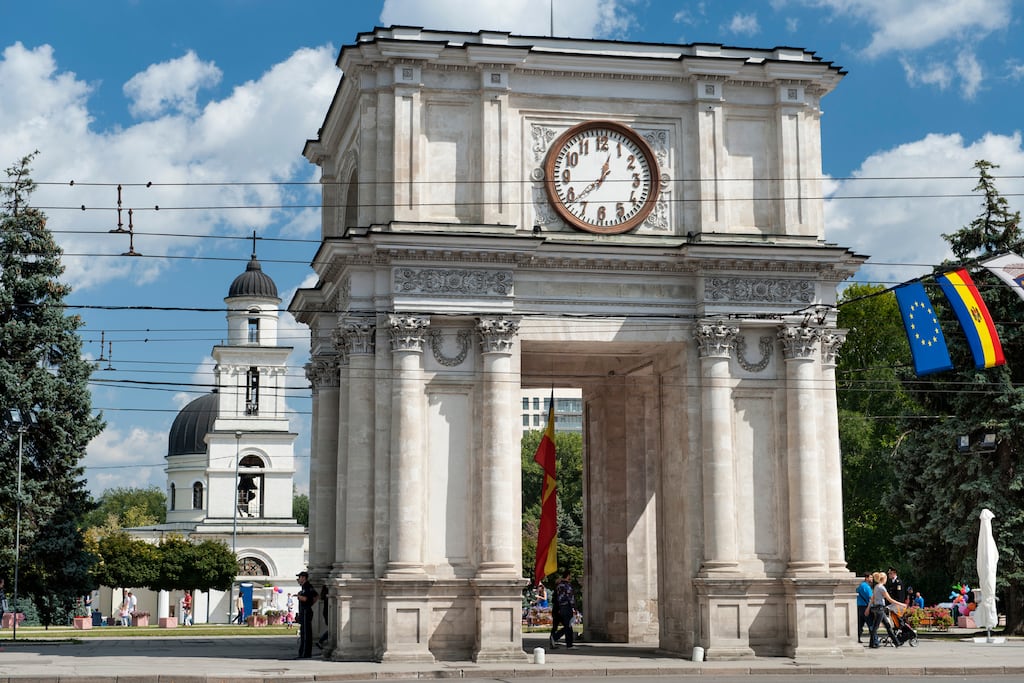
By late morning, the clouds begin to lift, and with them, the sound of brass bands begins. At National Assembly Square the National Wine Day Festival is under way. Craft stalls curve around the Arc of Triumph, their signs declaring Wine of Moldova: Unexpectedly Great. For 250 Moldovan lei (€12.80), I buy a “wine passport” that grants 12 tastings, each one scanned by QR code, though I discover what passes for a tasting here is closer to a full glass.
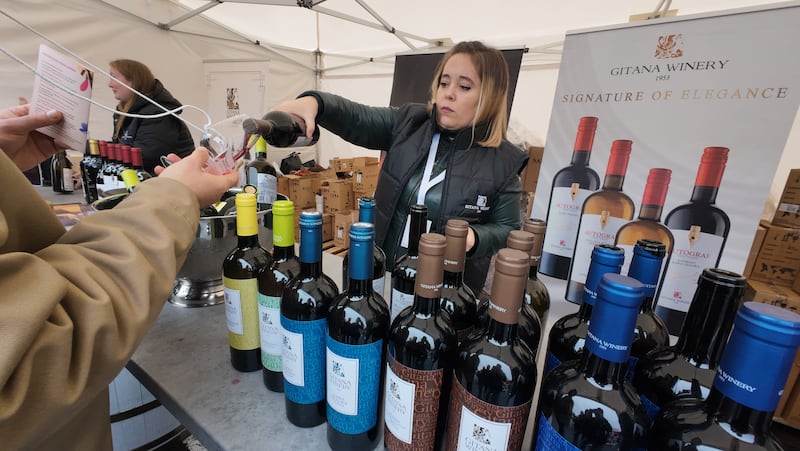
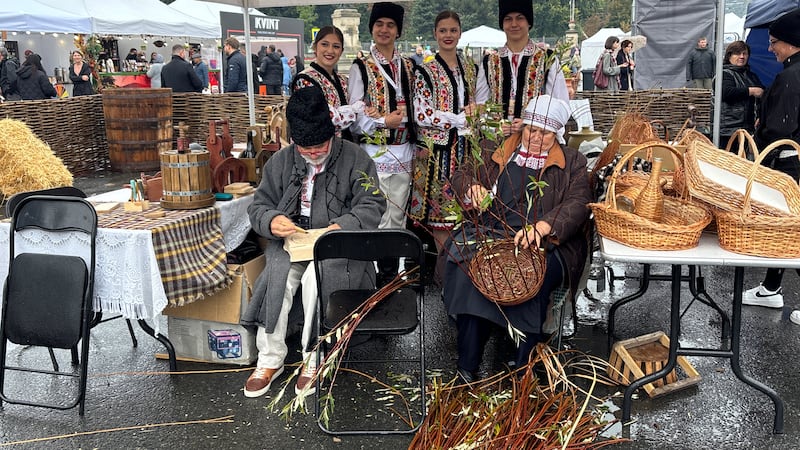
Men in traditionally embroidered shirts pour wine into heavy glasses. An old woman weaves baskets at a display in the centre. Children run between the stalls, faces sticky with must (freshly crushed grape juice). The festival feels part harvest, part homecoming. I’m told wine here is part of memory and each region tells its own story through the soil. At one stand I try Gitana Winery Cabernet, rich and dark, then some sparkling Cricova (a personal favourite for many years). The crowd moves slowly, tasting, nodding, chatting. Nothing about it feels curated for tourists. Chișinău’s festival celebrates for itself first, and visitors like me are welcome to watch.
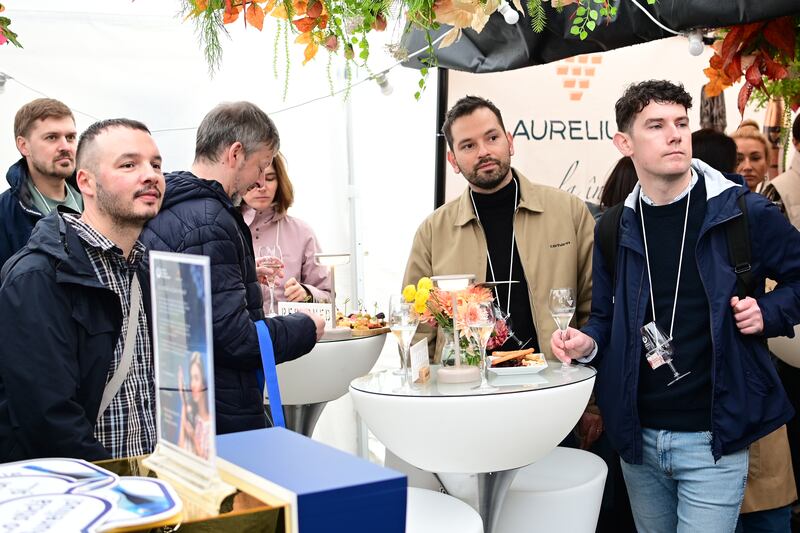
Beneath a white Aurelius Wines canopy, Roman Rotarov, president of the Sommelier Guild of Moldova, waves me in from the crowd. “Come, taste,” he says, already signalling to a waiter. Within seconds a glass materialises in front of me and wine begins to pour.
“This is one of our most important celebrations,” he says. “More than 20 years now. It’s not only for Moldovans, but for international guests too. This year we expect about 100,000 visitors and 108 winemakers. Each with their own story.”
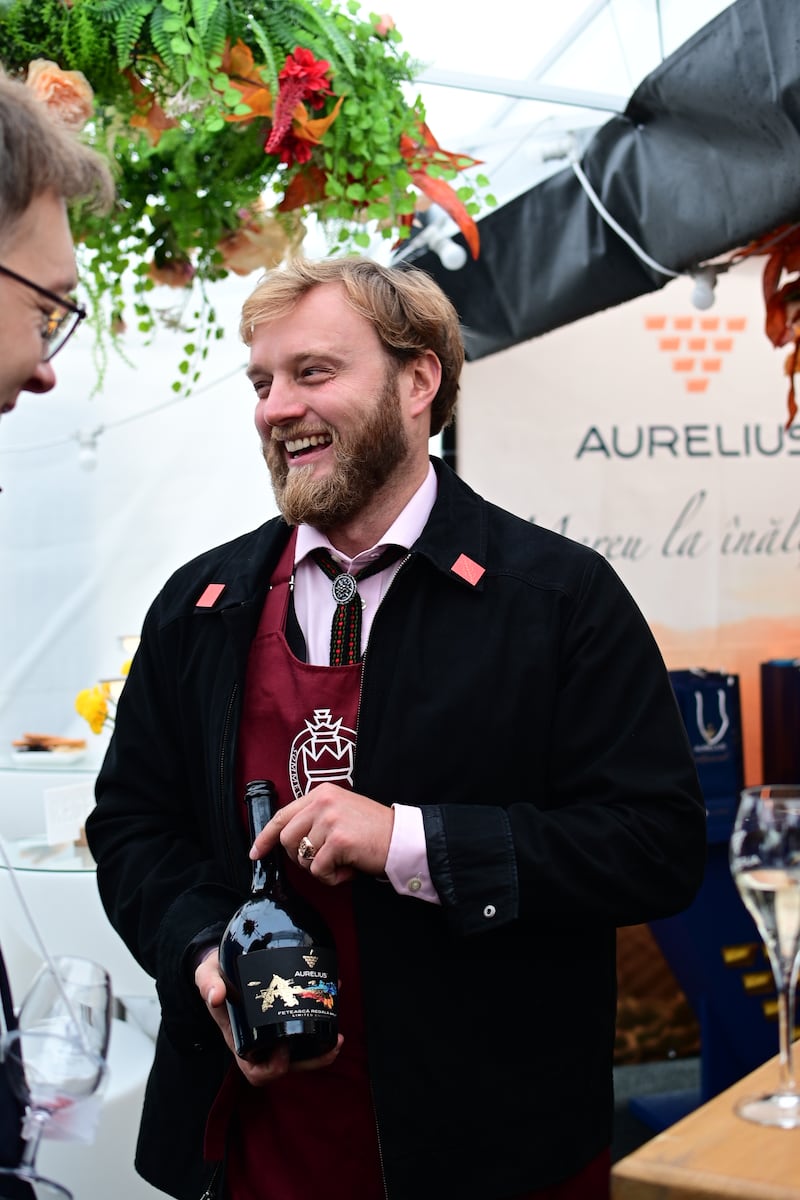
He explains Moldova’s quiet rise on the world wine stage. “Our slogan is ‘Unexpectedly Great’.” Apparently it’s what people say after tasting it for the first time. He lists the grapes – Fetească Albă, Fetească Regală, Fetească Neagră and Rară Neagră – “our maidens,” he calls them. Then the newer hybrids: Viorica, Floricica, Riton and Legenda. “We crossed more than 1,200 varieties over 20 years to create something that belongs to us.”
Around us the crowd thickens by the stage where dancers dressed in national costume perform with wine barrels and singers belt out more folk songs. We step outside the square and the city opens into green. Ștefan cel Mare Central Park is the city’s natural meeting point, a place of poets, chess players and long conversations. Along its Alley of Classics, bronze busts of writers line the path. Mihai Eminescu, the national poet, faces the avenue; behind him, a local points out the sculptor’s own profile, hidden in the curls of his hair. Nearby in the centre of the park, Bonjour Café sits under the trees in a space that was once filled with small kiosks, now a Parisian cafe framed by ivy and linden trees.
A 15-minute walk away, the Central Market hums with activity. It’s a vast sprawl of open-air stalls and covered halls, divided loosely by trade: vegetables in one section, fruit in another, meat and fish at the back, household goods and clothes towards the edge. Vendors call out prices, weigh grapes and bundle herbs with twine. Women in headscarves sell apples, chrysanthemums and jars of honey. The noise is constant: bargaining, gossip, the scrape of crates across concrete. It feels like the city in miniature: noisy, practical and entirely alive.
That evening we bring a bottle from the festival to my partner’s sister’s apartment, where I’m meeting most of the family for the first time. Within seconds I’m introduced to a rotation of aunts, cousins and curious neighbours, all eager to see “the Irish guest”. Every introduction is accompanied by a hug, a laugh, a plate of something. The table fills and refills in waves: more plăcintă, warm from the oven, bowls of beetroot borscht, heaps of cured meats, crudite and soft white cheeses. Each time I finish a dish, another quietly appears in front of me by sleight of hand. When I slow down, someone nudges the serving spoon closer. “Eat,” comes the instruction again. The air is thick with conversation, a blend of Romanian, Russian and English that somehow works. The aunts confer over translations; an uncle offers a glass of tulburel, the cloudy, slightly fizzy new wine of the season. It is sweet, low in alcohol, and poured as freely as water. Laughter rises, food keeps coming and the night stretches on.
The next morning we meet friends at CoffeeMonkey, a bright corner cafe on Alexander Pushkin Street. This 1960s constructivist block once housed the city’s main printing press. Inside, the coffee is dark and strong. We talk about the city’s recent changes: new bars, creative studios and the small migration in reverse. Moldovans are returning home from countries across Europe, drawn back by something slower, more their own. “The salaries are lower,” one friend says. “But for me the quality of life is better.”
That night we find Marlene, a three-room cocktail bar on Strada București. Inside, the decor is restrained but intimate. At the back, a garden tucked under a vine-covered pergola invites you to linger. We’ve booked a table ahead of time. We start with Palomas, then pick-me-up espresso martinis. Around us the crowd is young, multilingual and relaxed – a mix of locals and Americans. Outside, Strada București is quiet but central, lined with pre-war buildings and new upmarket restaurants. But tonight we’re not in the mood for upmarket, so we walk to Eli-Pili on Strada București, a family-style restaurant. We order zeama, the sour chicken soup, and salmon crêpes. The food is simple, restorative and the perfect way to end the day.
The next morning, we take the trolleybus into the city – six lei a ride, about 30 cents – to climb the spiral staircase of the Museum of the City of Chisinau. The former water tower houses historical maps and artefacts from the 15th-20th centuries that chart the city’s growth. The real gem is the view from the top where a balcony offers a panorama of rooftops stretching over streets filled with chestnut trees. From there it’s an easy walk to Valea Morilor Park, its vast lake framed by restored staircases and a boardwalk that curves around the water.
At lunch we meet friends at Divus, a sleek, low-lit restaurant on Mitropolit Bănulescu-Bodoni Street. They’ve come back after years in Dublin and London. “The life is bigger,” one says. “Of course, I make less than I did in London but it goes further even with the price rises.”
We share plates of salmon tartare, prosciutto, tapenade and truffled beef tenderloin. They talk about the city’s slow revival: salaries edging upwards, start-ups appearing and fewer people leaving. After Divus we head back for day two of the wine festival, where the crowds have grown and the rain has lifted. We sample a few more glasses and pick up a slice of baba neagră, Moldova’s dark, spiced cake that tastes faintly of caramel and smoke.
The next morning we head to the National Museum of History. Housed in a 19th-century building, it tells Moldova’s story from old fortresses to the fragile optimism of 1991 after the collapse of the Soviet Union. This autumn one temporary exhibition feels especially pointed: “European Moldova”, a photo chronicle of the country’s long road towards the European Union. Inside, photographs trace decades of diplomacy and protest. The images, drawn from the museum’s own archives and from Moldovan photojournalist Mihai Vengher, feel like a visual argument that Moldova belongs with Europe. Afterwards we head to the National Museum of Art where Mongolian artist Otgonbayar Ershuu is showing a series titled Cabinet of Curiosities – bright, mischievous collages made from postage stamps, painted chimp figures and bursts of colour.
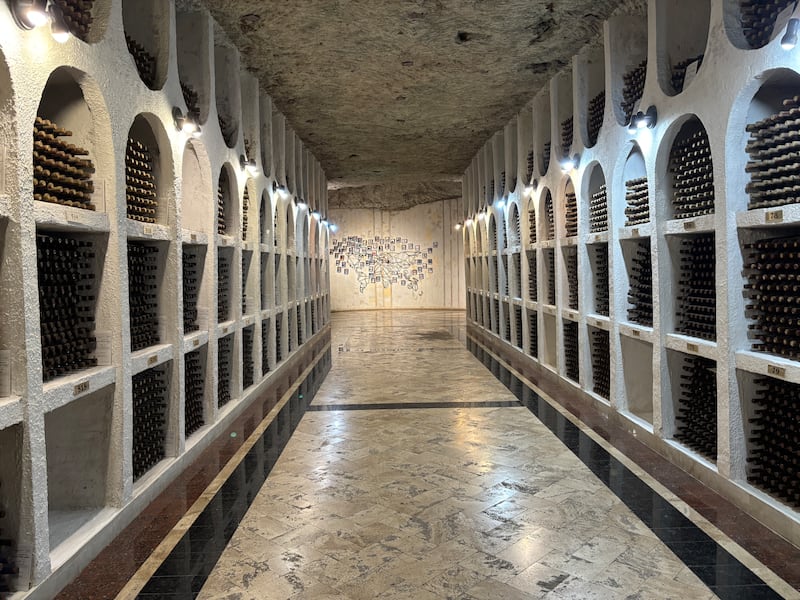
That evening we leave the city for Cricova, a vast vineyard and underground wine complex. Our guide, Anastasia, meets us with a smile and an electric bus cart. We drive through tunnels named after grapes: Cabernet, Pinot, Codru. “These were once limestone quarries,” she says. “Thirty million years ago this was the Sarmatian Sea.”
In the 1940s the Soviet government turned the mines into cellars. The temperature and humidity proved ideal for sparkling wine. Today its tunnels stretch over 120km and hold more than 1.3 million wine bottles. The corridors appear endless and we’re warned not to travel far from the group. Somewhere in these cellars, Russian cosmonaut Yuri Gagarin is said to have got lost during a tour and drank for two days straight before being discovered and carried out of the cellars. Whether true or not, our guide tells us, it’s a good story.
Anastasia leads us into one of the production chambers, where rows of riddling racks tilt bottles at precise angles for the slow process of turning and settling. After touring the chambers, we end the evening with a relaxed tasting session in one of Cricova’s underground salons.
The next morning, the apartment smells faintly of coffee and fried dough. We’ve already packed, our suitcases heavier than they should be, every spare inch filled with food gifts, jars of jams and bags of herbs. Moldova’s hospitality follows you, even when you think you’ve escaped it. As we wait for the lift doors to close, his mother appears again, running down the hall in slippers, a plastic container in her hands. “Take,” she says, pressing it into my partner’s hands – vinete, a home-made aubergine spread. In Ireland, it might be soda bread or leftover roast; here it’s aubergine and garlic, sealed in Tupperware. The gesture is the same.
As a weekend destination, Chișinău has all the obvious draws – walkable streets, good food, affordable hotels, and direct flights from Dublin – but what stays with me runs quieter. The city doesn’t dress itself up for visitors. Its cafes and museums exist for the locals who use them daily. Moldova, patient and proud, moves at its own pace. And, as Roman the sommelier said back at the festival, the result is often unexpectedly great.