

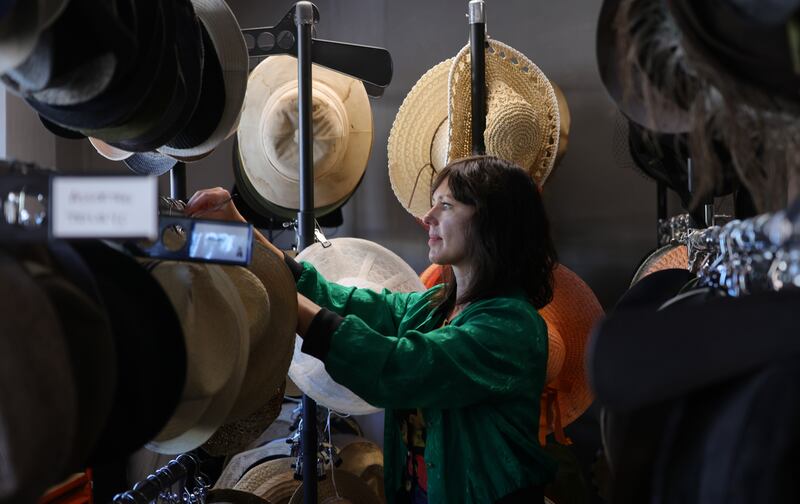
In a quiet, out-of-the-way industrial estate in Finglas lies what is perhaps the nation’s greatest dress-up box. Established in the thick of the financial crash in 2009, the Abbey Theatre’s Costume Hire warehouses have more than 30,000 pieces. From fine period costumes to GAA strips, leather brogues to space suits, and Garda uniforms to priestly gear, it’s a trove of marvellous make-believe – and every single piece is available to rent.
“We don’t do fancy dress,” says the Abbey’s head of costume and costume hire, Donna Geraghty. Instead, whether you’re involved in amateur dramatics or making a music video, shooting a film, or getting a production on to the professional stage, the Abbey is there for you.
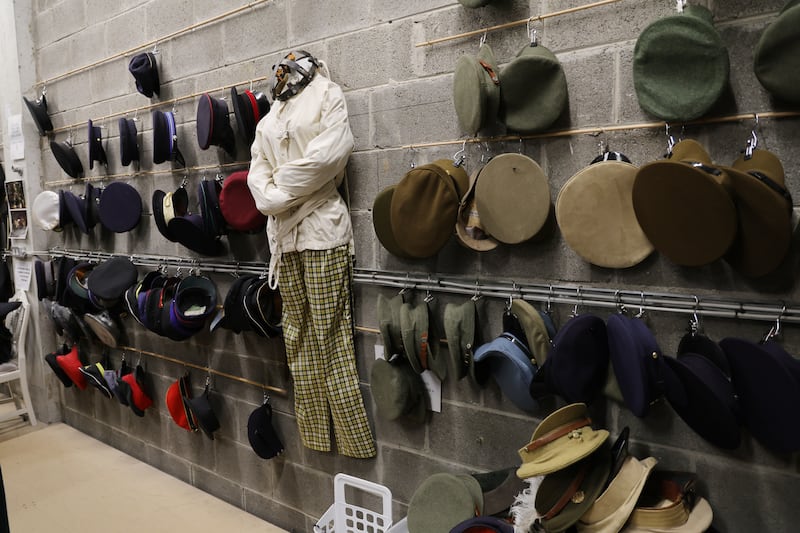
Need a harlequin? Not a problem. Short of a ruff and a jabot? Perhaps a huge crinoline? Do you plan a character lounging in a feathered house coat, or acting at loafing about in tattered trousers? You’ll find everything you need here, all arrayed and meticulously organised on the rows and rows of rails.
The first thing you notice are the mannequins. On my visit, a New Romantic figure, with a hint of Adam Ant, is standing to attention at the entrance. “The team like to dress them up,” says Geraghty. A jabot, by the way, is a ruffled neck piece. Geraghty is a mine of historical costume information. “Some things survived the fire of 1951,” she says. “We still have the odd piece.” Her words have an added poignancy, given the fire on May 11th of this year that ravaged the warehouse of Nomac Productions.
READ MORE


The Waterford-based costume hire business had been in operation since 1988. There, tens of thousands of costumes were damaged or destroyed. “Pieces,” according to the statement released by owner Blánaid MacCann on behalf of her team, “that hold not only endless memories for us, but endless memories for all of those who have worn them.” It’s a sentiment that hits home walking the aisles at the Abbey storehouse. You’re walking through years of productions, of the passions expressed on stage, and the passions of those that created the characters, and who brought them to life.
There is love, betrayal, tears and laughter. Some items bear labels with brief notes on the actor, production and date they last graced the stage. Do things have added cachet if they were worn by the likes of Alan Rickman or Fiona Shaw, I wonder? “Yes,” Geraghty says. “They usually do.” We stop at a Georgian-era frock coat and examine the detailing, the seams, the lining. “It’s not a fashion item. It’s a working item – not like a dress you may wear once to a wedding and [hopefully] be on your best behaviour. Things here have to be made really well.”
The Abbey’s Costume Hire opened in 2009, the brainchild of the then head of the costume department Niamh Lunny and costume designer Catherine Fay. Initially a short-term project to try to save some jobs during the recession, it soon became a valuable resource within both the professional and amateur sector, quickly going from strength to strength.
Today, a team of three are employed, maintaining the costumes and assisting customers to navigate the astonishing array. There is a minimum hire of one week and prices range from €3 for a collar, up to €45 for a three-piece ladies’ period outfit. A corset will set you back €20, a pregnancy bump €15, while a clerical alb comes in at €15. Hire for longer and you’re charged a fraction of the initial cost.
You can really fall for things, but it’s more than having a favourite, you’re bearing witness to a whole time coming to life
— Donna Geraghty
Geraghty herself started out studying textiles at NCAD, before going on to Inchicore College, where a work placement brought her to the Abbey. We keep moving as we talk – it is chilly in the warehouse, the temperature being set low to discourage moths, which makes a line of quilted jackets look remarkably tempting. There is a box of thermal underwear, unworn. “We use those for photoshoots, and we’ll offer them to films. It can get very cold on set.”
Not everything we see has played a role on the Abbey stage. Some items are donated, from members of the public as well as from film and TV. “We don’t list the non-Abbey provenance,” says Geraghty somewhat disappointingly, as I had been on the lookout for Paul Mescal’s Normal People shorts. Does she have favourites herself?
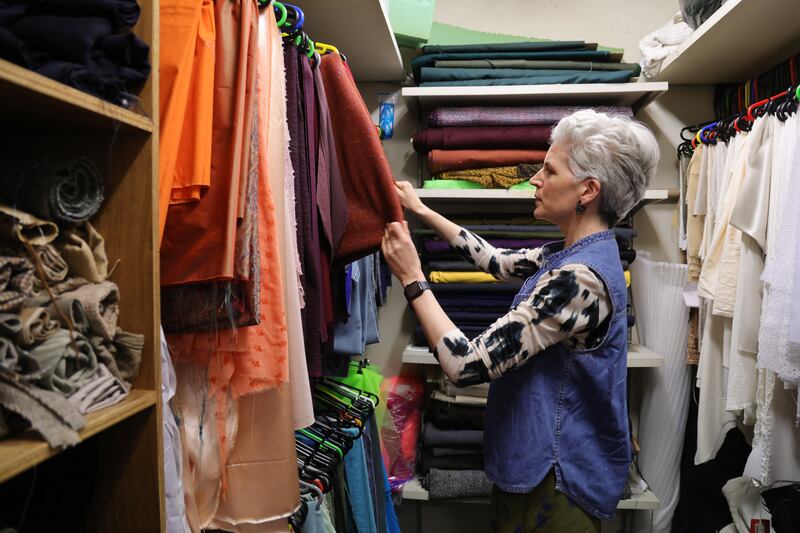
“Every show has something that I love. And I love the difference plays set in different eras bring. You’re discovering a whole time, and when the total look is created, you’re thinking: Wow. You can really fall for things, but it’s more than having a favourite, you’re bearing witness to a whole time coming to life,” she says.
Geraghty and her team are working on Annie Ryan’s reimagining of Lennox Robinson’s The Whiteheaded Boy, first performed in 1916. Now, reset in the Ireland of the 1980s, Sinéad Cuthbert has been creating the costumes.
“It’s a funny period, with the fashions. Our family is stuck in the late 1970s, for the same economic reasons a lot of families were. You can see it when you look in old photo albums, where it’s only in the younger characters that you see the latest trends coming through,” she says.
Family photo albums are a vital research resource, as is RTÉ’s Reeling in the Years – “Research gold,” as Cuthbert puts it. “There you can really see what people were wearing in Ireland, rather than what was in the fashion magazines. There’s a change with the music, there’s the punk era. We had the struggles in the North, and it was hard times in Ireland. There was a lot of brown in the clothes, so we’re trying to put in spots of colour.”
You’re discovering a whole time, and when the total look is created, you’re thinking: Wow
— Donna Geraghty
Sometimes we need distance from a date for it to start to make sense to us, and what might be living memory for some audience members, won’t be for others. UK chain stores had yet to arrive en masse in 1980s Ireland, so while people may have been watching Top of the Pops for fashion inspiration, looks were being created in a more ad hoc kind of a way. “If you could get anything from Camden Market [in London] you were in with the latest trend setters. Do you remember knitting machines?” Cuthbert asks. “I would get loads of hand-machine-knit jumpers from aunts,” she says with a laugh. After discussions with the director, and a close read of the script, Cuthbert’s next port of call is always the costume stores. “Looking at the poster for the Whiteheaded Boy,” she says, “about 90 per cent of the clothes are from the stores.”


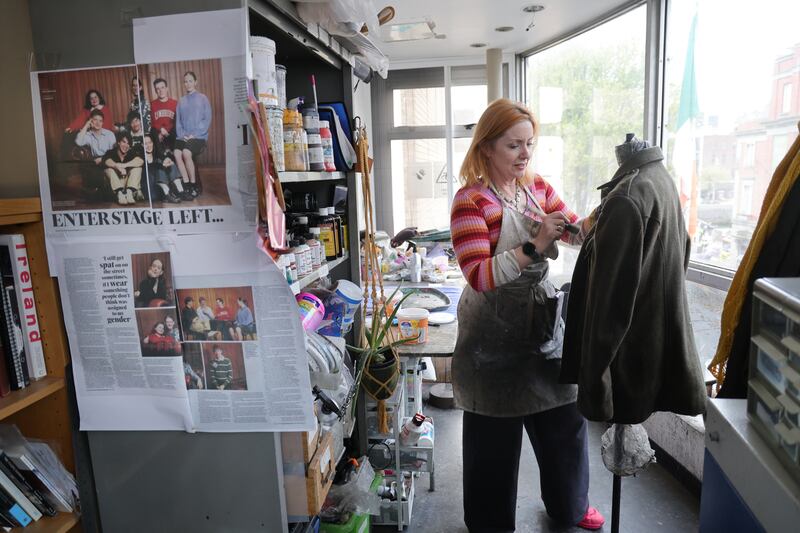
Sometimes things from previous productions are taken apart, so that the fabric can be repurposed. “Of all the departments, I think Costume recycles the most.” Frequently, clothes are made from scratch, and over at the theatre building on Abbey Street, the Costume Department is busy with needle and thread, paint and sandpaper. Sandra Gibney, the Breakdown Artist, is busy ageing shoes. Currently, a cheese grater is her favourite tool. “You don’t want things to look new,” she says. Up in the corner of the building, her work area has a view to the river, and across to The Flowing Tide pub, a favourite Abbey hangout. Sounds of the Luas ding by.
“You need the light,” she says. The costumes will, after all, be under scrutiny from thousands of pairs of eyes in the course of the run. The rumble and hiss of washing machines and tumble dryers backdrop the department’s work. White shirts are tinted so they don’t glare, seats of trousers are buffed. If a production calls for blood, it brings a whole other layer of cleaning needs. A recent production, Dublin Gothic, had a cast of 19, playing 150 different characters, which led to a vast amount of washing, drying, mending and stitching.
“There was one pair of jeans, and every single night there was a different rip,” Geraghty says. “But, weirdly, as they were being repaired, it just added to them. They probably looked their best on the last night – even though the show is meant to be the show from the opening night.” Sometimes a “before” and “after” version of a garment will need to be made. Hanging in the corridor is a pristine off-white lace dress from the revival of Marina Carr’s By the Bog of Cats, played at the theatre a decade ago. Next to it is displayed a greyed, torn copy, for when the character emerges, tarnished by the action of a later act.
Observing everything is Cyd, the theatre bear. “At the end of each pre-show, when all the costumes are done, they’ll make a new set of clothes for Cyd,” says Geraghty, smiling at yet another of theatre’s arcane traditions. She leads a team of 11, including at the Costume Hire warehouse. Next door, Caroline Butler is cutting and making outfits. Next up is Mrs Geoghegan’s best dress, created specially to be worn by Clare Barrett in The Whiteheaded Boy. “She’s all dolled up because her son is coming home,” Cuthbert says. “Caroline is an incredible tailor. They all are, they’re the best in the business.”

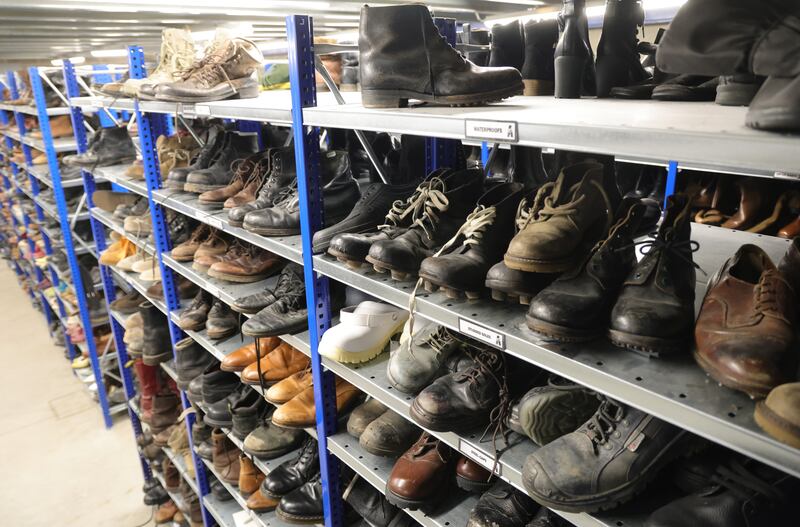
Back in Finglas, I try on a cowboy hat, followed by a 1920s cloche. There are swaggering knee boots topped with a fold of leather – suitable perhaps for a highwayman, and impossible looking snakeskin-effect high heels. Three rows of flat caps disappear into the distance along a breeze-block wall. I pull at a brightly coloured hem and a peacock lounging coat emerges. A ghostly white nightdress is tinged with delicate lace. I think of the power of clothes, of all the different selves one could become, and the sheer possibilities opened up by storytelling, art and drama. This truly is a remarkable place.
The Whiteheaded Boy is at The Abbey from June 3rd to July 25th. For Abbey Costume Hire information, see abbeytheatre.ie.


