
My cat brought this lizard into the house. It looks as though it has shed part of its tail. Other than that, it seemed unharmed and disappeared into the long grass when released. Rosemary McCreery, Newport, Co Mayo
It possibly could have been your cat that caused the lizard to shed its tail. When the lizard – Lacerta viviparous, our only native lizard species – is caught by a predator grabbing hold of its tail, it is able to avail of its power of autotomy, or self-fracture. This is a protective mechanism whereby the lizard can shed a portion of its tail and escape. The fracture takes place across the body of the vertebrate bone at the point seized. The tail muscles, all eight of them, only pass from one vertebra to the next so they break away neatly too. A new tail will form but it is never quite the same as the original one.

I spotted these caterpillars on the new growth of a box shrub that was hit by box blight last year. What are they? David Hamilton, Bray, Co Wicklow
Your box shrub is under attack again. These are the caterpillars of the invasive non-native box tree moth, and they will gobble the leaves and defoliate your plant. If they confine their activities to the leaves of peripheral branches it may survive. But if they move on to eating the bark as well as the leaves of the main trunk, then it is curtains for the box shrub. Accept your fate, get rid of the thing and plant a nice native woody shrub instead – one with flowers and berries that would support indigenous wildlife.
READ MORE


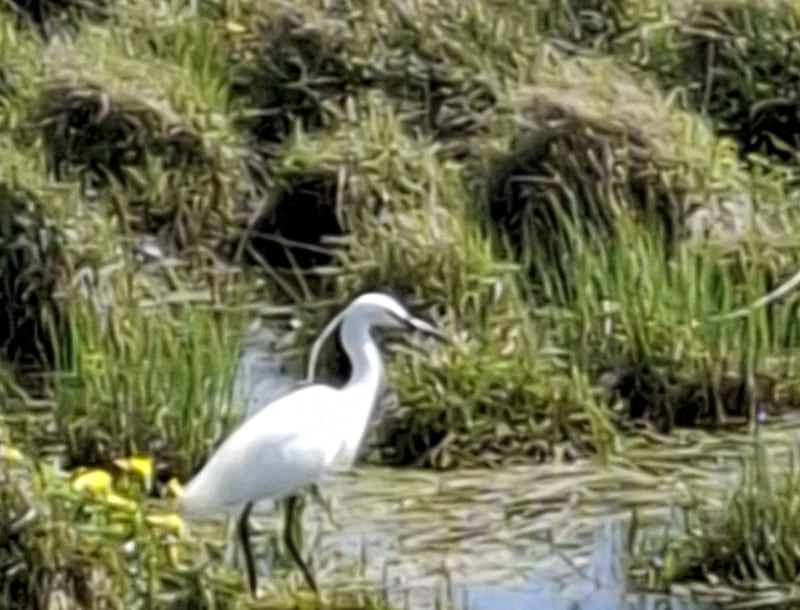
I came across the wonderful sight of a snow-white little egret on a bridge with a copse around it near Mullaghmore in the Burren in Co Clare recently. Are they rare in this area? Eleanor Feely, Co Clare
Little egrets were only occasional visitors from Mediterranean climes 40 years ago. Because of climate change they have been breeding here since 1997. They are primarily a coastal species and are abundant along estuaries, shallow lakes, and rocky shorelines in the south and east. They roost in trees and breed in a colony along with herons, high up in trees. Your sighting was of a visiting feeding one – trees are scarce in the Burren.

I noticed, what I thought was a leaf, caught in a web to the side of my front door. On closer inspection, it turned out to be a moth of sorts. Can you identify it? Paul Downey, Dunmore East, Co Waterford
This is a brimstone moth, which flies from April to October, often just before dusk. They can be attracted to lighted windows, as was yours. But it seems to have fallen foul of a spider web on the window frame, where it got caught. Its caterpillars – which are up to 35mm in length and mostly brown with a marked two-pointed hump near the middle – are extremely twig-like and not easy to spot. They feed on the leaves of hawthorn, blackthorn and apple trees. Winter is passed as a chrysalis.

I saw these ducks in Bagnalstown in late April. Can you tell me what type they are? Pat-Ann Dodd, Co Carlow
There are several words you could use to describe the offspring of a union between two different species. One parent was the mallard, and the other parent was a farmyard duck. Mallard males do not always confine their attentions to females of their own species. They are known to have bred with over 40 different duck species and there can be quite a bit of variety in the offspring of such unions.
Please submit your nature query or observation, ideally with a photo and location, via irishtimes.com/eyeonnature or by email to weekend@irishtimes.com
Please submit your nature query or observation, ideally with a photo and location, using the form below or by email to weekend@irishtimes.com


