

The game designer behind a controversial famine-survival board game says that while it was “thrilling” for The Great Hunger to be a featured topic on RTÉ’s Liveline this week, he does not “expect a single Irish person to buy this game”.
Co-designed by architect and part-time game designer Kevin McPartland, The Great Hunger is a “historic simulation game” which involves 2-5 people playing families of tenant farmers and field hands during the 1840s.
The game begins with population expansion up to a point when the potato blight arrives. Players must then try to find employment in Ireland, or secure passage to the US. The aim of the game is to survive, and the player “with the largest surviving population across Ireland and America” is deemed the winner.
The architect and teacher was on RTÉ’S Liveline on Thursday to discuss The Great Hunger.
READ MORE


McPartland says that he “can very much understand” the backlash from listeners, adding that he originally had “some trepidation about designing a game on this”.
The designer explains that “Irish people are not the target audience for this game” but “if this publicity sells more copies in America, then I feel like I am getting the story out even better”.
The game was proposed to have a run of 1,000-1,500 copies and be sold by small Connecticut-based board game company Compass Games.
McPartland, who is also an architecture teacher at a local community college in Maryland, says that he “loves spreading history” and he spent more than eight years developing this game as a hobby.
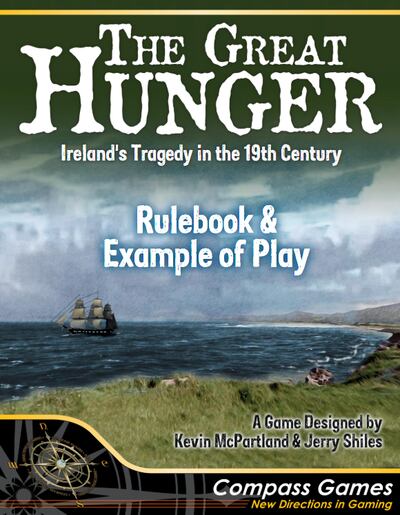
“The more I study about the history of An Gorta Mór, the more I realise that Americans just don’t know about it.”
McPartland believes that the game can be a tool to educate his fellow Americans. “Some people who would not darken the door of a lecture hall might learn about the famine through a game.”
He sees the Irish famine as having parallels to the modern US. “What I saw was a ruling class that was completely out of touch with the people they were ruling. Thus they made decisions that were so harmful to their people, but profitable to them.
“Guess what? If you don’t know your history you are doomed to repeat it and I see this going on in America right now.”
Speaking about the intention of the game, McPartland says: “In my own tiny little way I was hoping to enlighten a few people here in America.”
McPartland, who can trace his ancestry back to Leitrim, says that he thinks games can be a learning tool to teach people history.
He says that The Great Hunger is more an educational game than a trivial one. “Historic simulation games are far closer to the chess end of games than drinking games.”


