
Tired of shared rental accommodation, Konstantina Kalliontzi seized on the opportunity to live alone in a modular home at the back of an acquaintance’s garden last year.
The unit, which she rents under a licence agreement for €1,150 a month, was never going to be her long-term home.
“I knew I was moving there to save to buy a house,” says the tech worker.
The modular rental home, located in Donabate, north county Dublin, is a “decent studio size”, “very new” and contains all necessary appliances, such as a mini-oven and a washing machine, says the 26-year-old Kalliontzi.
READ MORE


While a little too warm in summer and too cold during winter, she found it has been a respectable place to live over the last 10 months.
[ Housing charity concerned at risk to tenants under modular home planOpens in new window ]
She kept the electric heater on “24/7” during colder periods, but, as she was heating such a small space, a three-month electricity bill, covering all of her energy use, came to only €100, she says.
Considering some of the house sharing options out there, she believes modular homes can be a good alternative.
“You have the opportunity to live relatively alone. I have a separate entrance to the garden,” she says.

Kalliontzi’s experience may be what the Government hopes to emulate by introducing regulations to make it easier for homeowners to build and rent out modular homes in their back gardens.
This week, Minister for Housing James Browne confirmed he will bring in long-flagged plans to make modular residential units of between 32sqm and 45sqm exempt from planning permission.
This, he said, would “lift the regulatory burden” on homeowners and families, while freeing up planning authorities to focus resources on more complex projects.
The exemptions will be subject to a requirement that the garden has to be at least 25sq m (269sq ft).
The modular structures, like other habitable premises, must comply with building regulations, including rules around access for people with disabilities, a Department of Housing spokesman says.
Full details of how the proposed “Exempted Development Regulations for Residential Dwellings” will operate will be clear when they are published, he says.
Enforcement of the building regulations will be a matter for the 31 local authorities, which have “extensive powers of inspection and enforcement under the Building Control Acts”, he adds.
The Government will amend the Residential Tenancies Acts so these garden units can be rented out without coming under the remit of Ireland’s rental watchdog, the Residential Tenancies Board (RTB).
Instead of a typical rental contract, the units would instead be let out under licence, with homeowners permitted to earn up to €14,000 in rental income tax-free, in a similar arrangement to the current rent-a-room scheme.
The Government’s political opponents, including Sinn Féin, Labour and the Social Democrats, argue that the changes will bring about a system of “beds in sheds”.
Experts and stakeholders disagree over whether the policy changes could lead to large numbers living in poor-quality garden homes.
[ Back-garden modular homes set to be exempt from planning rulesOpens in new window ]
Gavin Lawlor, president of the Irish Planning Institute, does not foresee the planning exemptions ushering in poor housing and a “race to the bottom” on standards. Anyone saying this will occur is “scaremongering”, he says.
Lawlor says Ireland has “some of the strongest building control regulations” and if a modular home fails to comply, authorities have “significant enforcement powers” available to them. He noted there are already planning exemptions for small single-storey extensions.
People spending the substantial sums that the modular units cost will generally ensure they comply with required standards, he says.
Lawlor is not convinced by the Government’s promise that these changes will “free up planners”.
While council planners will not be involved in approving these units, he envisages an increase in neighbour complaints to local authorities over new installations, while private consultant planners will be busy certifying that the dwellings comply with regulations.
Less optimistic is Lorcan Sirr, a housing policy analyst and lecturer at Technological University Dublin, who believes enforcement of standards will be “critical”, but difficult.
“It is all very well to say you have to follow building regulations. Who is going to check that people do [follow them]?” he asks.
He expresses concern that only a small proportion of back garden homes will be purchased from legitimate suppliers, while the rest could resemble “shanty town” structures.
These units will have an impact on the wider community, with likely increased pressure on water and other infrastructure, including parking, he says.
More worrying than the implications for building standards, Sirr says, is how the tenancy, or licence, arrangements will work. With the licences falling outside the scope of the RTB, Sirr said inhabitants could be “evicted at a moment’s notice”.
Mature student Oriel Corway (36) was until recently living in a flat-roofed studio in a back garden in Tallaght, where she says damp and mould were “absolutely rife”. She says she repeatedly raised this with the letting agent, which last December said more than €9,000 had been spent trying to rectify the issues.
She is now staying in other accommodation on a short-term let while refurbishments are carried out.
“I’m dreading going back... The bed was mouldy, I was mouldy, my clothes were mouldy ... I’m still having difficulty breathing,” she says.

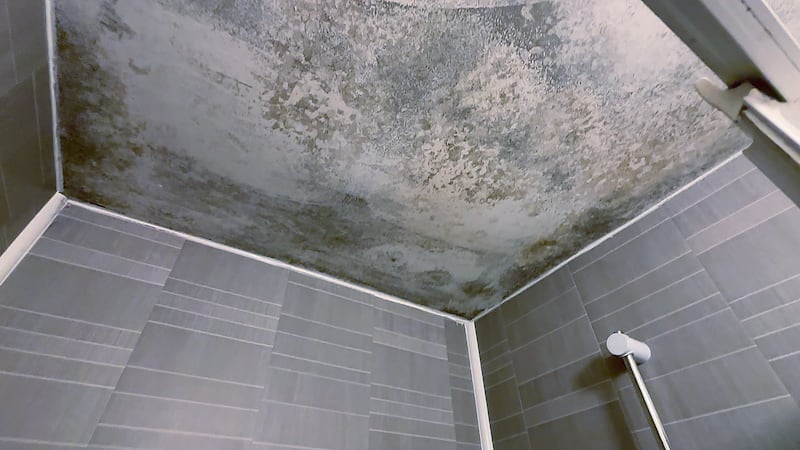
Her rent for the back garden home was €1,300, most of it covered by the State’s housing assistance payment (Hap).
She says she ended up in the studio “by necessity” as she needed to move closer to her parents, who were unwell.
“It is the housing crisis; you will take what you can get,” she says, adding that being “tucked away” at the back of someone’s garden feels “undignified”. She has been on a social housing list for about 15 years and is always on the lookout for an alternative rental.
[ Easing of garden cabin rules could have ‘unintended consequences’ for tenantsOpens in new window ]
She would be “happier” with the Government’s proposed changes if the RTB had oversight of these arrangements, she says, and warns people considering renting out these homes under licence to “be careful”.
Declan Murtagh, the chief executive of Framespace Solutions, which manufactures a range of modular buildings, is keen to dispel the notion that modular homes equate to “beds in sheds” or are in any way reminiscent of prefabricated schools in the 1980s.
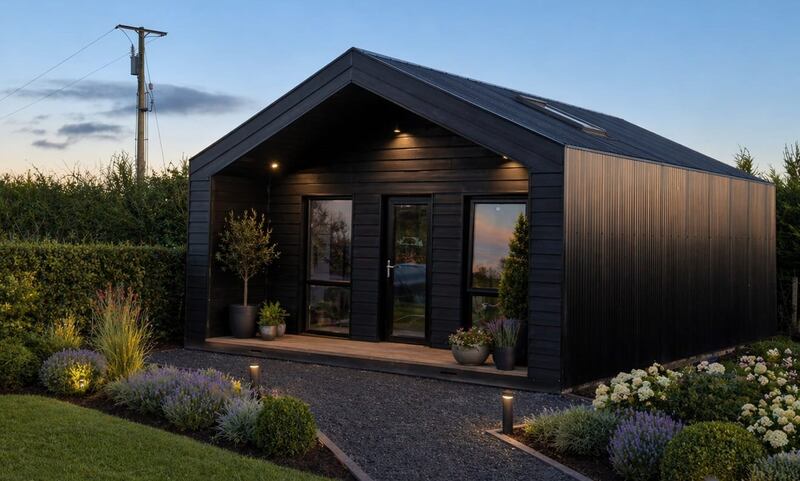
He welcomes the planning exemption regulations, but cautions that there is potential for bad actors in this area if there is insufficient policing of the units’ compliance with building regulations.
As long as they are followed, the regulations are “100 per cent” sufficient to ensure appropriate standards for the construction and installation of modular units, he says.
Murtagh says he would be “concerned” if the changes allow for units with a lifespan of just 15 years or so. They should instead be treated as a long-term, quality contributor to building up Ireland’s housing stock, he says.
Homeowners looking to install modular structures should prepare for a “significant, long-term investment”, says Murtagh, whose Framespace homes have a lifespan of at least 60 years, he says. A one-bed unit costs between €105,000 to €135,000, he says.
Richard Thorpe, owner of the Pod Factory, which builds modular units, says his company has always questioned how the standard of these units would be policed.
“It is very important for the building regulations to be complied with. You are now in a dwelling, so you are in the same circumstances as a house,” he says.
“The last thing you want is people living in sheds.”
Thorpe suggests all suppliers should have to submit compliance documents to every local authority to be approved for modular home installations.
Val O’Brien, chartered surveyor with Val O’Brien & Associates, says the Government’s plan has “great potential”, but he is “sceptical” about how it would operate.
A surveyor will be brought on site early in the construction of a typical extension or house, but there may not be a need for one when installing a modular home, unless a bank lending money for the project demands compliance certificates, says O’Brien.
It could be that there is no pre-emptive policing of building standards where homeowners are paying for the units out of pocket, he said, adding: “There is scope for an awful lot of shoddy work.”
Neighbours could be affected, and local councils would be expected to respond to any complaints about potentially dodgy structures, says O’Brien.
“I think you will see a lot more complaints,” he says.


