

The fabled Irish welcome is at risk if there is a backlash to short-term letting, the Government was warned last year.
“One of our core draws for tourists is the Irish welcome ... it continues to be front and centre in the marketing of holidays in Ireland,” one briefing document states.
But the document warns: “Housing constraints caused by unmanaged short-term letting will undoubtedly lead to resentment and even overt protests against tourism.”
The paper wasn’t produced by a housing advocacy group, nor an opposition party – it was drawn up by civil servants in the Department of Tourism last year.
READ MORE


The balancing of tourism against the housing crisis is under renewed scrutiny as the Government prepares new regulations for the short-term letting sector.
And it risks causing divisions within the Coalition as agendas diverge.
Last week, Coalition leaders agreed to move ahead with an effective ban on planning permission for new short-term lets in places with populations of more than 20,000 people.
Without planning, they won’t be able to get on to an online register of short-term let properties maintained by Fáilte Ireland and therefore won’t be able to use popular platforms such as Airbnb.
Arriving at this point has seen plenty of political jockeying: the original plan was to target towns and cities with more than 10,000 people, but the Government reversed course.
Independent Minister of State Michael Healy-Rae, whose tourism-heavy constituency of Kerry benefited significantly from the change, was among the opponents of the lower figure, alongside his constituency colleague Minister for Children Norma Foley. He was quick to take to social media last week to welcome the change while pointing to his own advocacy.
Minister for Tourism Peter Burke justified it, saying the Government was trying to be “understanding” towards smaller towns where demand was high but bed spaces limited.
There were said to be “robust” exchanges at a meeting of Coalition leaders and senior Ministers at the start of last week to sign off on the 20,000 threshold, with Minister for Housing James Browne reported to harbour reservations about the move.
Critics are scathing.
Raising the threshold was “an obviously politically motivated capitulation to a vocal minority in Government”, says Lorcan Sirr, senior lecturer in TU Dublin and a housing policy analyst. He saw it as “a political decision to prioritise the additional income from STLs [short-term lets] above the needs of people doing ordinary jobs with ordinary incomes who can’t find anywhere to live”.
But addressing the flow of properties into short-term letting is only half the equation: the other side is the stock of properties already available to let on a short-term basis, estimated last year to be about 32,000.
Fáilte Ireland has previously estimated that about 10,000 of these properties could be returned to the long-term housing market, with a third of these likely to be located in Dublin.
Many properties in the sector operate without the required planning permission but enforcement is weak.
The stipulation to be compliant to get on the new register, and hence on to platforms, could force those unable to get planning back into long-term housing. But this is also the next battleground.
“I’m only a small little person down along the food chain,” Healy-Rae told The Irish Times. “I know my station.”
The Independent Minister may downplay at times his role – while also effusively praising the “excellent and diligent” work done by his ministerial colleagues in housing – but Independents have outsize influence in this Government. And Healy-Rae’s next ask is for measures to allow existing operators to continue in the short-term letting sector.
Specifically, he wants a sunset period allowing lessors without planning permission to continue operating for two years while they regularise their status, and more ambitiously, a “grandfathering” of properties that have been operating without planning for seven years to continue doing so.
The Department of Housing is to bring forward a National Planning Statement on short-term letting before May 20th addressing these matters. Browne is likely to argue that properties being run as commercial units without planning are needed as rented homes or to be available to buy.
Again, analysts such as Sirr are highly critical of the proposals.
“The net effect of both of those would be to regularise or make permanent in the Irish housing system an already mostly-illegal mini-industry,” he says.
And to do so, he adds, would be at the expense of mostly young people searching for a home.
Healy-Rae argues that forcing the planning requirement is “like telling a farmer: ‘goddammit you’ve a great cow there ... and we’re coming along as a department and taking away your cow and killing her and we’re not giving compensation for her.’”
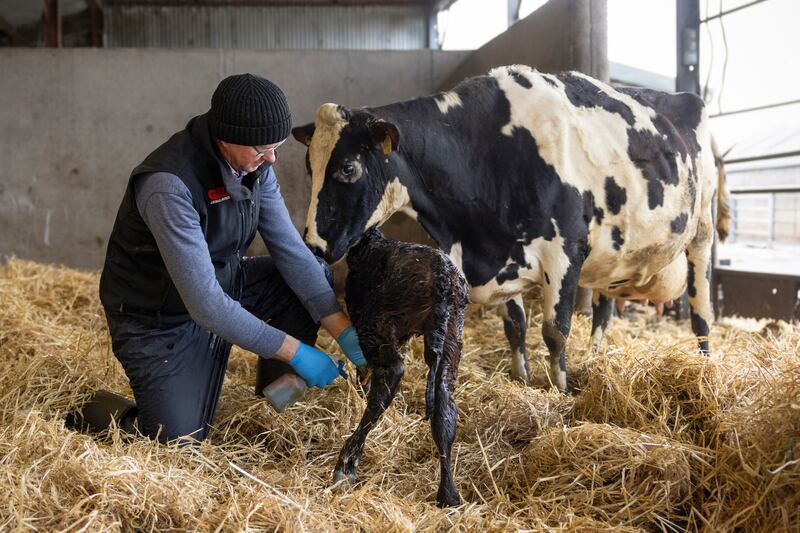
Someone who can grasp both sides of that metaphor is Tomás O’Keeffe, a dairy farmer and short-term letter from outside Clonmel, Co Tipperary.
Along with his wife and children, he extensively refurbished the vacant family home where he was raised, kitting it out like a thatched 1970s Irish farmhouse.
He did much of the work on the farmyard property, which dates from 1780-1820, himself. In addition to supplementing the farm income, he enjoys welcoming visitors into the sometimes solitary farm life, walking the fields with them and educating them on dairy farming.
He is now worried about accessing letting platforms, saying this is already being curtailed. He welcomes the register, but worries about being swept up in wider regulatory reforms.
“I realise there is a housing shortage and a housing emergency, but this house isn’t the solution to it,” he says.
Sinn Féin housing spokesman Eoin Ó Broin says operators such as O’Keeffe should be allowed to regularise their activities and continue providing a valuable tourism product. But he warns that the reasonable concern and confusion of small operators could operate as a “Trojan horse” for carveouts that would benefit major investors in short-term letting.
The Dublin Mid West TD says there are “companies with significant financial capital buying properties that were at one time long-term rentals and bringing them into the short-term rental sector”.
The Department of Tourism has previously estimated the sector represents about 40 per cent of tourism beds in Ireland, and has grown by about 10 per cent annually from 2022 to 2024.
But an internal Government analysis seen by The Irish Times suggests these beds often lie vacant.
A paper from the Department of Tourism found that occupancy rates in 2024 ranged from just 3 per cent to 36 per cent, with the highest in Dublin in August at 36.2 per cent.
“There is a very high percentage of STL bedspace capacity unused throughout Ireland,” the research states.
By way of contrast, industry analyses suggest occupancy in hotels nationally was 80.7 per cent in the first eight months of 2025.
The paper also outlines that 90 per cent of stays were in properties advertised as full units, as opposed to a room in someone’s home.
The figures show many short-term lets lying vacant most of the time against the backdrop of a housing crisis and that the vast majority of bookings are in full properties rather than spare rooms. That is obviously politically problematic.
While it does not explicitly make this point, figures from the research suggest there is capacity in the wider sector to absorb tourist demand, at a national level at least.
It finds that 70 per cent of the beds outside the term-letting sector could provide capacity for 51.1 million visitors – 17 per cent more than came last year – and that about 40 per cent of visitors stay with family or friends and don’t require tourist accommodation.
It goes on to point out that tourism itself is not immune to the effects of the housing crisis: “Insufficient housing supply is affecting all sectors of the economy, including tourism”, one Government briefing document states, citing Fáilte Ireland research indicating that more than half of tourism businesses report housing availability as a barrier to staff recruitment.
Ireland, along with all EU member states, is required to apply EU short-term rental regulations by May 20th this year. The next step will be the Department of Housing’s planning statement, which will bring the debate over what to do with the existing stock into sharp focus.
The stakes are high, according to a 2025 paper from the Department of Tourism, which points out that over-tourism has led to a “backlash from residents and social unrest” in some EU member states. The anti-tourism protests in Spain in 2024 and 2025 were among the most high-profile in Europe.
Failure to regulate the sector, officials warned last year, will probably drive more growth: “This will exacerbate the impact on the long-term housing market resulting in further societal and economic consequences, and it will also have potential downsides for the tourism sector.”
But striking the balance may yet strain relations in Government.


