

The CAO form can feel like the most important document you will ever fill in. You’re still in your teens, but are being asked to map out your future with very little experience of the world, enormous pressure from every direction and perhaps not much more than a rough sense of what you actually enjoy.
What nobody tells you loudly enough is this: if it goes wrong, it is not the end.
Kate Ward had always loved languages. She studied German and French to Leaving Certificate level and knew she wanted to do something with them, but she just wasn’t sure what.
Teaching was somewhere in the back of her mind but she wasn’t ready to commit to it, so chose business and languages because she thought that it would keep her options open.
READ MORE


“I wanted to complete a course that involved languages,” she says. “The points were always a factor. I wanted to do well enough to secure a place, but the ultimate goal was getting into college.”
Kate Mahony’s starting point was different. She didn’t have a burning passion; she just knew she had to put something down. Arts at Maynooth seemed like a sensible option.
“Arts was obviously broad as you can choose whatever subjects,” she says. “It was 357 points at the time, so that was my goal. It wasn’t based on any personal want or need to get as many points as possible.”
Kate’s parents had never been to college and wanted the best for her, while her school pointed her towards a level eight degree as the obvious next step. “There was nothing actually given to me at the time about the other options,” she says.

DJ Stack, meanwhile, had a clearer path in mind – or so he thought. He had played GAA, football and basketball throughout school, had always enjoyed maths, and was strongly influenced by his school basketball coach, who had done the same BEd in Physical Education and Mathematical Studies at UCC.
“It wasn’t that I had a master plan,” he says. “It was more that I picked something built on what I liked.”
For Stack, unlike for Kate Ward and Kate Mahony, the course itself wasn’t the problem. But he would, ultimately, find his career path diverging from his degree.
For both Kates, though, things began to unravel during first year. Kate Ward found herself questioning her choice as early as Christmas. She stayed on through the second semester, swapping modules, trying to make it work, but the feeling wouldn’t lift. She left, reapplied through the CAO, and started again the following September, only to find herself falling further behind in French, missing classes, and then failing a compulsory module.
Kate Mahony began to seriously rethink her choices when she sat down with her parents and looked honestly at the results in front of her. “I wasn’t putting in the effort. There wasn’t even a wake-up call after the first round of bad results,” she says.
She had never wanted to study business and Spanish, and still isn’t quite sure how those ended up on her form.
“I loved English in school. That’s why I’m doing journalism and communications now. I hadn’t even given that a second thought.”
The decision to leave carried a weight that neither of them had expected. For Kate Mahony in particular, she felt a sense of shame.
“I was 19 and I thought, oh my God, my life is over,” she says. “Obviously, I know now that it was honestly just the beginning of my actual academic journey. It was something I definitely shouldn’t have been ashamed about.”
Kate Ward felt adrift too.
“After leaving Maynooth University, I felt very lost and didn’t know what to do with myself,” she says. “It felt like everything had fallen apart and there was no way back.”
But, of course, there was a way back.
Kate Ward found a QQI level five post-Leaving Cert course (PLC) at Dunboyne College of Further Education, which gave her a pathway into the degree she had actually wanted all along: education with modern languages at UCD, combining German, French and teacher-training.
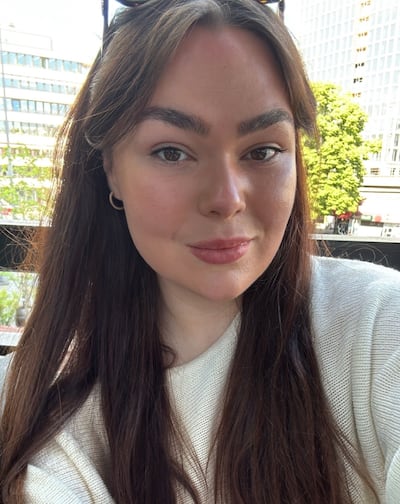
“The smaller class sizes and supportive atmosphere made me feel much more comfortable asking for help and engaging in class,” she says. “For the first time in a long time, I felt confident in my abilities again.”
[ Why students drop out and how you can avoid itOpens in new window ]
Kate Mahony did a PLC in journalism at Dunboyne College of Further Education, got her level five, and this qualified her for entry into the Communications degree at DCU. “I’ve just completed my first year and I’m doing really well, and that’s obviously a testament to the fact that I actually enjoy what I’m doing,” she says.
She now commutes further to college than she did to Maynooth, but her attendance is far better.
Stack taught maths for two years after his BEd, then applied for an MSc in project management at UCD Smurfit, supported by an Aspire scholarship. He is finishing the MSc this September, is soon starting an internship with the Football Association of Ireland for 12 weeks, and is joining the National Treasury Management Agency as an associate on their project management team.
All three have learned that the skills and experiences gathered throughout their education, the insights into what they like and don’t like and even the mistakes made along the way have formed a solid basis for their career.

Stack says that his teaching degree gave him far more than he realised at the time. “Teaching is essentially stakeholder management at speed,” he says.
“Every lesson is a small project. You learn to communicate complex ideas to people at different levels, work under pressure, read a room and adjust on the fly. Those are exactly the skills you need to run projects.”
Kate Ward found that a year in further education rebuilt her confidence and her sense of direction. For Kate Mahony, the PLC year gave her the time and space to figure out what she actually wanted to do.
“You won’t have it figured out at 17 or 18, and that’s okay,” Stack says. “The goal isn’t to pick the perfect course. It’s to pick something that builds on your interests and gives you options.
“In any case, the course matters less than how you engage with it. College is the bridge between school and working life, and the most important thing isn’t just the degree. You learn how to stand on your own two feet, how to live independently, how to make friends in new environments and how to manage your own time. The goal is to come out with more than a degree.”
Kate Ward says it’s okay if your first choice doesn’t work out. “There are always other routes and opportunities available, even if you can’t see them at the time.”
Kate Mahony wants schools to talk more about PLCs, apprenticeships, level seven courses, and the many roads that lead to the same destination, rather than funnelling every student into the scramble for points.
Whatever you put on that form, it is the first decision, not the last. In the worst case scenario, you will learn more about yourself, what you like, what you don’t and why – all crucial parts of any rounded education.


