Many secondary schools in Ireland are struggling to fill teaching vacancies. The situation is particularly acute in Dublin, with teachers often living a long distance from their school because they can’t afford to pay increasingly high rents.
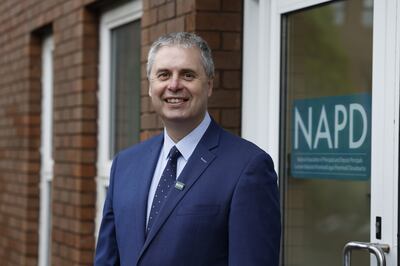
“What happens is, the teachers come to Dublin, they learn their trade for five or six years. They can’t afford to buy a house in Dublin, so they move back to where they’re from,” says Paul Crone, director of the National Association of Principals and Deputy Principals. “They are giving up jobs in Dublin schools and taking jobs down the country, and it’s leading to a brain drain in the city. That’s the one of the biggest things that we’re noticing.”
The introduction of an urban allowance, similar to the one in place for people who live and work in London, may help “grasp the nettle”, he says. “That’s something that has been resisted, but that really needs to be looked at seriously.”
London weighting, as it is known, essentially refers to an additional wage for workers to offset the expense of living in the city. While it was originally implemented for public-sector professions – such as teachers, police and NHS workers – the additional wage has since been applied widely across the private sector. The main sticking point over the introduction of such an allowance in Ireland is deciding which professions should get it.
READ MORE


An allowance for teachers who live in Dublin or other cities “would see similar demands from other public-sector workers, and are more appropriate to negotiations that take place as part of public-sector pay agreements”, a statement from the Department of Education noted.
“There are issues,” Crone acknowledges, “because if you give it to teachers, you’ll have to give it to nurses, you’ll have to give it to guards.
“In some jurisdictions, if you’re a teacher and you’re paid the urban allowance, you have to live within that area, and that’s in the conditions for the allowance. But we’re not even discussing that at the minute, so we need to discuss that and see if it’s viable and see if it’s possible. If it is, it certainly would go a long way towards helping those urban schools attract teachers.”
Maria Markey Greene, a teacher at Rosmini Community School in Drumcondra, Dublin, agrees an urban allowance could help the recruitment issues faced by some schools. On top of the cost of living, Markey Greene says many teachers are considering leaving the profession, or the country, due to increased stress.
“The teaching profession now has changed massively compared to what it was 20 or 30 years ago, because there is a huge increase in the workload. There’s also a massive skill base that people didn’t have coming into the job 20 or 30 years ago.”
Chief among the additional skills required by teachers now is a grasp of artificial intelligence (AI) tools, particularly as the senior-cycle curriculum is reformed to include more projects and continuous assessment. “I cannot overstate how massive these changes are going to be to our already heavily burdened, work-laden workload,” Markey Greene says. “When you start to feel burned out, you start to look at other options.”
A study published by Dublin City University last year found that 85 per cent of teachers reported experiencing moderate to high levels of work-related burnout, while four in 10 respondents said they were likely to leave the profession due to crippling burnout. About 1,000 teachers across primary and second level took part in the survey.
Markey Greene, a member of the Association of Secondary Teachers in Ireland’s (ASTI) standing committee, says the level of work teachers do is often not reflected in their salary. “It takes six years to become a secondary school teacher for most subjects. So you’re doing your primary degree and then you’re doing the PME [professional master of education] for two years. And what the Government doesn’t seem to understand is that to be a secondary school teacher, you’re a highly educated person in the workforce.”
Markey Greene says it can take “quite a while to go through” the salary scale in place for teachers, many of whom don’t get “opportunities for progression”.
Two salary scales operate for teachers in second-level schools in Ireland, depending on whether they entered the workforce before or after January 1st, 2011. Teachers who started working before this date are on a 25-point scale ranging from about €43,000 to €77,000. Teachers who started working on or after this date are on a 27-point scale ranging from around €47,000 to €85,000.
While schools in Dublin often find it harder to fill vacancies, rural schools are also feeling the impact.
John O’Donovan, principal of St Joseph’s secondary school in Ballybunion in Co Kerry, says some schools have had to “reduce their curriculum” because they can’t fill certain vacancies. He says it’s often particularly difficult to fill short-term contracts in science subjects, languages and home economics. “The number of applications has gone way down in recent years,” he says.
O’Donovan is in favour of keeping the two-year PME, but says teachers should be able to work and earn money sooner. “Year two of it, similar to junior doctors or other professions, should be an on-the-job training. They should be allowed to take a contract and earn money, and that would alleviate some of the pressure on schools.”
O’Donovan, a member of the ASTI’s principals’ and deputy principals’ committee, has worked in the sector for decades. During that time, he says, the workload for teachers has massively increased. “I’m in the departure lounge, so from the time I started to now, it has definitely quadrupled.”
He says there has, rightly, been a focus on the wellbeing of students in schools, but this needs to be extended to cover teachers. “There’s a lot of wellbeing [support] for kids, but not enough for teachers.”
A statement from the department said the wellbeing of teachers and principals is “vital to our education system”, adding that a range of supports are available to school staff.
In terms of school vacancies, the statement said the vast majority of teaching posts were filled as of last November. “Analysis of the teacher payroll from November 2025 shows 2.5 per cent (996 posts) of primary allocations and 0.7 per cent of allocations (247 posts) in post-primary were unutilised. This relatively low vacancy rate suggests that the vast majority of schools are well-staffed and able to meet the needs of their students.”
As of November, more than 75,000 qualified teachers were employed in Ireland, the statement added. “Thanks to sustained investment by recent governments in our education system, increases in teaching posts have outpaced student population growth in both primary and post-primary schools. Since 2018, there has been an increase of 15 per cent in teaching posts at primary and 20 per cent at post-primary.”
The statement said the salary scale for teachers is “competitive” and “compares very well internationally. For example, a starting teacher salary in Northern Ireland is approximately €36,000 and in London city is €46,000.”