The health service has improved “beyond recognition” when compared to 20 or 30 years ago, Taoiseach Micheál Martin has said.
He was speaking while officially opening the Royal College of Surgeons in Ireland’s (RCSI) new facility at 118 St Stephen’s Green on Wednesday.
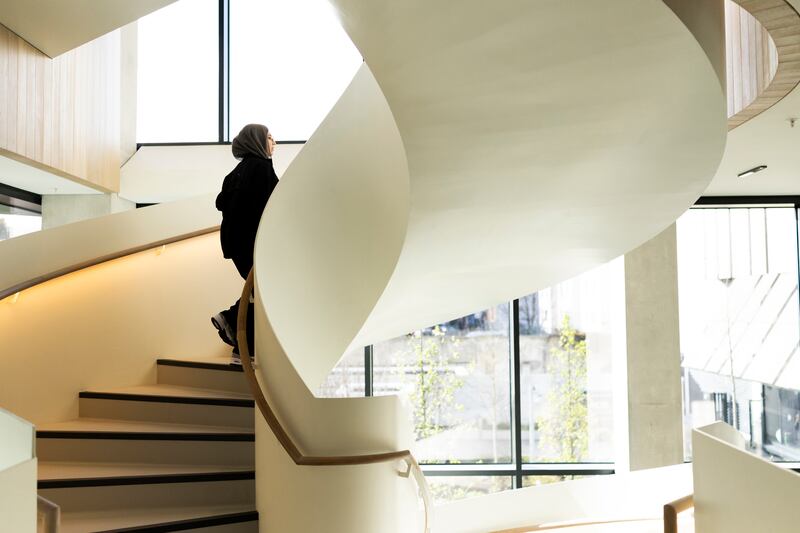
The €95 million development provides a range of important facilities for students such as advanced research laboratories and write-up areas designed to expand interdisciplinary and translational research in neurology and tissue engineering, a student centre, learning studios, clinical skills rooms, connected classrooms allowing lecturers to connect with students outside of Ireland and an exhibition space.
Students have been using the facilities since November of 2025 but the development was officially opened on March 25th.
READ MORE


A commemorative plaque was unveiled by Martin, Minister for Higher and Further Education James Lawless and president of the RCSI Prof Deborah McNamara in one of the learning studios.
“In terms of the mission of the college, it dovetails with what we want to achieve as a government, and research to me is at the heart of this ... Good teaching comes from the commitment and the focus on research,” said Martin.
He also said he believes stronger links should be developed with the political arena for “good reasons and to try and inform public debate better on health”.
“Increasingly in the Dáil now we’re being asked about clinical decisions to form judgmental positions on the complexity of clinical judgments.
“It’s a ropey area that politics is moving into and I think we have to have a bit of discipline around that, but we could benefit from shared space conversations around how systems work, how medicine works, how clinicians come to their conclusions to challenges facing clinicians generally.”
He said there is a “genuine” need to “pull this together” to get more informed political decision making and policy “in terms of health and in terms of medicine and best outcomes.”

“If you look back over the last four or five decades, Irish healthcare is transformed, lifespan has increased dramatically in this country,” he said.
He added that one area of “concern” for the political domain is rare diseases and orphan drugs.
“Many of the pharmaceutical companies are moving in that direction and huge challenges in terms of how you finance that and how you deal with that.”
He said the Government faces “almost monthly dilemmas in terms of when we fund particular medicines and when we don’t fund other medicines.”
RCSI has 5,682 registered students including 2,844 undergraduate students and 1,511 postgraduate students.
The university said the major new education, research and public engagement facility “strengthens RCSI’s capacity to support the expansion of the health workforce by educating future clinicians and health scientists.”
The university also said “it provides modern, flexible small‑group learning spaces and collaborative teaching environments designed to shape career‑ready graduates, along with a technology‑enabled learning infrastructure that supports the delivery of postgraduate healthcare education to professionals around the world.”
On the ground level sits the Humanarium, an exhibition space dedicated to health and wellbeing. RCSI said it is designed to enhance public health literacy and empower people to protect their own health. It is currently focusing on the organ of the heart.