
When Noreen Doyle’s son was diagnosed with leukaemia at the age of two, she remembers being absolutely terrified.
“I innocently said ‘leukaemia, like the cancer?’ That was how disconnected I was to the idea of a child having cancer. I had a three-year-old, this two-year-old and I was five months pregnant at the time,” she said. “It was a tough four and a half years of treatment.”
Given how frightening the experience was, they decided to contribute to a biobank, which is a collection of biological samples and healthcare data donated by people for health research.
Ten years later, when her fourth child was diagnosed with the same form of leukaemia aged 8, they were very grateful for that decision.
READ MORE


“Because we had entered our first child into that clinical trial, my [fourth] child benefited enormously from that trial. It was a real full-circle moment,” she said.
“The treatment for our first child was much more traumatic. He was much sicker, and we thought that we were going down that road again, but she really blazed through it and it was all to do with what they had learned from the clinical trial.”
Doyle’s decision to contribute to the biobank was driven by ethics. “I just felt it was the right thing to do when they explained what it meant.”
While the country has a number of biobanks in institutions around the State, they’re largely focused on one specific illness and linked to specific research funding.
St James’s Hospital in Dublin, however, is hoping to take this a step further by establishing the largest shared campus biobank in Ireland.
The hospital received around €10 million from the Health Service Executive (HSE) for the construction of the building, and it is envisaged it will be up and running in around two years’ time.
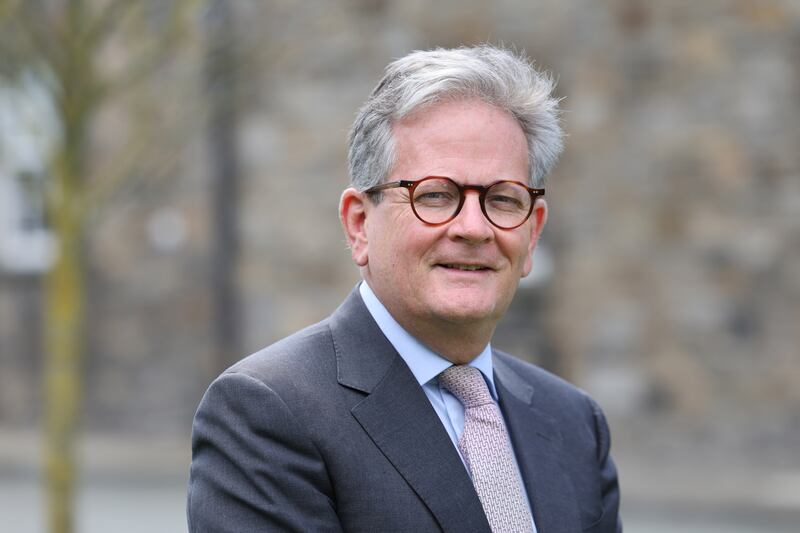
Prof Colm Bergin, consultant and academic lead in infectious diseases at St James’s Hospital, said biobanking is a process of amalgamating patient information, samples and diagnostics under a regulated structure that ensures “ethics, transparency and regulatory oversight to the retention of that data”.
The hope of establishing such things is that you “might be able to improve outcomes for individual patients, their families and the health system itself”.
“There are established biobanks that are driven by individuals and individual research teams. But the ambition here is they will be agnostic to condition, and will bring all who are accessing healthcare,” he said.
Dr Suzanne Bracken, programme manager of the campus biobank, said the project is at an “early stage”.
“Come 2028 to 2035, we kind of describe that as the growth phase. We aspire to develop a population-based biobanking. We’ve yet to design it, but recruiting patients in rather than taking a specific disease approach,” she said.
“Then 2035, we’ve described it as a mature phase where we hope to be considered a national or European biobank hub.”

Biobanking has been happening in Ireland for years, Bracken said, but this is the first time there will be its own dedicated building for it.
“It’s much more disjointed, it’s not as harmonised but it’s also not as efficient. You might have a research assistant over here doing it for a slightly different condition but similar ... so it hasn’t been the economy of scale and everything. It’s about doing it for one and for all.”
St James’s is not the first organisation to attempt something of this scale. Irish scientist Garret A FitzGerald was heavily involved in the establishment of the Penn medicine biobank more than two decades ago.
Director at the Institute for Translational Medicine and Therapeutics at the University of Pennsylvania, he said there can be significant individual benefits as well as broader health system ones.
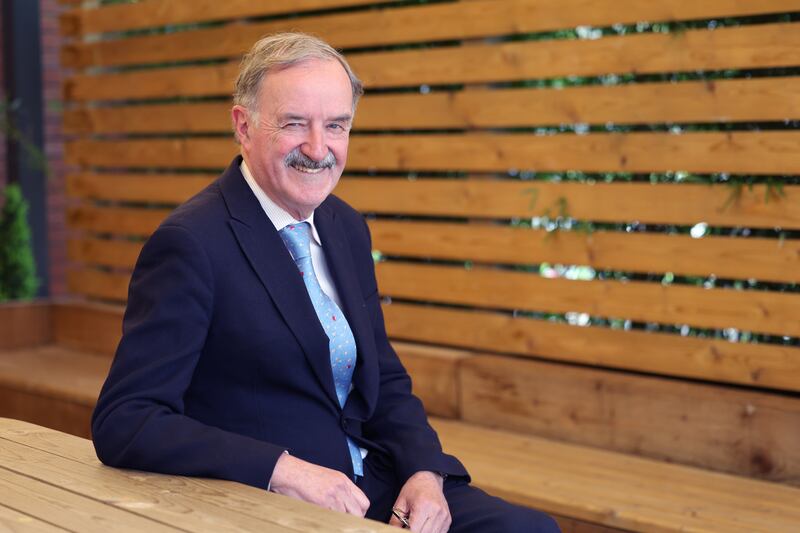
He described a patient who came in to have his tonsils removed and he was persuaded to give blood and join the biobank, but he forgot about it.
“Nine years later, he kept getting these calls from Penn. Eventually, they got through to him and an investigator in Penn found he had a mutation in a gene that gives rise to a thing called Lynch syndrome, which is a bad form of colon cancer,” he said.
“So they called him in, explained it to him and he had a colonoscopy and they found stage three cancer in his colon. He’s doing fine now. When this happened he was 43 and the age for advice for colonoscopy screening in the US is 50 so he probably would have been dead.”
There were some challenges to its establishment, FitzGerald admitted, such as integrating adult and paediatric information and different types of electronic medical records. But he believes Ireland can learn from those issues.
“Sometimes, there’s a benefit to not being the first at something,” he said.
Doyle said her family is a real-world example of the benefits of contributing to and establishing biobanks.
She welcomes the idea of a bigger, more large-scale option in Ireland and would encourage all patients and their families to engage with it once it’s in operation.
“Eventually, there will be a cure for leukaemia where it won’t be as frightening as it has been for our family and I’ll have been involved in that and that’s very powerful thing to have as a person.”


